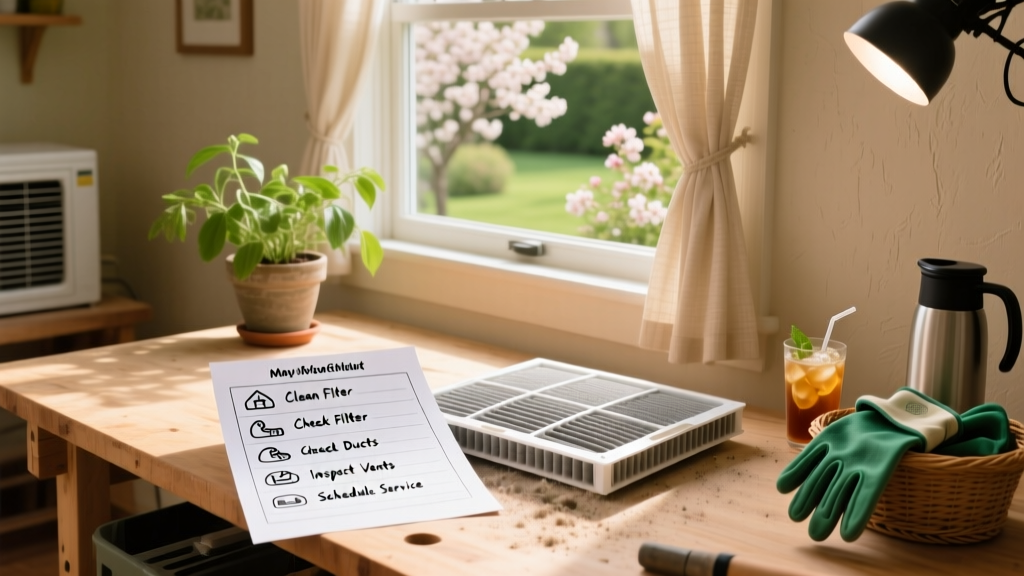
May is the sweet spot between winter’s chill and summer’s heat — when your HVAC system shifts from heating to cooling mode and indoor air quality starts to dip due to rising pollen, dust, and humidity. Skipping maintenance now means higher energy bills, strained equipment, and a higher chance of mid-June failure when temperatures spike.
Priority Tasks
| Task | Time Required | Difficulty | Tools Needed |
|---|---|---|---|
| Replace or clean HVAC air filter | 5–10 minutes | Easy | Replacement filter (MERV 8–11), ladder (if needed) |
| Inspect outdoor condenser unit | 15–20 minutes | Easy | Garden hose, soft brush, flashlight |
| Check thermostat calibration & settings | 10 minutes | Easy | Smartphone (for smart thermostats), thermometer |
| Vacuum return air vents & grilles | 20–30 minutes | Moderate | Vacuum with brush attachment, microfiber cloth |
| Test emergency shutoff switch | 2 minutes | Easy | None |
Detailed Task Breakdown
Replace or clean your HVAC air filter
Most systems need filter replacement every 30–60 days during seasonal transition months. In May, pollen counts peak — especially in the Midwest and South — clogging filters faster than usual. Pull the old filter and hold it up to light: if you can’t see through it, replace it. Use MERV 8 for standard homes; MERV 11 if someone has allergies or asthma. How to choose the right MERV rating depends on your blower motor’s static pressure tolerance — never go higher than your system manufacturer recommends.
Inspect and clear the outdoor condenser unit
Walk around your condenser unit and remove leaves, grass clippings, and mulch within 24 inches. Check coil fins for bends — use a fin comb (under $12 at hardware stores) to gently straighten them. Spray the coil with a garden hose using low pressure (never power wash) to rinse off dust and pollen residue. Let it dry fully before powering on. According to the U.S. Department of Energy, dirty coils reduce efficiency by up to 30% — a direct hit to your June electric bill.
Common Seasonal Problems
- Pollen buildup inside return ducts causing musty odors or sneezing fits
- Thermostat switching to cooling mode but fan not engaging — often due to a tripped limit switch or dead backup battery
- Condensate drain line algae growth (especially after humid April rains), leading to overflow pan alarms or water damage
- Unusual clicking or buzzing when AC first starts — may signal capacitor wear, common after months of dormancy
If you notice any of these, act fast: a failed capacitor can cost $180–$250 to replace, but catching it early may let you swap it yourself with basic tools. Capacitor replacement guide walks through safety steps and multimeter testing.
Tools & Supplies
Keep these on hand before May begins — no last-minute runs to the hardware store:
- 2–4 pleated HVAC filters (match your unit’s size — check the old filter’s label or your furnace door)
- Fin comb (e.g., Frost King FCM12)
- Condensate line cleaning tablets (e.g., Nu-Calgon tablets, used quarterly)
- Non-aerosol HVAC coil cleaner (avoid bleach-based sprays — they corrode aluminum)
- Flashlight with fresh batteries (for inspecting dark furnace compartments)
How often should I change my filter in May?
If you run your system daily for ventilation or dehumidification — even without cooling — change the filter every 30 days. Homes with pets, ongoing renovations, or high pollen exposure (like those near oak or ragweed stands) should do it every 20–25 days. The U.S. EPA estimates that 14% of household water usage is from leaks — but poor filtration wastes far more energy: a clogged filter forces your blower motor to work 15–20% harder.
Can I clean a reusable filter instead of replacing it?
Yes — but only if it’s labeled “washable” and rated MERV 4 or lower. Most reusable filters lose efficiency after 3–4 cleanings. Rinse under cool water (never hot — warps fibers), shake dry, and let air-dry completely before reinstalling. Never put a damp filter back in — mold spores thrive in that environment.
Why does my AC smell musty when I first turn it on in May?
That’s likely mold or mildew growing in the evaporator coil or drip pan over the dormant months. It’s not dangerous in small amounts, but indicates stagnant moisture and poor airflow. Run the system on fan-only for 15 minutes before cooling mode to dry internal components. If odor persists, schedule a professional coil cleaning — evaporator coil cleaning costs average $120–$175 but prevents biofilm buildup that reduces cooling capacity.
Is it safe to spray water on my outdoor unit?
Yes — but only with a garden hose on gentle spray, and only when the unit is powered off. Wait 15 minutes after shutdown to avoid electrical risk. Never spray upward into the fan motor housing or electrical connections. A wet coil cools more efficiently, but oversaturation invites rust on steel components — especially on units older than 10 years.
What’s the ideal thermostat setting for May?
Set cooling to 74–76°F during occupied hours and 78–80°F when away or sleeping. Every degree lower adds ~6% to cooling costs (Energy Star, 2023). If your home feels sticky despite the temperature, check relative humidity — above 60% triggers discomfort. Consider adding a whole-house dehumidifier if your AC runs constantly but doesn’t cool effectively.
"May is the single most cost-effective month to prevent summer HVAC failures — 72% of service calls in June stem from issues detectable in May," says HVAC technician Marcus Lee of Lee & Son Heating & Cooling, based in Raleigh, NC (2024 field survey).
Don’t wait for the first 90°F day to test your system. A quick 20-minute May tune-up saves time, money, and stress — and keeps your family breathing easier as pollen season peaks. Pair this checklist with our full spring home maintenance checklist to cover roofing, gutters, and exterior seals while you’re already outdoors.