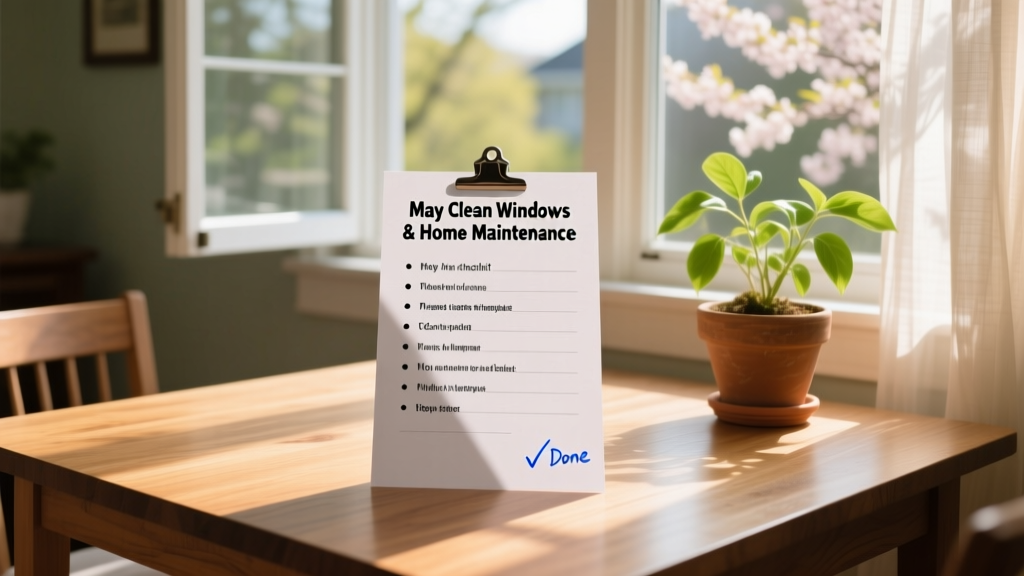
May is the sweet spot between spring’s damp chill and summer’s heat—ideal for tackling windows before pollen hardens, insects nest in tracks, and UV exposure fades seals. Skipping this window (pun intended) invites streaked views, trapped moisture, and even early seal failure in double-panes.
Priority Tasks
| Task | Time Required | Difficulty | Tools Needed |
|---|---|---|---|
| Clean exterior & interior glass | 2–3 hours (full house) | Easy | Squeegee, microfiber cloths, vinegar-water solution, ladder (if needed) |
| Inspect & clean window tracks and weep holes | 45 minutes | Moderate | Old toothbrush, compressed air, shop vac, pipe cleaner |
| Check weatherstripping and caulk at frames | 1 hour | Moderate | Utility knife, caulk gun, silicone caulk, replacement gasket (if cracked) |
| Test operable windows for smooth function | 20 minutes | Easy | Lubricating oil (silicone-based), soft cloth |
Detailed Task Breakdown
Clean exterior & interior glass
Start indoors: wipe sills with damp microfiber, then spray glass with 1:1 white vinegar and distilled water (tap water leaves mineral spots). Use overlapping S-pattern strokes with a rubber-bladed squeegee—dry edges with a lint-free cloth. For exteriors, avoid midday sun; heat dries solution too fast, causing streaks. If using a ladder, follow OSHA’s 4-to-1 rule: for every 4 feet of height, move base 1 foot out.
- Wipe screens with a vacuum brush attachment first—removes 80% of dust before washing
- Rinse screens in tub or shower, not hose—high pressure warps aluminum frames
- Let screens air-dry fully before reinstalling (2+ hours); trapped moisture breeds mold in frames
Inspect & clean window tracks and weep holes
Debris in vinyl or aluminum tracks causes binding and water pooling. Remove loose dirt with a dry paintbrush, then use a pipe cleaner dipped in isopropyl alcohol to clear weep holes—these tiny drainage ports prevent rot in wood frames and condensation buildup in vinyl. According to the National Association of Home Builders’ Window Installation Standards (2022), clogged weep holes contribute to 37% of premature window frame deterioration in humid climates.
"Weep holes aren’t optional—they’re your window’s emergency drain. If you can’t see light through them, they’re blocked." — Certified Window Technician, Window Safety Council, 2023
Common Seasonal Problems
Pollen accumulation peaks in May across most U.S. regions—especially oak, birch, and maple. When mixed with dew or light rain, it forms a sticky film that bakes onto glass by midday. Left uncleaned for more than 5 days, it etches into low-iron glass and degrades silicone seals. Also watch for:
- Swollen wood sashes from April rains—test operation before applying lubricant
- Ants trailing along window ledges (a sign of hidden moisture or rot)
- Fogged double-pane units—indicates seal failure; replace before summer humidity worsens condensation
Tools & Supplies
Keep these on hand—not just for May, but year-round. Store in a labeled bin near your garage or utility closet so you’re ready next season.
- Vinegar-water spray bottle (refillable, 32 oz)
- Two dedicated microfiber cloths: one for cleaning, one for drying
- Soft-bristle nylon brush (for screens and tracks)
- Non-petroleum lubricant like Tri-Flow Superior Lubricant (safe for vinyl and metal)
- Painter’s tape + caulk removal tool (for old caulk cleanup before resealing)
How often should I clean windows in May?
Once is enough—if done thoroughly. But if you live near construction, farms, or heavy traffic, add a quick wipe-down every 10–14 days. The U.S. Department of Energy notes that dirty windows reduce visible light transmission by up to 30%, increasing reliance on artificial lighting.
Can I use Windex on Low-E coated windows?
No. Ammonia-based cleaners like Windex degrade the thin metallic oxide layer over time. Stick to pH-neutral solutions—vinegar-water is safe, as is dedicated Low-E safe cleaners.
Why do my windows fog up only in May?
That’s likely temporary condensation—not seal failure. May’s fluctuating temps (cool nights, warm days) create dew-point shifts inside the thermal gap. Wait until June—if fog persists daily and doesn’t clear by noon, get a professional assessment. Learn more in our guide to fogged window diagnosis.
Do storm windows need May maintenance too?
Absolutely. Remove, wash, and inspect rubber gaskets for cracks. Reinstall with fresh weatherstripping—many homeowners overlook that storm windows bear the brunt of spring wind-driven rain. A 2021 study by the Fenestration and Glazing Industry Alliance found 62% of storm window leaks traced to degraded perimeter gaskets installed pre-2015.
Is it safe to pressure-wash window frames?
No. Even low-pressure settings (under 1,000 PSI) force water behind trim and into wall cavities—especially around brickmold or stucco. Use a garden hose with a soft spray nozzle instead, and always direct water downward and away from joints.
May isn’t about perfection—it’s about prevention. A clean, well-sealed window lasts 15+ years longer and cuts cooling costs by up to 12% (U.S. EPA ENERGY STAR, 2023). Tackle this checklist now, and you’ll thank yourself every July afternoon when the view stays crisp—and the AC runs quieter.