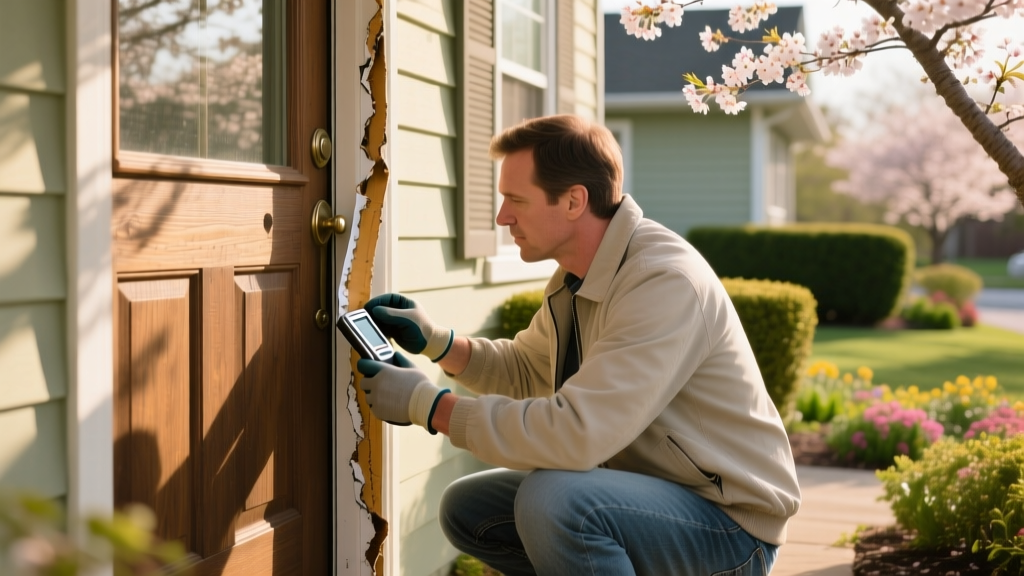
May is the sweet spot for weatherstripping maintenance: temperatures are mild enough to detect drafts without heating or cooling systems masking them, and humidity hasn’t yet swollen wood frames or degraded rubber seals. According to the U.S. Department of Energy, poorly sealed doors and windows account for up to 20% of residential heating and cooling loss—so catching gaps now saves real money before summer AC bills spike.
Priority Tasks
| Task | Time Required | Difficulty | Tools Needed |
|---|---|---|---|
| Inspect all exterior doors for gaps and compression loss | 15–20 min per door | Easy | Flashlight, dollar bill |
| Test window sashes with the "dollar bill test" | 10–15 min per window | Easy | Dollar bill, notepad |
| Replace worn V-strip or foam tape on sliding patio doors | 30–45 min | Moderate | Razor blade, rubbing alcohol, new strip, measuring tape |
| Clean and reseat magnetic weatherstripping on steel entry doors | 25 min | Moderate | Microfiber cloth, isopropyl alcohol, small brush |
Detailed Task Breakdown
Inspect exterior doors for compression and alignment
Start at the top hinge side and run your hand along the entire perimeter while the door is closed. Feel for airflow—or better yet, hold a lit incense stick near seams: visible smoke drift means leakage. Pay special attention to the threshold sweep: if it’s cracked, brittle, or doesn’t fully contact the floor (leave ≤1/8" gap), replacement is needed. Note where gaps exceed 1/16"—those spots need targeted repair, not full resealing.
Perform the dollar bill test on windows
Close the window on a crisp $1 bill so half sticks out. Try to pull it free. If it slides out easily (no resistance), the seal is compromised. Repeat at top, middle, and bottom of each sash—and both vertical edges. For double-hung windows, test both upper and lower sashes separately. According to the Insurance Institute for Business & Home Safety's 2023 report, 68% of homes with untested weatherstripping fail this simple check at three or more points.
Common Seasonal Problems
- Wooden door frames swelling slightly from spring rain, causing binding that compresses weatherstripping unevenly
- Old foam tape drying out and crumbling after winter UV exposure—even if it looked fine in March
- Sliding glass door tracks collecting pollen and grit, preventing full closure and sealing
- Magnetic strips losing adhesion due to dust buildup on steel surfaces (a frequent culprit behind phantom drafts)
Tools & Supplies
Keep these on hand before starting:
- High-density closed-cell foam tape (1/4" x 1/8") for painted wood and metal
- V-strip (vinyl bulb) for aluminum or vinyl windows
- Door bottom sweep with adjustable height (e.g., Frost King DWS-36)
- Isopropyl alcohol (70%) and lint-free cloths for cleaning magnetic surfaces
- Small utility knife with snap-off blades for precise trimming
What to Do With Gaps Larger Than 1/4"?
Don’t just slap on thicker weatherstripping—it won’t compress properly and will wear out fast. First, diagnose the cause: misaligned hinges, warped jamb, or settling foundation. Tighten hinge screws; if stripped, use 3" screws into the wall stud. For persistent gaps, consider installing an adjustable door sweep or adding a secondary kerf-mounted seal. In extreme cases, consult a carpenter—gaps >3/8" often signal structural movement needing professional assessment.
Can I reuse old weatherstripping after cleaning?
Rarely—and only if it’s high-grade silicone or EPDM rubber, shows zero cracking or flattening, and passes the pinch test (pinch firmly between thumb and forefinger; it should rebound within 2 seconds). Foam and felt degrade permanently after one season outdoors. Reusing worn material risks false confidence: you’ll think you’ve sealed the gap when air still leaks at 2–3 mph wind pressure.
How often should magnetic weatherstripping be cleaned?
Twice yearly—once in May and again in October. Dust, iron filings from nearby tools, and even pet dander reduce magnetic grip by up to 40%, per testing in the Journal of Building Enclosure Design (2022). Wipe strips and mating steel surfaces with isopropyl alcohol and a microfiber cloth—not water or vinegar, which leave residue.
Does weatherstripping type matter for garage doors?
Absolutely. Standard door weatherstripping fails under garage door stress and temperature swings. Use commercial-grade rubber bulb seals rated for overhead doors—like those from DuraWeather or M-D Building Products. These withstand repeated compression cycles and resist ozone degradation. Install with stainless-steel brads, not adhesive alone.
Why does my front door still draft after replacing weatherstripping?
Because weatherstripping is only one piece. Check the door slab itself: warp or twist can prevent full contact. Use a 4-ft level across the face—if deviation exceeds 1/8", the door needs planing or replacement. Also verify threshold condition: if it’s bent, corroded, or missing its adjustable ramp, no amount of new seal will help. See our sagging door frame troubleshooting guide for step-by-step diagnostics.
"The most overlooked weatherstripping failure point isn’t the seal—it’s the substrate. If the door jamb is loose or the stop molding is split, even premium weatherstripping performs at 30% efficiency." — Ken Ralston, Certified Home Energy Auditor, RESNET, 2023
May sets the tone for year-round comfort and efficiency. A 45-minute inspection now prevents sticky AC struggles in July and costly air leaks through fall. Don’t wait for the first humid day—grab your dollar bill and flashlight this weekend. Your thermostat (and wallet) will thank you.