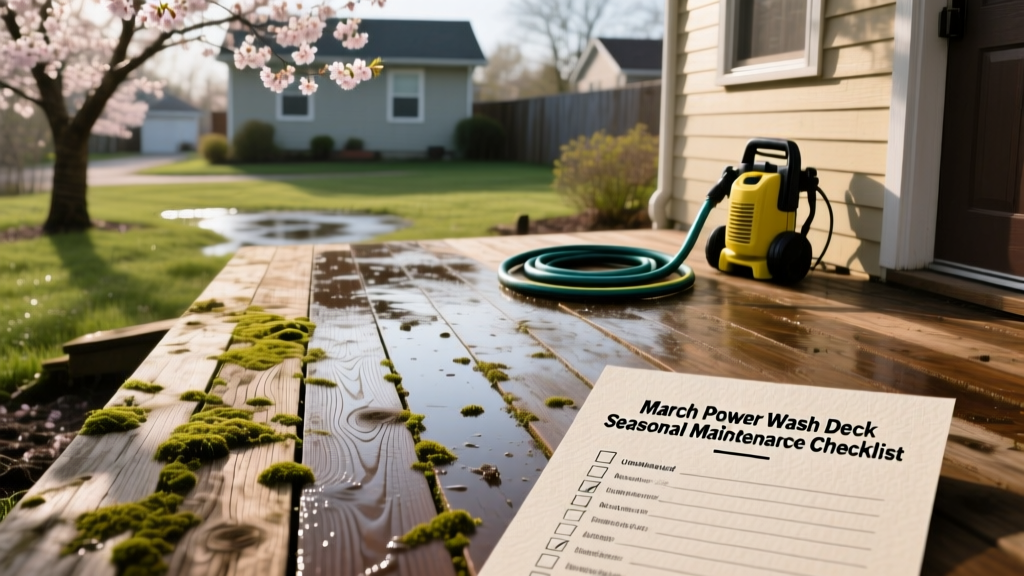
March is the sweet spot for deck power washing—temperatures are rising above freezing, winter grime has softened, and humidity hasn’t spiked enough to encourage rapid mold regrowth. Skipping this window means tackling stubborn algae in May or risking wood rot by June. According to the National Association of Home Builders’ 2022 Exterior Maintenance Report, decks cleaned annually before spring moisture peaks last 3.2 years longer than those cleaned sporadically.
Priority Tasks
| Task | Time Required | Difficulty | Tools Needed |
|---|---|---|---|
| Clear debris & sweep surface | 15–20 min | Easy | Broom, leaf blower, garden rake |
| Pre-rinse & inspect for damage | 25–35 min | Easy | Garden hose with spray nozzle, notepad |
| Apply deck cleaner & dwell | 20–30 min | Moderate | Deck cleaner (oxygen-based), pump sprayer, stiff-bristle brush |
| Power wash (low-pressure) | 45–75 min | Moderate | 2,000–2,500 PSI electric washer, 40° tip, safety goggles |
| Rinse, dry, & assess sealant needs | 30–45 min | Easy | Garden hose, moisture meter (optional), chalk line |
Detailed Task Breakdown
Clear debris & sweep thoroughly
Start by removing furniture, planters, and rugs. Use a stiff outdoor broom—not a leaf blower alone—to dislodge grit lodged in board gaps. Pay special attention to corners where pine needles and roof runoff collect organic matter. Vacuum crevices with a shop vac if you notice visible mold spores clinging to damp wood.
Pre-rinse and inspect for structural issues
Use a garden hose at full pressure to flush loose dirt and test drainage flow. While wet, walk the entire surface and tap each board with a rubber mallet: hollow sounds indicate rot beneath the surface. Check joist ends at ledger board connections—these are common failure points. Note any screws pulling out or warped boards (>1/8" gap between boards).
Apply oxygen-based cleaner, not bleach
Mix an EPA-registered oxygen bleach solution (e.g., Sodium Percarbonate) per label instructions—never chlorine bleach, which degrades wood fibers and harms nearby soil. Spray evenly, let dwell 10–15 minutes (no longer—sun exposure dries it too fast), then agitate with a non-metal brush.
"Oxygen bleach removes tannin stains and biological growth without lightening wood or killing surrounding plants—critical for decks near flower beds," says certified deck inspector Lena Ruiz, NAHB Certified Master Builder (2023).
Common Seasonal Problems
- Black streaks along north-facing boards: Caused by Gloeocapsa magma algae—thrives in cool, shaded, damp conditions typical of early March.
- Soft, spongy spots near steps or rail posts: Often hidden rot from last fall’s leaf damming and ice melt pooling.
- White powdery residue after drying: Efflorescence from concrete footings wicking salts upward—not mold, but signals poor substructure ventilation.
Tools & Supplies
You don’t need industrial gear—but skipping key items risks damage. Rent a 2,200 PSI electric washer (gas units often exceed safe pressure for aged cedar or pressure-treated pine). Avoid pressure tips under 25°—they strip grain. Keep these on hand:
- Oxygen-based deck cleaner (e.g., Wolman DeckBrite or OxiClean Outdoor)
- Non-scratch scrub brush with 3" stiff nylon bristles
- Moisture meter (ideal reading: 12–15% before sealing)
- Work gloves, ANSI-rated eye protection, and knee pads
- Drop cloths for adjacent siding and landscaping
Can I power wash if it’s still chilly?
Yes—if daytime temps stay above 40°F for 4+ hours and nighttime lows don’t dip below freezing. Cold water + cold wood causes microfractures. Wait until midday when surface temp hits 45°F or higher. Test with an infrared thermometer if unsure.
How do I know if my deck needs resealing after washing?
Sprinkle water on a cleaned, dry board: if it beads up and stays for >10 seconds, existing sealer is intact. If it soaks in within 5 seconds, sand lightly and apply new semi-transparent stain like Sherwin-Williams SuperDeck. Don’t seal damp wood—it traps moisture and blisters.
What about composite decks? Do they need power washing in March?
Yes—but use only 1,200–1,500 PSI and a fan tip. Composite decking absorbs less water but collects pollen, sap, and mildew in grooves. Skip harsh cleaners; use Simple Green Deck & Fence Cleaner instead. Rinse thoroughly—residue attracts insects and accelerates UV fading.
Is it safe to power wash near windows or vinyl siding?
Not without precautions. Set your washer to 1,500 PSI max within 3 feet of windows or siding. Always angle the spray downward and away from seams. Cover windows with painter’s tape and plastic sheeting. Better yet, pre-rinse siding with a garden hose first to reduce pressure needed.
Should I replace loose screws before or after power washing?
After. Washing reveals hidden corrosion and loosened fasteners. Remove rusted screws, drill pilot holes slightly larger, and install stainless steel #10 x 3" screws with bugle heads. Countersink them 1/16" below surface—this prevents snagging and allows proper stain coverage.
March deck maintenance isn’t about perfection—it’s about catching small problems before they cost thousands in repairs. A clean, inspected deck also gives you honest feedback on whether it’s time to consider full replacement vs. refurbishment. And if you spot more than three rotted joists or widespread checking, call a licensed contractor before applying any finish—some issues need structural assessment first.