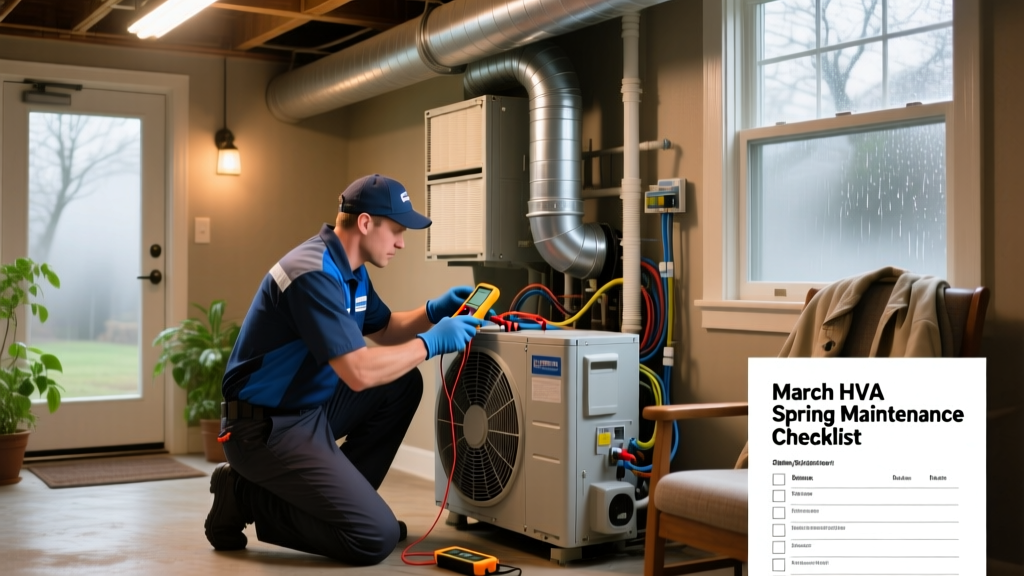
March is the sweet spot for HVAC spring maintenance: outdoor temperatures are mild enough to safely test your system, yet warm enough to reveal hidden cooling issues before summer demand spikes. Skipping this window means risking compressor strain, higher energy bills, or even a full AC failure when 90°F days arrive—and 42% of emergency HVAC calls in June stem from neglected spring prep (ACCA, 2023).
Priority Tasks
| Task | Time Required | Difficulty | Tools Needed |
|---|---|---|---|
| Replace air filter | 5–10 minutes | Easy | Replacement filter (MERV 8–11), ladder (if needed) |
| Inspect condensate drain line | 15–20 minutes | Moderate | Vinegar, turkey baster, wet/dry vac, flashlight |
| Test thermostat calibration | 10 minutes | Easy | Digital thermometer, smartphone (for smart thermostats) |
| Clean outdoor condenser coil | 30–45 minutes | Moderate | Garden hose with spray nozzle, soft brush, coil cleaner (non-acidic), safety glasses |
| Check refrigerant lines & insulation | 20 minutes | Moderate | Flashlight, gloves, replacement foam tape (R-3 rated) |
Detailed Task Breakdown
Replace air filter
Locate your filter—usually behind a return grille, in the furnace cabinet, or in a dedicated wall slot. Note its dimensions (e.g., 16x25x1) and MERV rating. Slide out the old filter and inspect for gray-black dust buildup or visible debris. Install the new filter with airflow arrow pointing toward the blower. Set a phone reminder for every 30–90 days depending on pets, allergies, or local pollen counts.
Clean outdoor condenser coil
Turn off power at the disconnect switch (not just the thermostat). Remove debris—leaves, grass clippings, nesting materials—with a soft brush. Rinse gently from the top down using a garden hose at low pressure; never use a pressure washer—it can bend fins. If coils are greasy or caked with grime, apply non-acidic coil cleaner per label instructions, wait 10 minutes, then rinse again. Let dry fully before restoring power.
Common Seasonal Problems
Early spring brings unique HVAC stressors: fluctuating temps cause short-cycling, high humidity encourages mold growth in drain pans, and pollen clogs filters faster than winter dust. Watch for these red flags:
- Musty odor when AC first runs — indicates microbial growth in evaporator coil or drain pan
- Water pooling near indoor unit — likely a clogged condensate line or cracked drain pan
- Thermostat reads 72°F but room feels 78°F — points to low refrigerant or dirty coil
- Outdoor unit fan spins but no cold air — possible capacitor failure or contactor issue
Tools & Supplies
Keep these items accessible in your garage or utility closet before March arrives:
- MERV 8–11 pleated filters (match your system’s size—common: 16x25x1, 20x25x1)
- Non-acidic coil cleaner (e.g., Nu-Calgon Evap Foam)
- R-3 rated foam pipe insulation tape for refrigerant lines
- Digital thermometer with ±0.5°F accuracy
- Condensate line cleaning kit (includes flexible brush and vacuum adapter)
How often should I replace my air filter in March?
If you run your system daily for heating or pre-cooling, replace it now—even if it looks clean. Pollen counts jump 300% between late February and mid-March in most U.S. regions (Pollen.com, 2024), and filters load faster. Homes with pets or allergy sufferers should swap filters every 30 days through April.
Can I clean the condenser coil myself—or do I need a pro?
You can safely clean light-to-moderate debris yourself—but skip it if fins are bent, coils are corroded, or you see oil residue (a sign of refrigerant leak). According to the U.S. Department of Energy, DIY coil cleaning improves efficiency by up to 15%, but only when done correctly.
"If you hear hissing, smell chemical odor, or notice frost on copper lines, stop immediately and call an EPA-certified technician—those are refrigerant system warnings." — HVAC Excellence Technician Certification Manual, 2023
Why test the thermostat in March instead of waiting until May?
Because March’s 50–70°F range lets you verify both heating and cooling modes without extreme load. A miscalibrated thermostat can cause up to 12% higher energy use (ENERGY STAR, 2022). For smart thermostats, update firmware and check geofencing settings while outdoor temps are stable.
What’s the biggest mistake homeowners make during spring HVAC prep?
Assuming 'no problems last summer = no issues now.' Refrigerant leaks grow silently; capacitors degrade over winter inactivity; and condensate pumps fail unpredictably. The ACCA reports that 68% of systems needing repair in June had passed visual inspection in March—highlighting why functional testing matters more than appearance.
Do I need to lubricate my HVAC blower motor?
Most modern blower motors are sealed and permanently lubricated—adding oil can damage them. Check your furnace manual: if it lists oil ports (typically two small zerk fittings), use 1–2 drops of ISO 32 turbine oil annually. Never use WD-40 or multi-purpose grease. When in doubt, skip it—over-lubrication causes more harm than skipping entirely.
March HVAC maintenance isn’t about perfection—it’s about catching the small things before they become costly emergencies. Pair this checklist with our furnace maintenance schedule and AC installation cost guide to build a full-year plan. Your system will run quieter, cooler, and longer—if you start now.