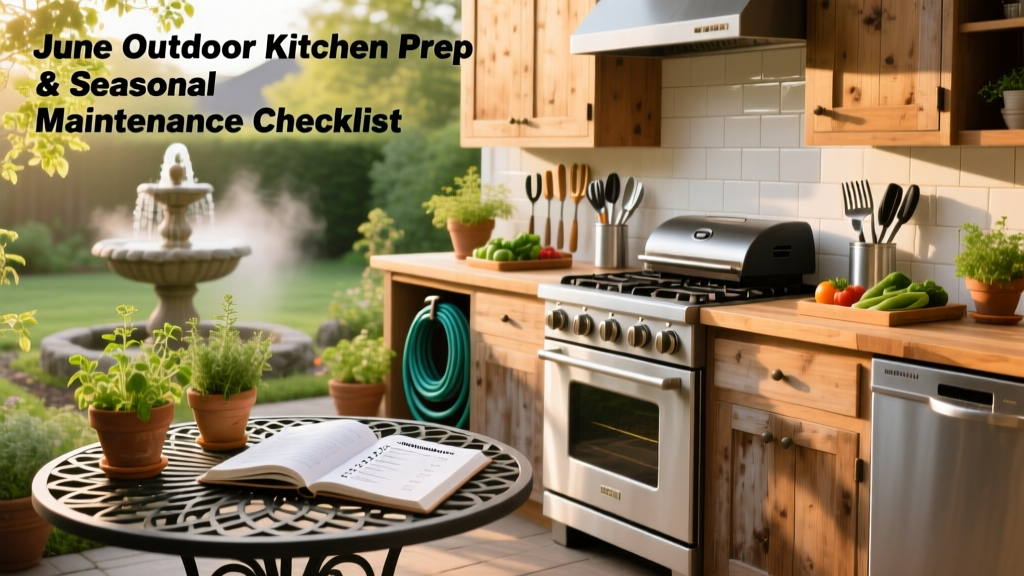
June is the sweet spot—warm enough to fire up the grill, but before humidity, pollen, and heavy summer storms turn minor issues into major headaches. This month, your outdoor kitchen shifts from occasional use to weekly workhorse status; skipping prep now means grease buildup, pest entry points, and component stress that compound fast.
Priority Tasks
| Task | Time Required | Difficulty | Tools Needed |
|---|---|---|---|
| Clean & inspect gas lines and connections | 25–40 min | Moderate | Soapy water spray bottle, adjustable wrench, leak detector solution |
| Deep-clean grill grates and interior burners | 45–75 min | Moderate | Stainless steel brush, degreaser, wire brush, shop vacuum |
| Inspect & seal countertop seams and backsplashes | 30–50 min | Easy | 100% silicone caulk (outdoor-rated), caulk gun, isopropyl alcohol, clean rags |
| Test lighting, GFCI outlets, and electrical covers | 20–35 min | Easy | Outlet tester, flashlight, screwdriver, voltage tester |
| Clear drain lines and check for insect nesting | 15–25 min | Easy | Plumber’s snake, vinegar/baking soda mix, flashlight, tweezers |
Detailed Task Breakdown
Clean & inspect gas lines and connections
Turn off the main gas valve. Apply soapy water to all fittings—including regulator, hose ends, and quick-connects. Bubbles indicate a leak. Tighten only finger-tight plus ¼ turn with a wrench—over-torquing cracks brass fittings. According to the National Fire Protection Association’s Fire Prevention Code 2023, undetected gas leaks cause 12% of residential outdoor cooking fires.
Deep-clean grill grates and interior burners
Remove grates and soak in hot water + ½ cup baking soda + ¼ cup dish soap for 20 minutes. Scrub with stainless steel brush. For burners, lift and wipe debris from ports with a pipe cleaner or unbent paperclip—never use a toothpick (it breaks off). Vacuum ash and grease from the firebox floor. Replace drip pans if warped or corroded.
Inspect & seal countertop seams and backsplashes
Run your finger along all seams—especially where stone meets stainless or tile meets wood. Look for cracking, discoloration, or gaps >1/16”. Clean thoroughly with isopropyl alcohol, let dry 15 minutes, then apply a continuous bead of 100% silicone caulk rated for UV and freeze-thaw cycles (e.g., GE Advanced Silicone II). Smooth with a damp fingertip—not a tool—to avoid air pockets.
Common Seasonal Problems
June brings three predictable troublemakers: first, increased insect activity—wasps and ants nest inside unused burner tubes and under loose countertop edges. Second, early-season humidity accelerates rust on non-stainless hardware like drawer slides and hinge screws. Third, pollen accumulation clogs ventilation fans and condenser coils on outdoor refrigerators—cutting cooling efficiency by up to 30%, per the Air-Conditioning, Heating, and Refrigeration Institute’s 2022 field study.
- Look for tiny piles of sawdust near cabinet bases—sign of carpenter ants
- Check refrigerator fan intake behind the unit for yellow-green pollen clumps
- Listen for sputtering or uneven flame—often caused by moisture in the gas line after spring rains
Tools & Supplies
Keep these within arm’s reach before you start:
- Stainless steel grill brush with replaceable heads (top-rated options here)
- Outdoor-rated 100% silicone caulk (not acrylic or latex)
- GFCI outlet tester (UL-listed, $8–$12)
- Shop vacuum with crevice tool (critical for grease trap cleanup)
- Food-grade mineral oil for stainless surfaces (prevents water spotting)
How often should I clean the grease trap?
Monthly during active use—June through September. A full trap reduces airflow, causes flare-ups, and invites roaches. Empty it into a metal can, cool completely, then dispose at a local recycling center that accepts used cooking oil. Never pour grease down drains or onto soil.
Can I use regular household caulk on my outdoor kitchen?
No. Standard acrylic caulk shrinks, cracks, and mildews within 3 months outdoors. Only use products labeled “100% silicone” and “UV-resistant”—like DAP Dynaflex Ultra or OSI Quad Max. These retain elasticity across -40°F to 150°F and resist mold spores common in humid coastal or Midwest climates.
Why does my outdoor refrigerator run constantly in June?
Pollen-clogged condenser coils are the #1 cause. Pull the unit forward, remove the rear access panel, and vacuum coils gently—then wipe with a soft brush. If it still runs >75% of the time, check door gasket seal with the dollar bill test: close the bill in the door—if you can pull it out easily, replace the gasket.
Is pressure washing safe for my outdoor kitchen surfaces?
Only on sealed stone, concrete, or porcelain tile—and never above 1,500 PSI. High pressure etches natural stone and forces water behind backsplashes. For stainless steel, use a soft-bristle brush and warm soapy water. For stubborn grease, try a citrus-based degreaser like Simple Green Outdoor Formula—it’s biodegradable and won’t pit metal.
Do I need to winterize now if I live in Florida or Southern California?
No—but you do need to guard against salt air corrosion and UV degradation. Wipe stainless surfaces weekly with food-grade mineral oil. Inspect rubber gaskets on fridge and ice maker doors monthly for cracking. And reseal any caulk joints showing white chalkiness—a sign of silicone breakdown, per the Outdoor Kitchen Materials Guide.
"Most outdoor kitchen failures aren't from cold—they're from neglect between May and July. A 15-minute visual inspection every other week prevents 80% of midsummer breakdowns." — Carlos Mendez, Certified Outdoor Kitchen Inspector, NKBA, 2023
With June’s prep done right, your outdoor kitchen becomes a reliable hub—not a source of stress—for cookouts, family meals, and weekend hosting. Tackle these tasks before the first heatwave hits, and you’ll gain more than peace of mind: you’ll extend appliance life by 3–5 years and avoid emergency service calls that cost $180+ on weekends. Next, consider adding a July outdoor lighting safety check to keep pathways and task areas safe as daylight hours shift.