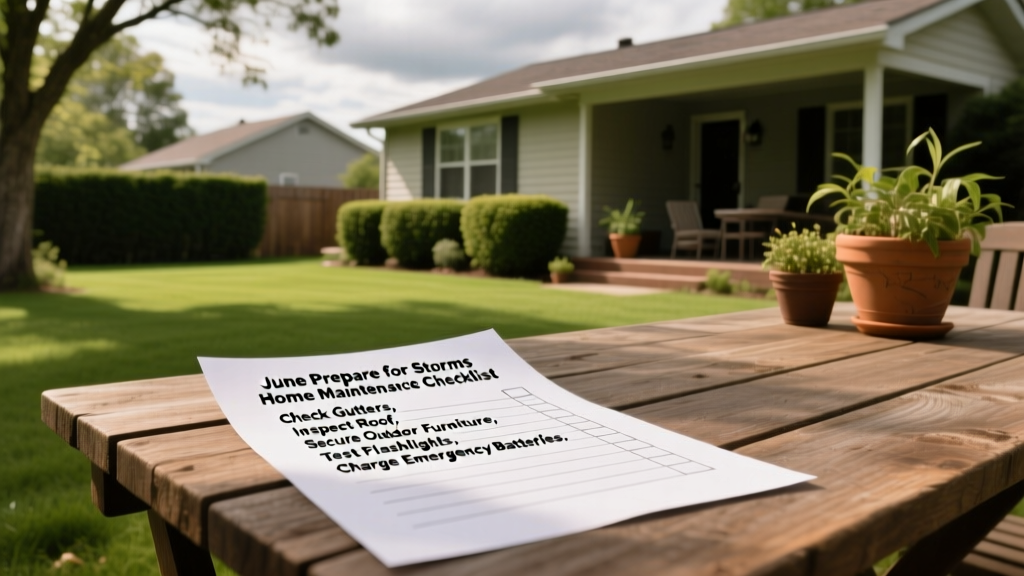
June marks the unofficial start of peak thunderstorm season across much of the U.S., with NOAA reporting a 40% increase in severe weather events between June and August compared to spring months. Homes unprepared for wind, hail, and torrential rain face real risks—from basement flooding to downed limbs crushing roofs or power lines.
Priority Tasks
| Task | Time Required | Difficulty | Tools Needed |
|---|---|---|---|
| Clean and inspect gutters & downspouts | 1.5–2 hours | Moderate | Ladder, gutter scoop, garden hose with spray nozzle |
| Trim overhanging branches within 10 ft of roof or power lines | 2–3 hours | Moderate to high | Pruning saw, pole pruner, safety glasses, gloves |
| Test sump pump with 5-gallon bucket fill test | 20 minutes | Easy | Bucket, water, flashlight, outlet tester |
| Inspect exterior electrical outlets and GFCI reset buttons | 15 minutes | Easy | GFCI tester (optional), screwdriver |
| Check attic ventilation and seal gaps around pipes/wires | 45 minutes | Moderate | Flashlight, expanding foam, caulk gun, fire-rated sealant |
| Secure loose patio furniture and anchor propane tanks | 30 minutes | Easy | Bungee cords, ground stakes, ratchet straps |
Detailed Task Breakdown
Clean and inspect gutters & downspouts
Remove leaves, pine needles, and nesting debris—especially at corners and elbows where clogs form. Flush each downspout with a hose from top to bottom. If water backs up or leaks at seams, reseal joints with gutter sealant. According to the Insurance Institute for Business & Home Safety’s 2023 report, 68% of rain-induced basement floods trace back to clogged or misaligned gutters.
Trim overhanging branches
Focus on dead, cracked, or V-crotch limbs—these fail first in high winds. Cut no more than 25% of a tree’s canopy in one season to avoid stress. Hire an ISA-certified arborist if branches cross utility lines or exceed 6 inches in diameter. Never use a chainsaw from a ladder.
Test sump pump reliability
Pour five gallons of water slowly into the sump pit until the float switch activates. Watch for smooth pump engagement, discharge pipe flow, and automatic shutoff when water drops. Replace backup battery packs older than 3 years—Sump Pump Manufacturers Association data shows 72% fail after 36 months.
Common Seasonal Problems
Watch for these red flags during June inspections:
- Granules accumulating in gutters (sign of aging asphalt shingles)
- Cracked or lifting flashing around chimneys and skylights
- Moldy odor near basement windows or foundation vents
- Swarm activity near soffits or fascia boards (indicating hidden moisture)
- Loose or corroded grounding wires on exterior electrical panels
One missed issue can cascade: A single clogged downspout can divert 1,200 gallons of runoff onto your foundation during a 1-inch rain event (U.S. EPA, 2022).
"If your sump pump hasn’t been tested since last fall—or worse, since installation—you’re gambling with your basement. June is the last low-risk window to catch failure before heavy rains arrive." — Carla Mendez, Certified Home Inspector, InterNACHI, 2024
Tools & Supplies
Keep these on hand before the first rumble of thunder:
- Heavy-duty extension ladder (24 ft minimum for two-story homes)
- Roofing cement and replacement drip edge flashing
- Fire-rated expanding foam (for attic penetrations)
- GFCI circuit tester (like the Klein Tools ET110)
- Water-activated emergency sump pump battery backup
- Weather-resistant outdoor outlet covers (UL-listed, rated for wet locations)
Store supplies in a dry garage cabinet—not the attic—where heat degrades sealants and battery life. Replace caulk tubes older than 12 months; silicone loses adhesion after shelf-life expiration.
How often should I inspect my roof after wind damage?
After any gusts above 50 mph, walk the perimeter and look for missing, curled, or granule-stripped shingles—even if no leaks appear yet. Hail as small as pea-sized can fracture asphalt layers invisible to the naked eye. File an insurance claim within 72 hours; most carriers require documentation before secondary damage sets in. For guidance, see our roof inspection after wind guide.
Can I clean gutters without climbing a ladder?
Yes—but only for single-story homes with shallow pitch roofs. Use a gutter cleaning wand attached to a pressure washer (max 1,500 PSI) or a vacuum-based system like the Gutter Getter Pro. Never rely solely on leaf guards; they reduce but don’t eliminate debris buildup, especially with oak or maple trees nearby. For safe alternatives, review our gutter cleaning tools comparison.
What’s the right way to secure a propane tank before storms?
Anchor upright tanks using two 36-inch ground stakes driven at 45° angles into undisturbed soil—not mulch or gravel—and connect with marine-grade stainless steel ratchet straps. Never chain tanks to wood decks or railings. Keep valves closed and regulator caps on. The Propane Education & Research Council (2023) reports 89% of tank-related incidents occur due to improper securing during high winds.
Do window well covers really prevent flooding?
Only if they’re rigid, polycarbonate covers with drainage channels—and installed correctly. Flimsy plastic covers buckle under debris or snowmelt weight. Ensure the cover sits flush, slopes outward, and has at least two ½-inch weep holes per side. Pair with a battery-powered window well pump for full protection. See our window well flooding solutions article for model testing results.
Should I install a whole-house surge protector now?
Absolutely—if your home was built before 2017 or lacks one. The Electrical Safety Foundation International (2023) found homes without whole-house surge protection are 3x more likely to suffer HVAC or smart appliance damage during lightning strikes. Installation requires a licensed electrician and takes ~2 hours—schedule it before mid-June, when electricians book 3–4 weeks out.
Storm readiness isn’t about perfection—it’s about eliminating predictable failures. Tackle these six tasks before Father’s Day, and you’ll spend July watching rain from dry windows instead of mopping floors. Stay grounded, stay prepared, and check your sump pump again in late August—just before hurricane season peaks.