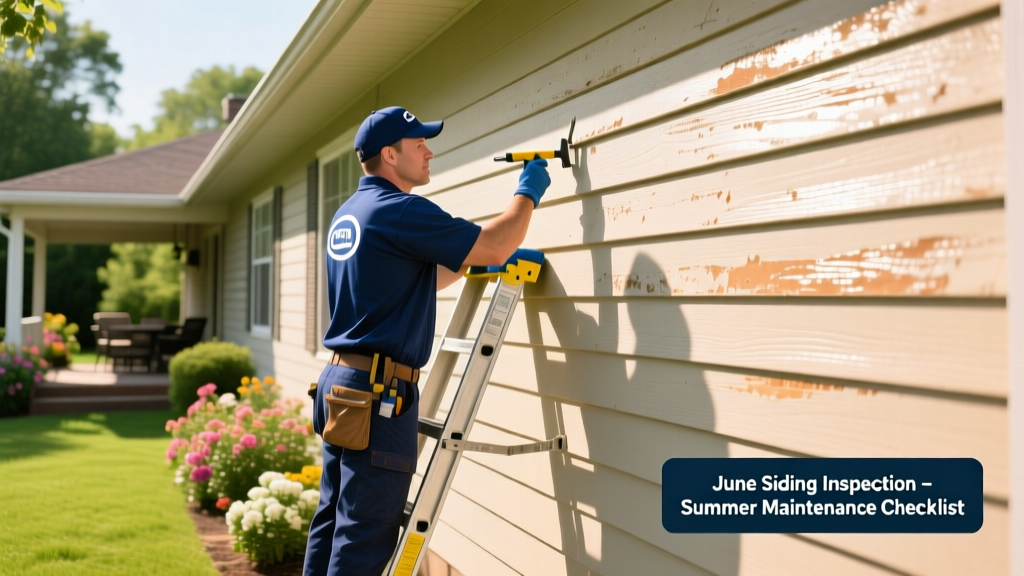
June is the sweet spot for siding inspection—warm enough to spot moisture damage, dry enough to safely access all surfaces, and early enough to fix issues before July’s UV intensity and August thunderstorms worsen them. Skipping this check risks warping, mold growth behind panels, or insect entry points that escalate fast in humid summer air.
Priority Tasks
| Task | Time Required | Difficulty | Tools Needed |
|---|---|---|---|
| Visual inspection (all four sides + soffits) | 45–75 minutes | Easy | Ladder (20-ft extension), notepad, phone camera |
| Clean algae/mold from north-facing walls | 1.5–2.5 hours | Moderate | Soft-bristle brush, garden hose, oxygen bleach solution (not chlorine) |
| Seal gaps around windows & doors | 40–60 minutes | Moderate | Caulk gun, exterior-grade acrylic latex caulk, utility knife |
| Check and tighten loose fasteners on vinyl or metal siding | 30–50 minutes | Easy | Phillips screwdriver or cordless drill with #2 bit |
Detailed Task Breakdown
Visual inspection (all four sides + soffits)
Start at ground level and work upward using a ladder rated for your weight plus tools. Focus on seams, corners, and areas near downspouts or grade changes. Note any buckling, dimpling, or discoloration—especially on south- and west-facing walls where sun exposure peaks. Take dated photos of suspect areas for comparison next year. Don’t forget soffits: look for wasp nests, rot, or missing vent covers that invite attic moisture.
- Check every seam between panels for gaps >1/16 inch (a credit card thickness)
- Tap vinyl siding lightly with a wooden dowel—hollow sound = proper installation; dull thud may indicate moisture trapped behind
- Look for rust stains below metal trim or near gutters—sign of corroding fasteners
Clean algae/mold from north-facing walls
North-facing walls stay damp longer and are prime spots for Gloeocapsa magma (blue-green algae). Use oxygen bleach mixed at 1:1 with water—not chlorine, which degrades vinyl and harms plants. Apply with a pump sprayer, let dwell 10–15 minutes, then gently scrub with a soft brush. Rinse thoroughly from bottom up to avoid streaking. According to the U.S. EPA’s 2022 Mold Remediation in Schools and Commercial Buildings guide, untreated algae colonies can retain moisture long enough to initiate wood substrate decay within 18 months.
Common Seasonal Problems
June brings three predictable threats to siding integrity: thermal expansion stress on vinyl (causing buckling if installed too tightly), rapid algae growth in shaded, humid microclimates, and increased carpenter ant activity seeking nesting voids behind loose panels. The Insurance Institute for Business & Home Safety’s 2023 report found homes with unsealed siding gaps were 3.2× more likely to suffer interior moisture damage during summer thunderstorm events.
"If you see blistering paint on wood siding in early June, don’t just repaint—it’s almost always a sign of trapped moisture from last fall’s rain that never fully dried out." — Sarah Lin, Certified Exterior Inspector, NAHB Remodelers Council (2024)
Tools & Supplies
Keep these on hand before starting. No need to buy everything new—many items double as gutter or deck maintenance gear.
- 20-ft Type IA fiberglass ladder (rated for 300 lbs)
- Oxygen bleach powder (e.g., Stain Solver or OxiClean Outdoor)
- Exterior-grade acrylic latex caulk (e.g., DAP Dynaflex 230)
- 100-grit sandpaper (for smoothing rough wood edges before caulking)
- Moisture meter with pinless mode (e.g., General Tools MMD4E) — rent one if needed
How often should I inspect vinyl siding for warping?
Annually in June is ideal—but if your home faces full afternoon sun and temperatures regularly exceed 95°F, add a quick visual scan in late July. Vinyl expands ~1/8 inch per 10 feet when heated from 60°F to 110°F. That movement needs room—if panels were nailed too tightly during installation, buckling starts at the center of long runs.
Can I pressure-wash my fiber cement siding?
Yes—but only at ≤1,500 PSI and with a 40° fan tip, held no closer than 12 inches from the surface. A 2021 study by the Fiber Cement Siding Institute found that >2,000 PSI or angled spraying removed protective factory-applied coatings on 68% of tested samples, accelerating future staining. Always test in an inconspicuous area first.
What’s the fastest way to spot hidden rot behind siding?
Use a moisture meter set to wood mode. Readings above 18% indicate active decay. If the meter won’t penetrate, tap with a small pry bar: soft, spongy resistance—or a hollow, wet-sounding thud—means trouble. Probe gently with an awl where readings spike; if it sinks in >1/4 inch, remove that panel section for full assessment.
Do I need to re-caulk around windows every year?
No—but inspect annually. High-quality acrylic latex caulk lasts 5–7 years on north walls, but only 2–3 years on south/west exposures due to UV degradation. Look for cracks, pulling away from the frame, or chalky residue—signs it’s lost adhesion. Replacing failed caulk now prevents $1,200+ in window seal repair costs later, per window seal replacement cost data.
Is algae on siding dangerous to my family’s health?
Not directly—Gloeocapsa magma is non-toxic—but its presence signals chronic moisture retention, which encourages indoor mold spores and dust mites. The American Lung Association notes homes with visible exterior algae have 2.7× higher airborne mold counts indoors during summer months (2023 Indoor Air Quality Report).
Should I replace dented aluminum siding or just patch it?
Patch only if dents are shallow (<1/8 inch) and isolated. Aluminum denting usually means underlying insulation or sheathing is compromised—or fasteners pulled loose. For multiple dents or any sagging, replace the entire panel. Patch kits rarely hold in high-wind zones and trap moisture at the bond line. See our aluminum siding repair vs. replacement guide for side-by-side cost analysis.
June siding care isn’t about perfection—it’s about catching the small things before they become structural liabilities. A 75-minute inspection today could save you weeks of headache and thousands in repairs by September. Keep your notes, snap those photos, and cross this off your list while the weather cooperates—and your home stays tight, dry, and ready for summer’s demands.