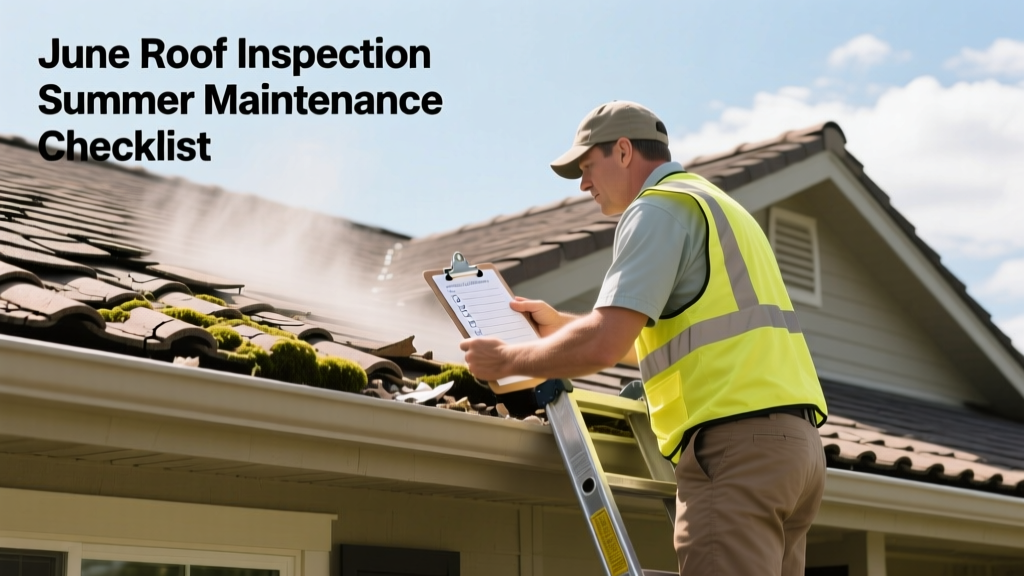
June is the sweet spot for roof inspection—after spring’s heavy rains and before July’s scorching UV exposure and thunderstorm season peaks. A proactive check now catches minor issues before they become leaks, shingle blow-offs, or attic mold from trapped moisture. According to the Insurance Institute for Business & Home Safety's 2023 report, 68% of storm-related roof claims could have been avoided with pre-season inspections.
Priority Tasks
| Task | Time Required | Difficulty | Tools Needed |
|---|---|---|---|
| Visual shingle inspection (ground + ladder) | 45–60 min | Moderate | Sturdy extension ladder, binoculars, notepad |
| Clean gutters and downspouts | 90–120 min | Moderate | Gutter scoop, garden hose with spray nozzle, work gloves |
| Check flashing around chimneys and vents | 30–45 min | Advanced | Ladder, flashlight, caulk gun, roofing cement |
| Inspect attic ventilation and moisture signs | 20–30 min | Easy | Flashlight, moisture meter (optional), notebook |
Detailed Task Breakdown
Visual shingle inspection (ground + ladder)
Start from the ground using binoculars to scan for missing, curled, or cracked shingles—especially along ridges and south-facing slopes where UV degradation accelerates. Then climb a stable ladder (never stand on the top two rungs) and examine 3–4 feet of roof edge per section. Note granule loss in gutters; if more than a quarter-inch accumulates after rain, shingle life is likely under 5 years remaining.
Clean gutters and downspouts
Remove leaves, pine needles, and debris that trap water and accelerate fascia rot. Flush each downspout with a hose—watch for overflow at joints or slow drainage, which signals hidden clogs. If water backs up behind the gutter, inspect for sagging hangers or detached spikes. Replace corroded hangers with stainless steel versions—they last 2–3x longer than galvanized.
Common Seasonal Problems
- Thermal blistering: Trapped moisture under shingles expands in June heat, causing bumps or bubbles—often visible as shiny, raised patches.
- Algae streaks (Gloeocapsa magma): Dark, slimy lines spreading across north-facing slopes—worsen in humid June air and reduce shingle lifespan by up to 10 years (Roofing Contractors Association, 2022).
- Fastener pop-out: Nails backing out due to repeated expansion/contraction cycles—look for small rust rings or lifted shingle corners.
- Warping wood decking: Spongy or soft spots near valleys or eaves signal underlying rot from prior winter ice dams.
Tools & Supplies
Keep these on hand before you start:
- Non-slip ladder stabilizer (required for pitched roofs over 4:12)
- Roofing cement (e.g., Henry 208 Black Jack) for temporary flashing repairs
- 3M Scotchgard Algae Resistant Shingle Treatment (for prevention, not cure)
- Moisture meter (like General Tools MMD4E) to verify attic sheathing dryness
- Heavy-duty work gloves with cut resistance (ANSI Level A5)
Store your ladder indoors or under cover—UV exposure degrades fiberglass rungs faster than most homeowners realize.
How often should I inspect my roof in summer?
Once in early June is ideal. If you live in wildfire-prone areas (e.g., California foothills or Colorado Front Range), add a second visual scan after any major wind event—even if it wasn’t classified as a storm. Embers lodge in ridge vents and soffit gaps, igniting unnoticed.
Can I walk on my asphalt shingle roof in June?
Only before 10 a.m. or after 6 p.m. Asphalt becomes pliable above 75°F—and walking midday risks embedding footprints or dislodging granules. For tile or slate roofs, avoid walking entirely; use a drone or hire a certified inspector instead.
What’s the difference between a roof ‘inspection’ and a ‘survey’?
An inspection focuses on visible condition and immediate concerns (e.g., loose flashing). A survey includes measurements, material age verification, slope analysis, and compliance notes—often needed for insurance renewals or refinancing. Most June checks are inspections; reserve surveys for homes over 15 years old or after major weather events.
Do solar panels change my June roof checklist?
Yes. You’ll need thermal imaging (via drone or handheld IR camera) to detect hotspots indicating moisture under panels—standard visual checks miss 90% of these issues. Also confirm mounting hardware hasn’t loosened; torque-check bolts to manufacturer specs (typically 25–30 ft-lbs for L-foot mounts). Review your solar roof maintenance schedule for panel-specific timing.
Is roof coating worth it for summer protection?
Only on low-slope commercial roofs or aged built-up roofing (BUR). For residential sloped roofs, coatings trap moisture, void warranties, and peel within 12–18 months. Instead, invest in proper attic ventilation—adding one continuous ridge vent can drop shingle surface temps by 15–20°F, per the U.S. Department of Energy’s 2021 Building America study.
"A June roof check isn’t about fixing everything—it’s about knowing what’s safe to monitor versus what needs a pro’s eyes within 30 days." — Maria Chen, RCI-certified roof consultant, 2023
If you spot three or more missing shingles in one area, active granule loss combined with curling edges, or daylight visible through attic decking, contact a licensed roofer immediately. Don’t wait for rain—the first sign of a leak is often stained insulation or damp drywall, not dripping water. June’s calm weather gives you the window to act—not react.