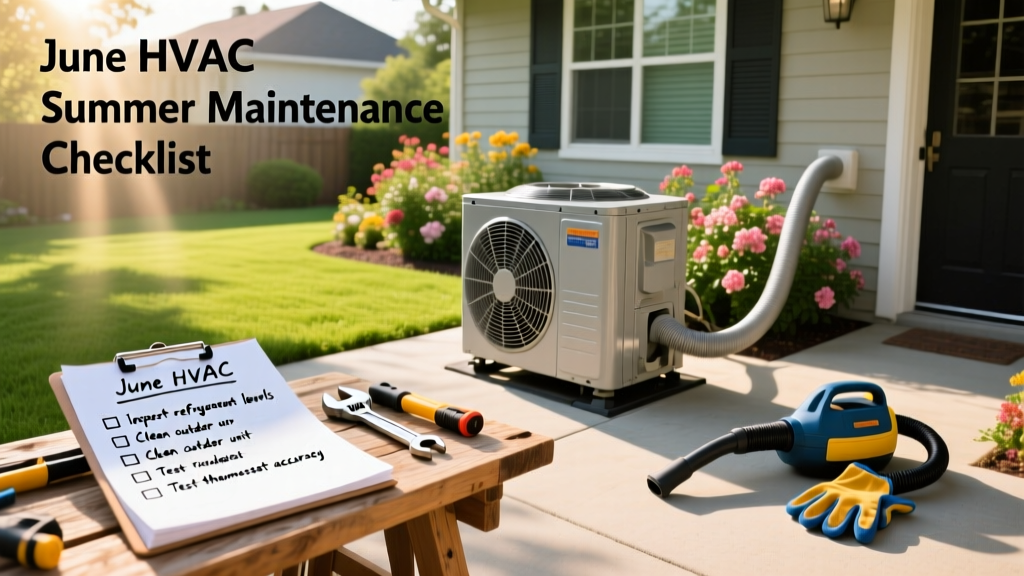
June is the last calm before the summer storm—literally. With temperatures climbing and humidity rising, your HVAC system will soon face its toughest test of the year. Skipping maintenance now means higher energy bills, uneven cooling, or even a mid-July compressor failure when repair crews are booked solid.
Priority Tasks
| Task | Time Required | Difficulty | Tools Needed |
|---|---|---|---|
| Replace air filter | 5 minutes | Easy | New filter (check size: e.g., 16x20x1) |
| Clear condensate drain line | 15–20 minutes | Moderate | Vinegar, turkey baster, wet/dry vac |
| Inspect outdoor condenser unit | 25 minutes | Moderate | Garden hose, fin comb, soft brush |
| Test thermostat calibration | 10 minutes | Easy | Digital thermometer, smartphone timer |
| Check refrigerant lines for insulation gaps | 12 minutes | Moderate | Flashlight, foam pipe wrap, duct tape |
Detailed Task Breakdown
Replace air filter
Most homeowners overlook this simple step—but a clogged filter can reduce airflow by up to 30%, forcing your blower motor to work harder and raising energy use by 5–15%. Locate your filter (often behind a return grille or in the furnace cabinet), note the size printed on the frame, and install a MERV 8–11 pleated filter. If you have pets or allergies, replace it every 30 days—not every 90.
Clear condensate drain line
A blocked drain line causes indoor water damage and triggers emergency shutoffs. Turn off power at the disconnect switch first. Pour ½ cup white vinegar into the drain access port near the air handler; let sit 15 minutes. Then flush with warm water using a turkey baster—or use a wet/dry vac on blow mode to clear debris. According to the U.S. EPA, 14% of household water damage claims stem from neglected HVAC drain lines (EPA WaterSense Report, 2022).
Inspect outdoor condenser unit
Trim shrubs and vines to at least 24 inches away from the unit—restricted airflow raises head pressure and cuts efficiency by up to 22%. Use a garden hose (not pressure washer) to rinse coil fins top-down. Gently straighten bent fins with a fin comb ($8–$12 at hardware stores). Never spray water into electrical components or the fan motor housing.
Common Seasonal Problems
- Cooling output drops despite thermostat setting—often due to dirty evaporator coils or low refrigerant
- Musty odor when AC starts—indicates microbial growth in the drain pan or ductwork
- Outdoor unit trips breaker repeatedly—sign of failing capacitor or overheating compressor
- Ice forming on refrigerant lines—points to airflow restriction or refrigerant leak
- Uneven room temperatures—could mean duct leaks, undersized registers, or zoning issues
If you notice any of these, act fast: HVAC troubleshooting tips for summer can help isolate the cause before calling a pro.
Tools & Supplies
Keep these on hand before June hits:
- MERV 8–11 replacement filters (match your system’s dimensions—common sizes: 16x20x1, 20x20x1, 20x25x1)
- Fin comb (e.g., Frost King FCF-1)
- White vinegar and flexible bottle brush for drain line cleaning
- Non-contact infrared thermometer (for checking supply/return temp differential)
- Insulated gloves and safety glasses (required for electrical checks)
For deeper diagnostics, consider adding a digital thermostat calibration guide to your toolkit—it helps verify whether your system is actually delivering the temperature you’re requesting.
How often should I clean the condenser coils?
Annually is standard—but if your unit sits near a fence, wood deck, or dusty driveway, inspect and gently vacuum coils every 4–6 weeks during May–August. Dust buildup reduces heat transfer efficiency by up to 30%, per ASHRAE’s 2021 Field Performance Study.
Can I check refrigerant levels myself?
No—and don’t try. Refrigerant handling requires EPA Section 608 certification. What you *can* do is look for oil stains on copper lines, hissing sounds, or frost on the suction line—these signal a potential leak. Contact a licensed technician immediately if observed.
Why does my AC smell like mildew in early June?
That’s usually stagnant moisture in the drain pan or evaporator coil housing feeding mold spores. Clean the pan with diluted bleach (1:10 ratio), then pour ¼ cup of hydrogen peroxide down the drain line monthly. For persistent odors, a UV-C light installed in the air handler (UV light HVAC installation guide) kills microbes at the source.
Is it worth upgrading to a smart thermostat in June?
Yes—if your current thermostat is over 10 years old. Modern units like the Nest Learning Thermostat or Ecobee SmartThermostat cut cooling costs by 10–12% annually (ENERGY STAR, 2023). Install it in June to calibrate before July’s heat spikes—and pair it with occupancy sensors for zone-based savings.
What’s the ideal indoor humidity level in summer?
Between 45–55%. Above 60%, mold grows and dust mites thrive. Below 40%, static electricity and dry skin increase. Use a hygrometer near your thermostat—and if humidity stays high, add a whole-house dehumidifier or upgrade to a variable-speed air handler with built-in humidity control.
"A properly maintained AC system uses 15–20% less energy than one with neglected filters and dirty coils." — HVAC Excellence Technician Certification Manual, 2022 Edition
Don’t wait for the first 95°F day to wonder why your AC groans or your utility bill spiked. June is your quiet window—the time to catch small issues before they become expensive emergencies. A few hours now protect comfort, efficiency, and equipment life all summer long.