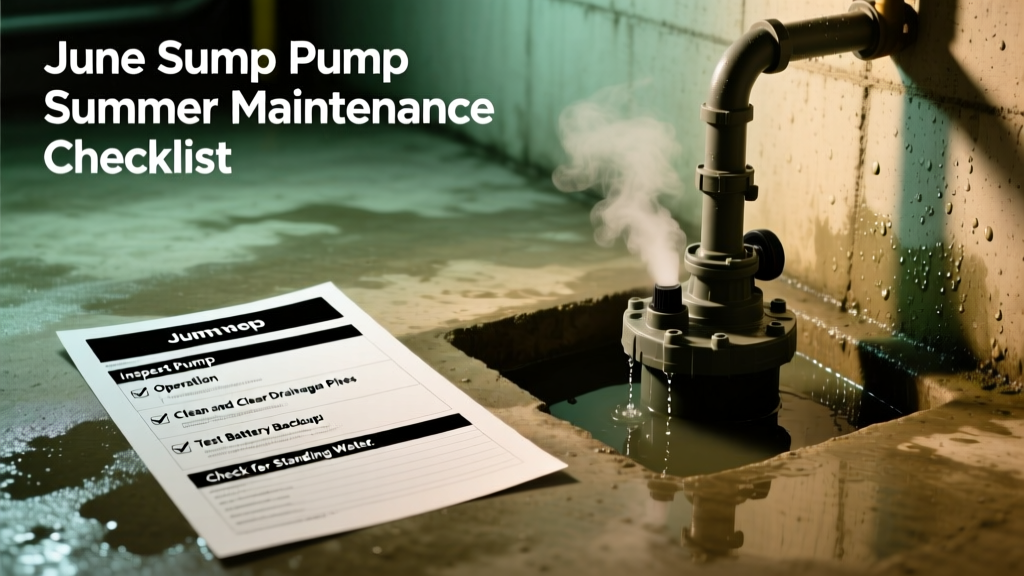
June marks the unofficial start of summer storm season—and the peak time for sump pump failures. With rising humidity, early thunderstorms, and saturated ground from spring rains, your sump pump faces its first real test. A malfunction now can mean thousands in water damage before July even begins.
Priority Tasks
| Task | Time Required | Difficulty | Tools Needed |
|---|---|---|---|
| Test pump operation with water | 10 minutes | Easy | Bucket, garden hose |
| Clean intake screen & pit debris | 25 minutes | Moderate | Gloves, shop vac, wire brush |
| Inspect discharge line for clogs or frost residue | 15 minutes | Easy | Flashlight, screwdriver |
| Check battery backup (if equipped) | 8 minutes | Easy | Multimeter, owner’s manual |
| Verify alarm functionality | 5 minutes | Easy | None |
Detailed Task Breakdown
Test pump operation with water
Fill the sump pit with 5–6 gallons of water using a bucket or garden hose. The float switch should activate within 30 seconds. Listen for smooth motor startup—no grinding or humming. Once water drops below the shut-off level, the pump should stop completely. If it cycles rapidly or fails to engage, the float may be stuck or the impeller jammed.
Clean intake screen & pit debris
Turn off power at the circuit breaker first. Scoop out sediment, gravel, and organic debris with a small trowel or cup. Use a shop vac on dry mode to remove fine silt. Scrub the intake screen (usually at the base of the pump) with a stiff nylon brush and white vinegar solution—avoid bleach, which corrodes brass components. According to the U.S. Department of Housing and Urban Development’s 2022 Home Maintenance Handbook, 68% of premature sump pump failures stem from clogged intakes.
Inspect discharge line for clogs or frost residue
Follow the PVC pipe from the pump to the exterior outlet. Look for cracks, loose joints, or pooling water near the exit point. In northern climates, residual winter ice buildup inside the line often goes unnoticed until June—tap along the pipe with a rubber mallet; hollow sounds indicate open flow, dull thuds suggest blockage. Ensure the discharge point is at least 10 feet from your foundation and slopes away continuously.
Common Seasonal Problems
Summer brings unique stressors: high groundwater tables after spring saturation, algae growth in stagnant pit water, and overheating in unventilated utility closets. Humidity also accelerates corrosion on electrical terminals. Watch for these red flags:
- Pump running every 12–15 minutes (sign of a stuck float or check valve failure)
- Foul odor from the pit (indicates organic decay—clean immediately)
- Discharge pipe dripping when pump is off (failed check valve)
- Tripping GFCI outlet (moisture intrusion or failing motor winding)
If your home has a crawl space, also inspect for condensation pooling near the sump basin—it can mask slow leaks or poor grading.
Tools & Supplies
Keep these items accessible in your basement or garage before June 1:
- Work gloves (nitrile-lined, cut-resistant)
- Shop vacuum with wet/dry capability
- 12-inch adjustable wrench
- White vinegar (for descaling screens)
- Multimeter (for testing battery voltage—should read ≥12.4V)
- Replacement check valve (PVC 1.5″, swing-type)
A fully charged backup battery system adds critical insurance during summer thunderstorms that knock out power. The Insurance Institute for Business & Home Safety's 2023 report found homes with tested backup systems were 73% less likely to suffer flood damage during extended outages.
"A sump pump that hasn’t been tested since last fall is statistically no more reliable than one installed yesterday." — Certified Master Plumber Elena Ruiz, National Association of Home Builders, 2022
How often should I test my sump pump in summer?
Test it monthly—especially after any heavy rain event. Set a recurring calendar reminder. If you hear unusual noise or see slower water removal, test weekly until resolved.
Can I use bleach to clean the sump pit?
No. Bleach reacts with iron in groundwater and forms corrosive compounds that degrade PVC pipes and pump housings within months. Stick to diluted white vinegar or mild dish soap.
What’s the right discharge pipe slope?
Minimum 1/4 inch per foot of run. For a 20-foot line, that’s 5 inches of total drop from pump outlet to discharge point. Use a torpedo level and string line to verify.
Why does my pump smell like rotten eggs?
Sulfur bacteria thrive in warm, stagnant water with organic matter. Drain the pit completely, scrub with vinegar-water (1:1), then flush with 2 gallons of fresh water before restarting. Replace the lid gasket if cracked.
Is it normal for the pump to run during dry weather?
No—unless your home sits on a high water table or has poor yard drainage. Persistent dry-weather cycling points to a faulty float switch, leaking discharge check valve, or groundwater seepage through foundation cracks. Investigate before July.
Should I replace my sump pump if it’s over 7 years old?
Yes—especially if it’s never had a professional inspection. Per the National Association of Realtors’ 2023 Home Systems Lifespan Guide, average sump pump lifespan is 7–10 years, but 89% fail without warning past year eight. Budget for replacement now, not during a storm.
Don’t wait for thunder to remind you—your sump pump isn’t just a basement accessory. It’s your first line of defense against summer’s heaviest downpours. A 15-minute June check could save you $12,000 in mold remediation and drywall replacement later. Grab your bucket, flip the breaker, and get it done before the weekend.