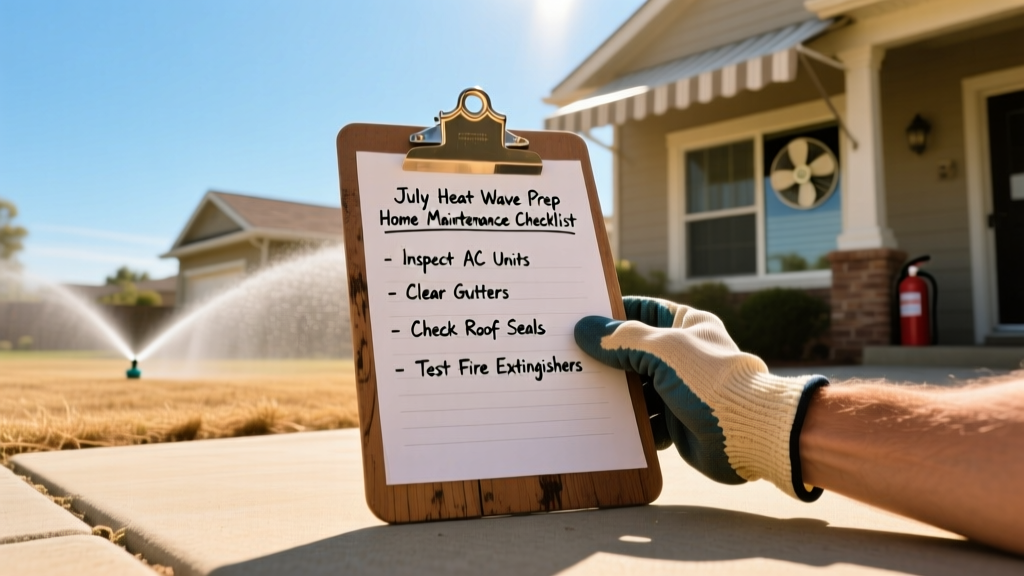
July is when heat stress peaks—not just on your AC unit or roof, but on windows, seals, insulation, and even your water heater’s pressure relief valve. A single 100°F+ day can expose hidden weaknesses that lead to $300+ emergency repairs later. Proactive checks now prevent costly failures during the most demanding weeks of the year.
Priority Tasks
| Task | Time Required | Difficulty | Tools Needed |
|---|---|---|---|
| Clean AC condenser coils & clear 24" perimeter | 45 min | Easy | Garden hose, coil brush, shop vac |
| Test attic ventilation (soffit + ridge flow) | 20 min | Moderate | Thermometer, smoke pencil or incense stick |
| Inspect window/door weatherstripping for gaps | 30 min | Easy | Flashlight, dollar bill, replacement foam tape |
| Flush water heater sediment (gas & electric) | 60 min | Moderate | Garden hose, bucket, wrench, gloves |
| Check irrigation system for overspray & clogged heads | 35 min | Easy | Screwdriver, rag, replacement nozzles |
Detailed Task Breakdown
Clean AC condenser coils & clear 24" perimeter
Turn off power at the disconnect switch first—never skip this. Remove debris from fins using a soft brush; never bend them. Rinse gently from the inside out with low-pressure water (high pressure warps fins). Then walk the full 24-inch radius around the unit: cut back shrubs, remove mulch piles, and sweep away gravel or leaves. According to the U.S. Department of Energy, dirty coils reduce efficiency by up to 30% and shorten compressor life by 2–4 years.
Test attic ventilation
On a sunny afternoon, place a thermometer in the attic and another outside. If the attic reads more than 25°F above ambient temperature, airflow is insufficient. Light an incense stick near a soffit vent—if smoke doesn’t draw upward toward the ridge vent within 5 seconds, check for blocked baffles or insulation covering intake vents. The attic ventilation guide walks through baffle installation and static vs. powered options.
Common Seasonal Problems
- AC short-cycling caused by refrigerant leaks or dirty evaporator coils (check for ice buildup)
- Window seal failure—look for fogged double-pane glass or warm drafts along sashes
- Water heater pressure relief valve leaking after repeated thermal expansion cycles
- Garage door opener motor overheating—listen for grinding or delayed response on hot days
- Outdoor electrical outlets tripping due to moisture ingress in cracked covers
Tools & Supplies
Keep these on hand before the first 95°F day hits:
- Coil cleaner spray (non-acidic, like Nu-Calgon Evap Foam)
- Replacement weatherstripping (V-seal for doors, bulb-type for windows)
- Insulated gloves (for handling hot water heater drain valves)
- IR thermometer (to spot-check duct temps and attic surfaces)
- UL-listed outdoor outlet covers with gasket seals
What to Do When…
My AC runs constantly but never cools below 78°F
First, check your thermostat’s fan setting—it may be stuck on “ON” instead of “AUTO.” Next, inspect the air filter: if it’s gray-black and light won’t pass through, replace it immediately. If cooling still lags, measure supply and return vent temps with an IR thermometer. A delta-T under 14°F suggests low refrigerant or a failing blower motor. Call a licensed HVAC tech—don’t top off refrigerant without leak detection.
I hear clicking from the water heater when it’s hot outside
That’s likely thermal expansion triggering the pressure relief valve. Install an expansion tank on the cold inlet line—this absorbs pressure spikes and prevents premature valve failure. The U.S. EPA estimates that 14% of household water usage is from leaks, many originating from stressed relief valves.
My ceiling fans wobble more than usual
Heat expands metal components and loosens mounting hardware. Turn off power, then tighten the canopy screws, downrod connections, and blade bracket bolts. Balance blades using a $5 clip-on balancer kit—uneven weight causes vibration that worsens over time. Refer to our ceiling fan maintenance post for torque specs per brand.
The garage door reverses mid-close on hot afternoons
Heat swells wooden tracks and softens rubber rollers, increasing resistance. Lubricate rollers and hinges with white lithium grease—not WD-40—and test force settings using the “hand-in-the-path” method per manufacturer instructions. If reversal persists, check photo-eye alignment: sunlight glare can mimic obstruction signals.
"Every 10°F above design temperature reduces AC lifespan by 5%—and July’s average high in Phoenix, Dallas, and Atlanta exceeds that threshold for 22+ days annually." — ASHRAE Handbook: HVAC Applications, 2022 Edition
My irrigation timer shows 'ERR' during heat waves
Most controllers fail when internal temps exceed 120°F—especially those mounted on south-facing walls or in unventilated sheds. Relocate it to a shaded, well-ventilated area or install a reflective cover. Also verify rain sensor wiring: heat-induced expansion can loosen terminals and cause false triggers.
Staying ahead in July isn’t about doing more—it’s about doing the right things before the strain begins. A clean condenser, sealed envelope, and verified safety valves buy you reliability all summer long. Revisit your spring home checklist to cross-reference deferred items, and schedule your next HVAC tune-up before August billing spikes hit.