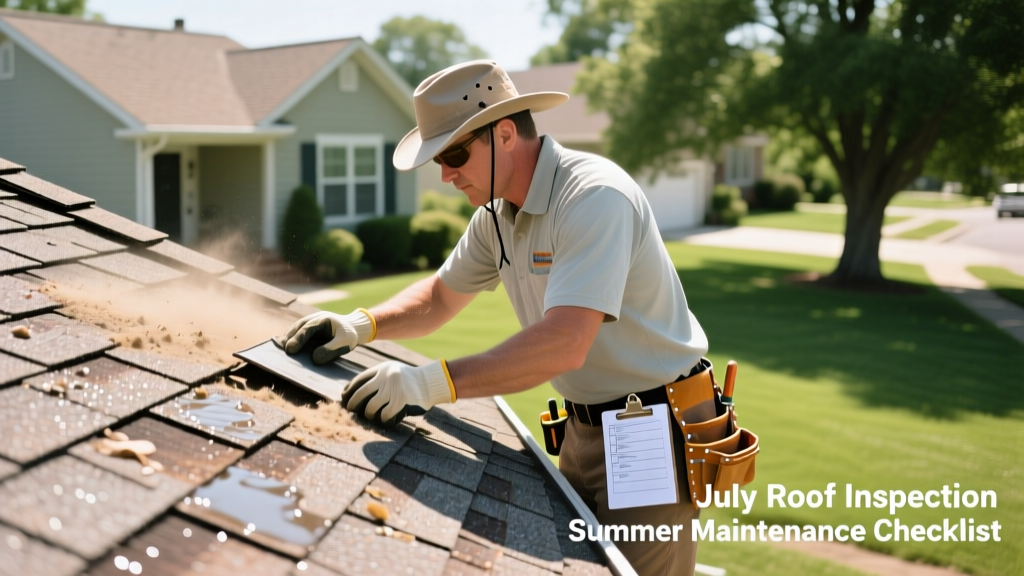
July is the peak of thermal stress for most roofs—especially asphalt shingles, which can soften above 150°F. With intense UV exposure, rapid temperature swings, and early monsoon moisture in many regions, this month is your last best chance to spot heat-related deterioration before fall winds arrive. According to the Insurance Institute for Business & Home Safety's 2023 report, 68% of roof failures traced to summer heat damage went unnoticed until after heavy rain caused interior leaks.
Priority Tasks
| Task | Time Required | Difficulty | Tools Needed |
|---|---|---|---|
| Visual shingle inspection (ground & ladder) | 45–60 min | Moderate | Ladder, binoculars, notepad, camera |
| Check flashing around chimneys & vents | 25–35 min | Moderate | Flashlight, gloves, small pry bar (if resealing) |
| Clean gutters & downspouts | 60–90 min | Easy | Gutter scoop, trowel, garden hose with spray nozzle |
| Inspect attic ventilation & moisture | 30–45 min | Moderate | Thermometer/hygrometer, flashlight, moisture meter (optional) |
Detailed Task Breakdown
Visual shingle inspection
Start from ground level using binoculars to scan for curling, blistering, or granule loss—especially on south- and west-facing slopes. Then climb safely (use a 4-to-1 ladder angle) and examine 3–5 random sections per roof plane. Look for soft spots underfoot (a sign of deck rot beneath), missing tabs, and exposed nail heads. Take dated photos for year-over-year comparison. If you find more than 5 damaged shingles per 100 sq ft, contact a licensed roofer—don’t wait until August when contractor backlogs spike.
Flashing and sealant check
Focus on roof penetrations: chimneys, plumbing vents, skylights, and dormer walls. Gently lift edges of metal flashing with a flat pry bar—look for cracked caulk, rust stains, or gaps where water could wick underneath. The U.S. EPA estimates that 14% of household water usage is from leaks—including those starting at compromised flashing. Replace failed roofing cement with butyl-based sealant (e.g., Henry’s 208) and press flashing firmly into place. Avoid silicone—it doesn’t adhere well to aged asphalt or concrete.
Common Seasonal Problems
- Heat blistering: Blisters form when trapped moisture under shingles expands in July sun—often appearing as raised, shiny bumps on dark shingles.
- Granule shedding acceleration: High temps + UV degrade asphalt binders faster; check downspouts and gutters for excessive black grit.
- Algae streaking resurgence: Humid microclimates (e.g., north-facing slopes, shaded eaves) support Gloeocapsa magma growth—visible as gray-green streaks.
- Fastener pop-out: Thermal expansion/contraction cycles loosen nails over time—watch for nail heads protruding through shingle surfaces.
Tools & Supplies
Keep these on hand before your July roof walk: extension ladder rated for roof work (not step ladders), non-slip shoes with rubber soles, leather work gloves, a digital moisture meter (like Protimeter Surveymaster), and a small container of roofing cement for emergency patching. For algae treatment, mix 1 part oxygen bleach (e.g., OxiClean) with 2 parts water—never chlorine bleach, which damages shingles and nearby plants. Store supplies in your garage tool organization system for quick access next season.
- Roofing cement (butyl or asphalt-based)
- Replacement shingles (match brand/model if possible)
- Roofing nails (1¼" galvanized, ring-shank)
- Oxygen bleach solution & soft-bristle brush
- Attic moisture meter (optional but recommended)
How often should I inspect my roof in summer?
Once in early July is ideal—after spring storms have passed but before peak heat stress accumulates. Homes near trees or in high-humidity zones (e.g., Gulf Coast, Pacific Northwest) benefit from a second look in late July, especially after any thunderstorms with wind gusts over 40 mph.
Can I walk on my roof in July?
Yes—but only before 10 a.m. or after 6 p.m. Asphalt shingles become pliable and sticky above 85°F, increasing slip risk and potential damage. Always test footing first: step only on shingle seams, never on ridges or edges. If your roof has clay tile or slate, skip walking entirely—hire a pro. More details in our roof walking safety guide.
What does curling shingle edges mean?
Curling (especially upward cupping at corners) signals aging binder failure—often accelerated by poor attic ventilation or low-grade shingles. It’s not just cosmetic: curled edges let wind-driven rain penetrate under the shingle layer. If >20% of visible shingles show curling, replacement may be needed within 12–18 months.
Why check attic ventilation in July?
Hot attic air (above 130°F) shortens shingle life by up to 40%, per the Oak Ridge National Laboratory’s 2022 Building Technologies study. In July, measure attic temps midday—if they exceed outdoor temps by more than 25°F, your intake/exhaust balance is off. Check soffit vents for insulation blockage and ridge vents for debris buildup.
Should I clean algae off my roof now?
Only if streaks cover >15% of the roof surface or are spreading rapidly. Oxygen bleach applied via pump sprayer (not pressure washer) kills algae without harming shingles. Wait for dry, overcast conditions—direct sun evaporates solution too fast. For long-term prevention, install zinc or copper strips under the top course of shingles; rainwater slowly releases ions that inhibit growth.
"Most July roof failures aren’t from new damage—they’re from undetected spring storm damage worsened by heat. A 10-minute visual scan from the ground catches 70% of critical issues before they escalate." — Certified Master Roofer, National Roofing Contractors Association, 2023 Field Survey
If your roof is over 12 years old or you’ve had two or more repairs since installation, consider scheduling a professional assessment before August—contractor availability drops sharply after Labor Day. Pair this with your July gutter cleaning routine for full upper-structure protection. Stay safe, stay proactive, and remember: heat damage rarely makes noise—until it’s leaking inside.