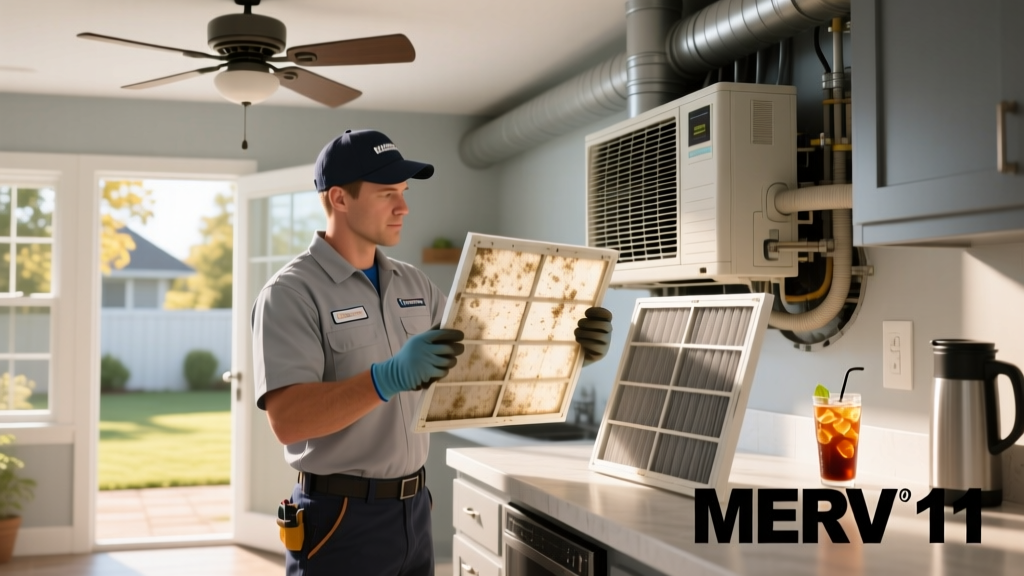
July is peak strain time for home cooling systems—especially in humid or high-90°F regions. Air conditioners run nearly nonstop, pulling warm, moisture-laden air through filters that clog faster than any other month. A dirty filter in July doesn’t just raise your bill; it risks freezing coils, tripping breakers, or triggering compressor failure before the heat wave peaks.
Priority Tasks
| Task | Time Required | Difficulty | Tools Needed |
|---|---|---|---|
| Inspect and replace standard 1–2″ fiberglass or pleated filter | 5–10 minutes | Easy | None (just new filter) |
| Clean or replace electronic air cleaner plates | 20–30 minutes | Moderate | Screwdriver, mild detergent, soft brush |
| Vacuum return air grilles and duct openings | 15 minutes | Easy | Vacuum with brush attachment |
| Check condensate drain line for algae blockage | 10 minutes | Moderate | Shop vac, white vinegar, turkey baster |
Detailed Task Breakdown
Replace Standard Filters Every 30 Days
During July, most homes need filter changes every 30 days—not the 90-day interval recommended for spring/fall. That’s because pollen counts drop but dust, pet dander, and outdoor particulates spike with open windows and AC recirculation. Use a MERV 8 filter unless you have allergies (then go MERV 11—but confirm your system handles it). Slide the old filter out, note airflow direction arrows, and install the new one snugly—no gaps at the edges.
Clean Electronic Air Cleaner Plates
If your system uses an electronic air cleaner (EAC), plates collect sticky grime fast in humid July air. Power off the unit at the breaker, remove plates per manufacturer instructions, and soak them in warm water + 2 tbsp baking soda for 15 minutes. Gently scrub with a soft nylon brush—never steel wool. Rinse thoroughly, air-dry completely, and reinstall. According to the ASHRAE Handbook HVAC Applications (2022), uncleaned EAC plates can reduce system airflow by up to 35% in under six weeks.
Common Seasonal Problems
- Ice forming on evaporator coils—often caused by a clogged filter restricting airflow
- Musty odor from vents—sign of mold growth in wet drain pans or dirty filters
- AC cycling on/off every 5–8 minutes—frequent filter neglect raises static pressure beyond safe limits
- Higher-than-usual electric bills—U.S. DOE estimates dirty filters increase cooling costs by 5–15% in peak months
Tools & Supplies
Keep these on hand before July hits:
- Replacement filters sized for your system (check label on current filter or manual)
- White vinegar (for cleaning condensate lines)
- Shop vacuum with narrow crevice tool
- Flashlight with fresh batteries (to inspect dark return ducts)
- Gloves and N95 mask (for dusty filter swaps or attic access)
How often should I change my filter if I run AC 24/7?
Every 21–30 days—especially with pets, construction nearby, or wildfire smoke. In Phoenix and Atlanta, HVAC techs report replacing filters every 21 days during extended 100°F+ stretches (Arizona State University HVAC Field Survey, 2023).
Can I wash and reuse my July filter?
Only if it’s labeled “washable” and designed for repeated use—most fiberglass and standard pleated filters are disposable. Reusing a disposable filter damages fibers, drops MERV rating, and lets particles bypass the media.
"Washing a disposable filter is like reusing a coffee filter—it looks clean but loses structural integrity." — HVAC Technician Maria Lin, 12-year field service lead at Comfort First Services
Why does my filter look clean but my AC still struggles?
Surface appearance is misleading. Microscopic dust and biofilm build up in deep pleats, restricting airflow before visible grime appears. Use a flashlight to peer into the filter’s depth—if light doesn’t pass evenly through all layers, replace it.
What MERV rating is safest for older systems in July?
Stick with MERV 6–8 for units installed before 2010. Higher ratings increase resistance, straining aging blower motors. If you upgrade to MERV 11, pair it with a variable-speed blower motor to maintain static pressure balance.
Should I check filters in both the air handler and return grille?
Yes—some homes have dual filtration: one at the return vent and another inside the air handler cabinet. Missing either causes bypass airflow and uneven loading. Mark your calendar for both locations using different colors (e.g., blue for return, red for handler).
Is it okay to skip July filter changes if I’m away on vacation?
No—systems still cycle on humidity control even when set to ‘fan auto’ or ‘off.’ A clogged filter left unchecked for 2+ weeks can trigger coil freeze-up or refrigerant pressure faults. Set a smart thermostat reminder or ask a neighbor to swap it while you’re gone.
Staying ahead of filter maintenance in July isn’t about perfection—it’s about preventing cascading failures when repair crews are booked solid and temps hit 102°F. One 10-minute swap now saves hours of emergency calls later—and keeps indoor air quality steady for kids, seniors, and anyone sensitive to airborne particles. For more seasonal prep, see our June roof inspection checklist and August dehumidifier tune-up guide.