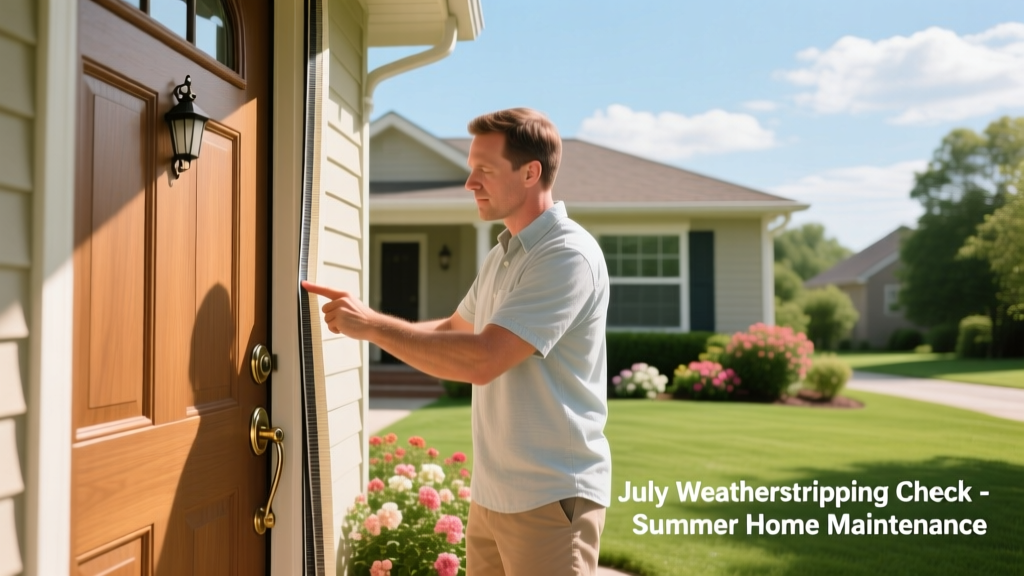
July’s heat and humidity expose hidden flaws in weatherstripping—especially where AC runs constantly and exterior doors sweat or swell. According to the U.S. Department of Energy, poorly sealed doors and windows can account for up to 20% of residential cooling loss in summer months (2022 Residential Energy Consumption Survey). This is the ideal time to catch compression failures, UV degradation, and moisture-induced warping before they drive up bills or invite pests.
Priority Tasks
| Task | Time Required | Difficulty | Tools Needed |
|---|---|---|---|
| Inspect all exterior doors (entry, garage, patio) | 15–20 min | Easy | Flashlight, notepad |
| Test window seals with dollar bill method | 10–15 min per window | Easy | Dollar bill, pen |
| Replace cracked or brittle foam tape on storm windows | 30–45 min | Moderate | Razor blade, rubbing alcohol, new V-seal tape |
| Re-caulk perimeter gaps around door frames | 45–60 min | Moderate | Caulk gun, silicone caulk, utility knife |
Detailed Task Breakdown
Inspect exterior doors for compression failure
Start at your main entry door. Close it firmly and look for light gaps along the strike side, top, and threshold. Run your hand along each seam—feel for drafts or warm air escaping. Pay special attention to the bottom sweep: if it’s warped, cracked, or no longer touches the threshold, replace it immediately. Aluminum threshold sweeps last ~5 years; rubber bulb types degrade faster in direct sun.
Test windows using the dollar bill method
Close the window fully. Slide a crisp $1 bill between the sash and frame at multiple points—top, middle, and bottom on both vertical edges. If it slides out easily (no resistance), the seal is compromised. For double-hung windows, repeat on the meeting rail. Note locations on your notepad—these are priority spots for replacement or adjustment.
Common Seasonal Problems
July brings three predictable stressors for weatherstripping: thermal expansion (causing vinyl or wood frames to bind and pinch seals), high humidity (softening adhesive on foam tape), and intense UV exposure (cracking rubber bulb seals within 2–3 seasons). You’ll often see ‘ghost gaps’—tiny separations that only open when the door heats up midday. These are invisible in morning inspections but measurable with an infrared thermometer or thermal camera app.
- Warped wooden door bottoms lifting away from threshold sweeps
- Brittle, chalky foam tape peeling at corners
- Condensation pooling under sliding glass doors due to failed bottom gasket
- AC running longer cycles despite thermostat setting
Tools & Supplies
Keep these on hand before starting. Most items cost under $25 and last multiple seasons:
- Replacement weatherstripping: V-seal for windows, kerf-mount bulb seal for doors, adhesive-backed foam tape (3/8" thick)
- Non-residue cleaner (e.g., Goo Gone Pro-Power) for old adhesive removal
- Silicone-based lubricant (not petroleum-based—it degrades rubber)
- Small putty knife and microfiber cloths
According to the Insurance Institute for Business & Home Safety's 2023 report, homes with properly maintained weatherstripping during peak summer months saw a 12% average reduction in HVAC runtime compared to those with untreated gaps.
"If you hear wind whistling around a door in July—even once—it’s already costing you $15–$25/month in added cooling load." — HVAC Technician Maria Lin, Austin Energy Home Performance Program, 2023
How often should I replace weatherstripping?
Most standard foam tape lasts 2–3 years in full-sun exposures. Bulb seals on entry doors typically last 4–6 years. Sliding glass door gaskets wear fastest—inspect them every July and replace if compressed more than 30% from original thickness. Track this in your free home maintenance log template.
Can I install new weatherstripping over old material?
No—always remove old adhesive residue completely. Residual glue creates uneven surfaces and prevents proper compression. Use isopropyl alcohol and a plastic scraper; avoid steel wool or abrasive pads on painted trim. Test adhesion by pressing a small strip down, waiting 2 hours, then tugging gently.
Why does my front door stick only in July?
Wood absorbs ambient humidity, swelling across the grain. A door that fits perfectly in March may bind at the top hinge or latch side in July. Light sanding (120-grit) along the sticking edge helps—but first check if the weatherstripping itself is over-compressed and holding the door shut.
Is magnetic weatherstripping worth it for metal doors?
Yes—if your door is steel and the frame is ferrous. Magnetic seals provide tighter closure than foam or bulb types and resist UV degradation better. Just verify the magnet strength matches your door weight (look for ≥12 lbs pull force per foot). They’re especially effective on garage entry doors exposed to afternoon sun.
What’s the fastest way to spot a failing threshold seal?
Place a dry paper towel flat on the floor just inside your exterior door. Close the door fully, wait 30 seconds, then open and check. If the towel is damp—or even slightly cool—the threshold seal is leaking humid air. Replace sweep or adjust height before August rains arrive.
July’s heat isn’t just a comfort issue—it’s a diagnostic window. Catching weatherstripping issues now prevents mold growth behind trim, reduces strain on aging AC units, and keeps your September HVAC tune-up focused on efficiency—not emergency fixes. Replacing one worn door sweep takes less than 10 minutes—and pays for itself in two months of lower energy bills.