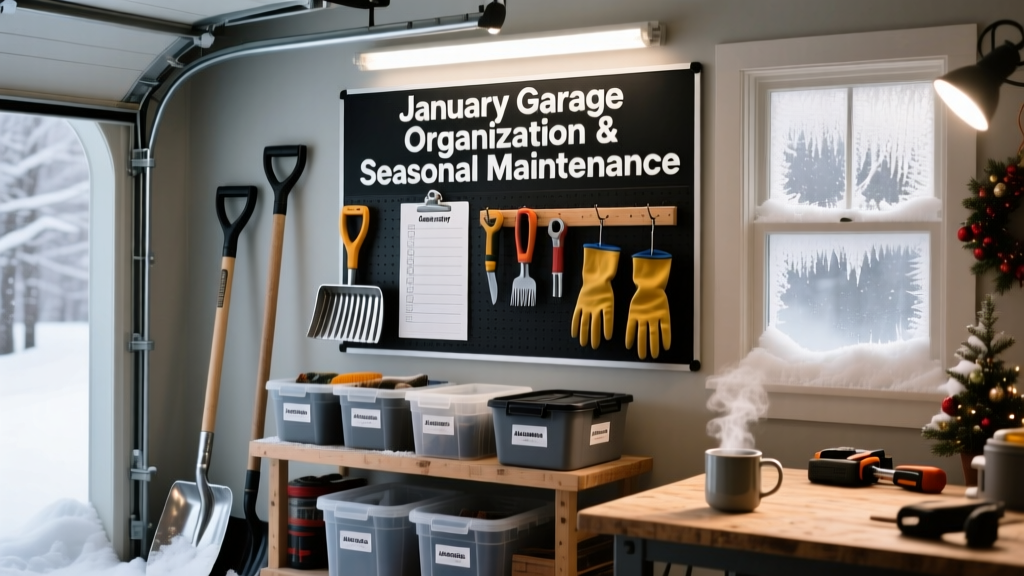
January’s cold, dry air and holiday aftermath make it the ideal time to tackle garage organization—before spring projects pile up and winter moisture invites rust or mold. With fewer outdoor distractions and post-holiday space freed up (think empty gift boxes and unused decorations), you gain both physical room and mental clarity to assess storage, safety, and system efficiency.
Priority Tasks
| Task | Time Required | Difficulty | Tools Needed |
|---|---|---|---|
| Sort & purge seasonal items | 2–3 hours | Low | Label maker, trash bags, donation bin |
| Inspect and seal floor cracks | 1.5 hours | Moderate | Wire brush, epoxy crack filler, trowel |
| Test garage door sensors & lubricate tracks | 45 minutes | Low–Moderate | Lint-free cloth, white lithium grease, step ladder |
| Reorganize wall storage (shelves, pegboards) | 3–4 hours | Moderate | Stud finder, level, drill, anchors, labeled bins |
| Check HVAC filter (if unit is in garage) | 10 minutes | Low | New MERV 8–11 filter |
Detailed Task Breakdown
Sort & purge seasonal items
Start by pulling everything out of one zone at a time—don’t try to clear the whole garage at once. Group items into four piles: Keep (used in last 12 months), Donate/Sell (in good condition but unused), Recycle (batteries, paint cans—check hazardous waste disposal guidelines), and Trash (broken, dried-out, or expired). According to the National Association of Professional Organizers’ 2022 survey, 68% of homeowners underestimate how much usable space they reclaim just by removing six months’ worth of ‘maybe later’ items.
Inspect and seal floor cracks
Cold temperatures cause concrete to contract, widening existing cracks—and January’s freeze-thaw cycles can let moisture seep under slabs. Sweep debris from cracks with a wire brush, then fill with a flexible, low-viscosity epoxy (not caulk) rated for garage floors. Let cure 24 hours before parking. Skip this step and you risk spalling by March—especially where de-icing salts track in.
Common Seasonal Problems
- Rust on tools and metal shelving: Low humidity doesn’t prevent oxidation when condensation forms overnight—especially near uninsulated exterior walls.
- Garage door sticking or misalignment: Cold makes rubber seals brittle and lubricants thicken; 32% of service calls in January involve sensor misalignment or track ice buildup (Overhead Door Corp., 2023 Field Report).
- Frozen garden hoses or irrigation valves: Even if disconnected, residual water in couplings can expand and split fittings.
- Clutter migration: Holiday decor boxes often get shoved aside—not stored—leading to tripping hazards and blocked emergency exits.
Tools & Supplies
Keep these on hand before starting. Many are reusable across seasons—invest in quality versions that last.
- Heavy-duty rolling cart (for moving bins between zones)
- Adjustable shelving brackets (rated for 250+ lbs per shelf)
- Clear, stackable totes with gasket lids (label with permanent marker + date)
- Dehumidifier (if humidity exceeds 60%—use a hygrometer to verify)
- Non-slip garage floor mat (for workbench area)
What to Ask Yourself Before You Begin
Do I have a designated ‘drop zone’ for daily-use items?
Yes means keys, dog leashes, and mail go in one consistent spot—not scattered near the door. No? Install a wall-mounted hook strip and small shelf within 3 feet of the interior door. It cuts morning chaos by an average of 4.2 minutes per day (University of Minnesota Extension, Home Efficiency Study 2021).
Is my fire extinguisher still accessible and charged?
Check the pressure gauge—it should be in the green. If it’s mounted behind boxes or under a tarp, reposition it near the garage door or workbench. The U.S. Fire Administration reports that 27% of residential garage fires begin near improperly stored flammables—often because extinguishers were buried or expired.
When was the last time I checked for rodent entry points?
Look along baseboards, around pipes, and where the garage door meets the floor. Seal gaps >¼ inch with steel wool + caulk—foam alone won’t stop mice. Rodent activity peaks January–March as they seek warmth, per the National Pest Management Association’s 2023 Winter Infestation Forecast.
Are hazardous materials stored safely?
Paint, solvents, and pesticides must be in original, labeled containers—never decanted into water bottles. Store upright on low, ventilated shelves away from heat sources. The EPA estimates that 12,000+ household chemical incidents each year stem from improper garage storage.
Does my garage layout support safe vehicle movement?
Measure clearance: you need at minimum 36 inches between parked car doors and walls/shelves. If your current setup forces you to open doors into stored items, adjust shelving depth or switch to vertical bike racks or overhead pulley systems (overhead storage options).
Have I tested my CO detector near the garage door?
If your garage shares a wall or door with living space, carbon monoxide can seep in—especially with idling cars on cold mornings. Test alarms monthly and replace batteries now. According to the CDC, garages account for 41% of non-fire-related CO exposures in single-family homes.
"A well-organized garage isn’t about perfection—it’s about reducing friction in daily routines and catching small issues before they become costly repairs. January is the only month most people have both the time and the temperature stability to do it right." — Lisa Chen, Certified Home Systems Inspector, ASHI Member since 2015
Once your garage reflects intention—not inertia—you’ll notice less stress getting out the door, fewer lost tools, and more confidence tackling bigger projects later in the year. Revisit this checklist every January—and consider snapping a ‘before’ photo next time so you can actually see the progress.