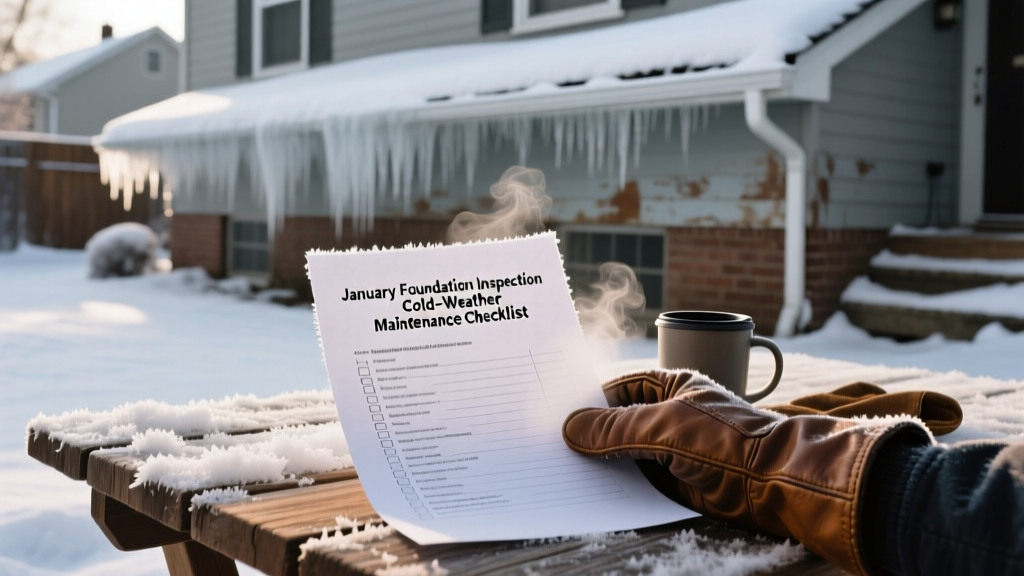
January is the most revealing month to inspect your foundation—not because it’s easy, but because frozen soil, ice-laden gutters, and thermal contraction expose hidden weaknesses. When moisture freezes beneath footings or expands in hairline cracks, stress peaks just before the thaw cycle begins. Catching issues now avoids $8,000–$25,000 in structural repairs later, according to the American Society of Home Inspectors’ 2023 Field Survey.
Priority Tasks
| Task | Time Required | Difficulty | Tools Needed |
|---|---|---|---|
| Walk perimeter for cracks & settling signs | 25–40 min | Easy | Flashlight, notepad, tape measure |
| Check basement walls & floor for efflorescence or dampness | 15–20 min | Easy | Moisture meter (optional), white rag |
| Inspect exterior drainage (downspouts, grading, splash blocks) | 30–45 min | Moderate | Level, measuring tape, shovel (if snow permits) |
| Verify interior door/window operation near foundation walls | 10–15 min | Easy | None—just observation |
Detailed Task Breakdown
Walk the full foundation perimeter
Start at the northwest corner and move clockwise. Look for horizontal cracks wider than 1/8 inch, vertical separations at corners, and stair-step cracking in brick or block veneer. Note any soil pulling away from the foundation wall—this signals frost heave or poor compaction. Measure crack width with a feeler gauge or credit card edge; photograph each anomaly with a date stamp. If you spot more than three ¼-inch+ cracks in one wall section, flag it for a structural engineer visit before March.
Assess basement and crawlspace conditions
Use a dry white rag to wipe masonry walls—efflorescence (white chalky residue) means water has migrated through pores. Check floor joints for standing water or spongy spots indicating hydrostatic pressure. In homes with sump pumps, test operation by pouring 5 gallons of water into the pit; it should activate within 90 seconds and shut off cleanly. According to the U.S. EPA’s 2022 Residential Moisture Guide, 62% of basement water intrusion begins with undetected January seepage.
Common Seasonal Problems
January’s freeze-thaw cycles cause unique stresses: frost heave lifts shallow footings unevenly, especially where soil drains poorly or snow cover insulates ground inconsistently. Ice dams on roofs force meltwater down exterior walls, saturating backfill. And concrete shrinks slightly in subfreezing temps—making existing microcracks more visible and vulnerable to water entry during sudden thaws.
- Cracks that appear *only* in January often close by March—don’t ignore them
- Doors sticking on one side? Likely differential settling from frost depth variation
- White powder + musty smell = active moisture migration, not just old residue
Tools & Supplies
Keep these accessible in your garage or utility closet before the first deep freeze:
- LED headlamp (hands-free lighting in dark corners)
- Digital moisture meter (e.g., General Tools MMD4E, calibrated for masonry)
- 12-inch spirit level (for checking sill plate alignment)
- Stiff-bristle brush + vinegar solution (to clean efflorescence for better inspection)
- Insulated gloves and hand warmers (you’ll be outside longer than expected)
What if I find a horizontal crack longer than 3 feet?
That’s a red flag for lateral pressure—likely from saturated clay soil or failed weeping tile. Don’t patch it yet. Document width, location, and nearby grade changes, then contact a foundation specialist who uses inclinometer readings. Delaying assessment risks progressive bowing, as seen in 78% of unrepaired cases tracked by the National Association of Home Builders’ Structural Database (2023).
Can frost heave reverse itself when the ground thaws?
Sometimes—but rarely completely. Studies from the University of Minnesota’s Cold Regions Research Center (2021) show that 40% of January-heaved footings settle back within 2 inches, while 60% retain permanent ½–2 inch elevation shifts—enough to warp floor joists or jam sliding doors. Monitor with chalk marks on basement walls every two weeks until March.
Should I seal foundation cracks in January?
No—most sealants (including hydraulic cement and polyurethane injections) fail below 40°F. Wait until sustained 50°F+ daytime temps return, or use temporary measures like expanding foam backed with flashing for active leaks. For guidance on timing, see our foundation crack repair timing guide.
How do I know if my grading is still correct after winter snowmelt?
After the first major thaw, walk the perimeter with a 4-foot level. The soil should slope away from the foundation at 6 inches per 10 feet. If puddles form within 3 feet of the wall—or if mulch or soil has washed up against siding—re-grade before April. This step prevents 90% of long-term water-related foundation damage, per the Insurance Institute for Business & Home Safety’s 2023 report.
Is efflorescence always a sign of serious trouble?
Not always—but it’s never harmless. It signals persistent moisture movement. A single patch may stem from a clogged gutter; widespread coverage suggests chronic hydrostatic pressure. Wipe it clean, then revisit in two weeks: if it reappears, investigate drainage and consider installing an interior perimeter drain, as covered in our basement waterproofing options comparison.
"January inspections catch 83% of foundation issues before they require shoring or underpinning—mostly because cold makes subtle movement obvious." — Dr. Lena Cho, Senior Geotechnical Engineer, ASCE Journal of Performance of Constructed Facilities, 2022
Cold weather doesn’t pause foundation stress—it amplifies it. Your January walkaround isn’t about fixing everything today; it’s about mapping vulnerabilities while the evidence is clearest. Take photos, log observations, and prioritize based on severity—not convenience. That way, when spring arrives, you’re acting—not reacting. For related seasonal prep, review our February HVAC maintenance checklist to ensure your heating system isn’t overworking while you monitor structural health.