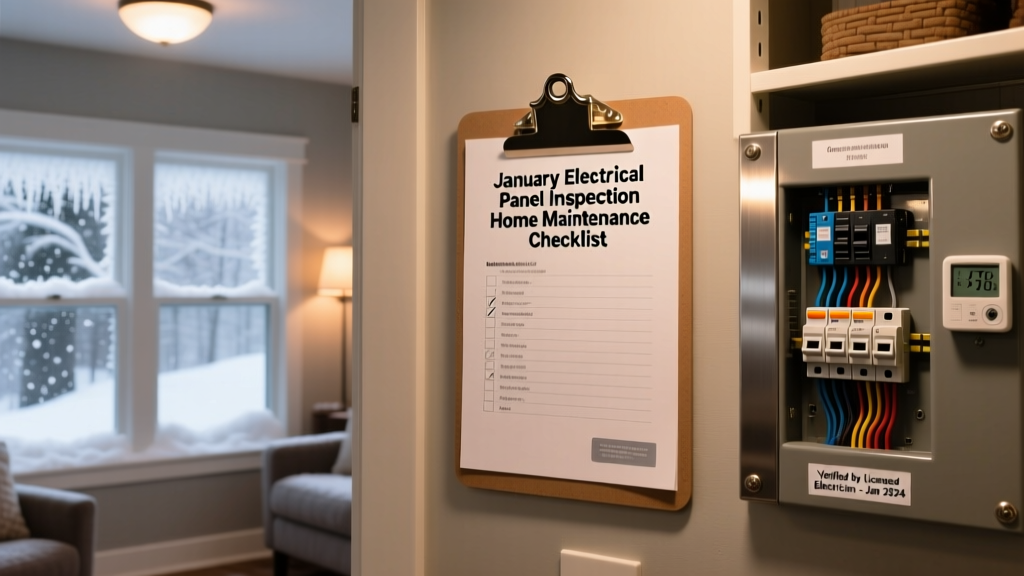
January is the ideal time to inspect your electrical panel: heating systems run constantly, holiday lights are recently packed away (and may have revealed overload issues), and cold temperatures can expose loose connections or corrosion that worsen under thermal stress. According to the U.S. Fire Administration’s 2022 report, faulty wiring and overloaded circuits cause nearly 19,000 home structure fires annually — 42% of those occur between December and February.
Priority Tasks
| Task | Time Required | Difficulty | Tools Needed |
|---|---|---|---|
| Visual inspection for corrosion, scorch marks, or rust | 15 minutes | Easy | Flashlight, safety glasses |
| Verify breaker labeling matches circuit map | 30–45 minutes | Moderate | Circuit map (or notebook), marker, tape |
| Tighten main lugs and neutral bar connections | 20 minutes | Advanced* | Insulated 8-inch wrench, torque screwdriver, voltage tester |
| Test GFCI/AFCI breakers with built-in test buttons | 10 minutes | Easy | None (breaker-integrated) |
Detailed Task Breakdown
Perform a visual safety scan
Turn off all non-essential loads first. Open the panel cover only if you’re comfortable doing so — never force it. Shine a flashlight inside and look for: white powdery corrosion on aluminum bus bars (a red flag in older homes), blackened or discolored breakers, melted insulation near terminals, or moisture stains on the panel interior. If you spot any of these, stop and call a licensed electrician immediately.
Confirm and update circuit labeling
Use your home’s original circuit map (or create one now) to verify each breaker controls what it says it does. Flip one breaker at a time and check outlets, lights, and appliances room-by-room. Mark discrepancies with heat-resistant label tape — avoid paper stickers, which degrade near heat sources. The National Fire Protection Association (NFPA 70E, 2023) requires legible, permanent labeling for all breakers serving dedicated circuits like HVAC or well pumps.
Common Seasonal Problems
- Cold-induced contraction: Metal connections shrink slightly in sub-freezing temps, increasing resistance and heat buildup at loose terminals — a leading cause of arcing.
- Humidity condensation: When warm indoor air meets a cold panel surface (especially in garages or basements), condensation forms — accelerating corrosion on copper and aluminum parts.
- Overloaded circuits from space heaters: 65% of residential electrical overloads in January involve portable heating units plugged into shared outlets (Consumer Product Safety Commission, 2023).
Tools & Supplies
Keep these on hand before you begin — no improvising with household tools near live panels:
- Non-contact voltage tester (tested on a known live outlet first)
- Insulated 8-inch combination wrench (for main lugs)
- Breaker labeling kit with UL-rated adhesive labels
- Microfiber cloth (to gently wipe dust without scratching)
- Small LED panel light (magnifying models help spot hairline cracks)
"A loose neutral connection in a 200-amp panel can generate over 120°F at the terminal — enough to ignite nearby insulation. Torque specs matter: most main lugs require 50–60 lb-in, not 'snug'" — Licensed Master Electrician Maria Chen, NECA Technical Bulletin #44, 2022
Can I tighten breakers myself?
Yes — but only the screw terminals on individual breakers, using a properly insulated #2 Phillips screwdriver. Never overtighten: 20–25 inch-pounds is typical. If the breaker feels wobbly or doesn’t seat flush, replace it — don’t force it. Always de-energize the circuit first, and verify with your voltage tester.
What if my panel is labeled 'Zinsco' or 'Federal Pacific'?
These panels (manufactured 1950s–1980s) have documented failure rates exceeding 50% for internal breaker sticking — a major fire hazard. The CPSC has issued multiple advisories since 2019. If yours is unmarked but installed pre-1985, schedule an evaluation by a licensed inspector — many utilities offer free preliminary assessments.
How often should I inspect the panel beyond January?
Homeowners should do a quick visual check every 3 months — especially after storms or major appliance installations. Full inspections (including torque verification and infrared scanning) are recommended every 5 years for panels over 15 years old. Infrared scans detect hot spots invisible to the eye; many electricians include them in annual service plans.
Is it safe to add a new circuit in January?
Technically yes — but cold weather stiffens NM-B cable jackets, making bending and stapling harder. If ambient temperature is below 20°F, let cables acclimate indoors for 2 hours before installation. Also, verify your panel has available physical space *and* amperage headroom: adding a 30-amp EV charger to a 100-amp panel already running heat pumps and ovens risks continuous overload.
Why does my breaker trip more often in cold weather?
Cold increases resistance in motor windings (furnace blower, sump pump), drawing higher inrush current. Combine that with aging breakers whose internal bimetallic strips lose calibration over time — and you get nuisance trips. Replace breakers older than 25 years, even if they haven’t failed yet. Eaton and Siemens both recommend replacement at 20–25 years per their 2021 product lifecycle guidelines.
January’s chill isn’t just a reason to bundle up — it’s your best early warning system for electrical vulnerabilities. A 45-minute inspection now could prevent a frozen pipe-sized emergency later. Keep your panel clean, labeled, and tight — and when in doubt, hire a licensed pro instead of risking shock or fire.