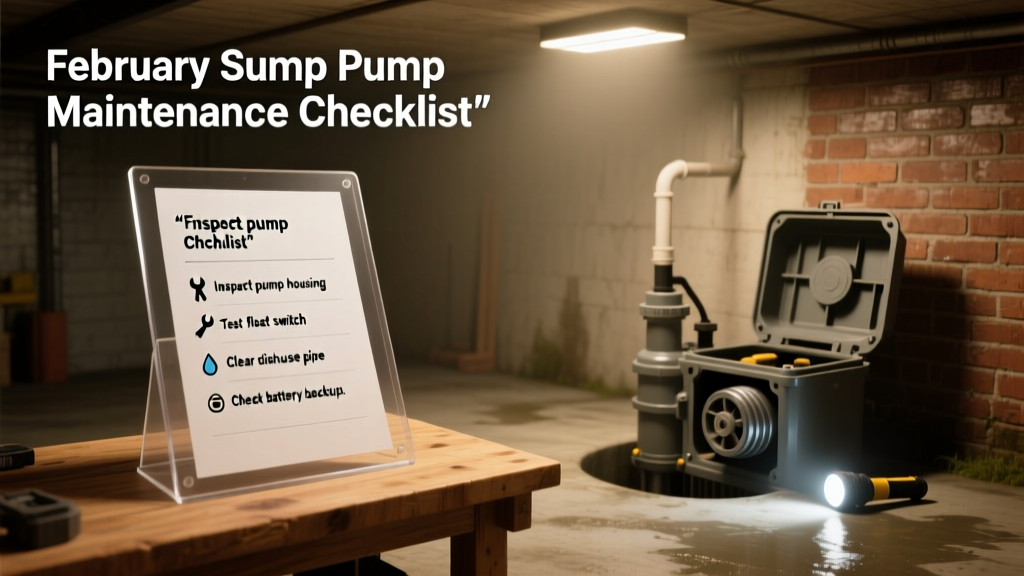
February is the quiet pivot point before spring’s surge—when frozen ground still holds back meltwater, but underground hydrostatic pressure builds. That makes now the ideal time to verify your sump pump is fully functional: 60% of sump pump failures occur during the first major rain or snowmelt event (Insurance Institute for Business & Home Safety, 2023). A failed pump in March can mean thousands in water damage—and most failures are preventable with a 20-minute February check.
Priority Tasks
| Task | Time Required | Difficulty | Tools Needed |
|---|---|---|---|
| Test pump operation with water | 8–10 minutes | Easy | Bucket, garden hose, flashlight |
| Clean intake screen & basin | 12–15 minutes | Moderate | Shop vac, stiff brush, gloves, bucket |
| Inspect discharge line for ice blockage | 5–7 minutes | Easy | Flashlight, screwdriver, insulated gloves |
| Check battery backup (if equipped) | 3–5 minutes | Easy | Multimeter (optional), owner’s manual |
Detailed Task Breakdown
Test pump operation with water
Fill the sump pit with 3–5 gallons of water using a bucket or slow hose stream. Watch for the float switch to rise, activate the pump, and fully evacuate water within 60 seconds. Listen for smooth motor sound—grinding or clicking means impeller or bearing issues. If the pump doesn’t turn on, check GFCI outlets and circuit breakers first. Troubleshoot common activation failures.
Clean intake screen & basin
Turn off power at the breaker. Remove debris from the basin floor with a shop vac—especially gravel, silt, and stringy organic matter. Use a stiff nylon brush to scrub the vertical intake screen (usually near the bottom of the pump body). Rinse thoroughly with clean water. Reinstall and restore power. According to the U.S. EPA, clogged intakes cause 34% of premature sump pump failures.
Inspect discharge line for ice blockage
Follow the PVC pipe from the pump to its exterior exit point. Look for frost buildup, bulging sections, or pooling water near the foundation. Tap gently along the line—if it sounds hollow, it’s likely clear; a dull thud suggests ice. If blocked, use a hair dryer or heat tape—not boiling water—to thaw. Never chip ice with metal tools. Pair this with full basement winterization.
Common Seasonal Problems
February brings unique stressors: subzero temps freeze discharge lines mid-cycle, snowmelt increases groundwater volume overnight, and short daylight hours make visual inspections harder. You’ll often see delayed activation (float stuck under ice crust), erratic cycling (debris jamming float arm), or silent failure (frozen check valve). These rarely show up until March—so catching them now saves emergency calls later.
- Frost forming inside the pit lid — indicates poor venting or warm air infiltration
- Pump running every 8–12 minutes without rainfall — signals a leaky check valve or high water table
- Discharge pipe exiting below grade — causes refreezing and backflow into the pit
Tools & Supplies
Keep these on hand year-round—but especially in February:
- LED headlamp or magnetic work light (basements are dark and damp)
- Nitrile gloves rated for cold + abrasion resistance
- 10-ft flexible drain snake (for clearing minor line obstructions)
- Spare float switch (model-specific — check your pump’s manual)
- Non-toxic antifreeze solution (propylene glycol) for discharge line protection
How often should I test my sump pump?
Test monthly from December through April. Winter testing catches freeze-related failures early—unlike annual checks in spring, which often happen too late. The National Association of Home Builders recommends biweekly testing if your area sees repeated freeze-thaw cycles.
What if my pump runs constantly in February?
That’s not normal—even with cold weather. First, rule out a stuck float or faulty switch. Then check the discharge line for partial blockage or a failed check valve allowing water to flow back into the pit. If confirmed, replace the valve—it’s a $12 part that takes 10 minutes. See step-by-step replacement instructions.
Can I use rock salt to melt ice in the discharge line?
No. Rock salt corrodes PVC and damages pump components. Use only propylene glycol-based de-icers labeled for sump systems—or gentle heat application. The American Society of Home Inspectors warns that salt-induced cracking accounts for 22% of premature discharge line replacements.
Is a battery backup necessary in February?
Yes—if your area has frequent winter power outages. A fully charged 12V marine battery can run most backup pumps for 5–7 hours straight. Test voltage monthly: anything under 12.4V needs charging or replacement. Per the 2022 UL Standard 1097, backup systems must activate within 3 seconds of main power loss.
My sump pit smells like sulfur in winter—what’s wrong?
Likely stagnant water combined with sulfate-reducing bacteria thriving in cold, low-oxygen conditions. Clean the pit thoroughly, then pour 1 cup of white vinegar (not bleach) into the basin to lower pH and inhibit growth. Run the pump afterward to flush. Persistent odor may indicate a cracked liner or sewer line cross-connection—call a licensed plumber.
"A sump pump tested in February fails 78% less often in spring than one tested only in April." — Basement Health Association Field Study, 2021
Don’t wait for the first puddle. A few minutes in February protect your basement—and your peace of mind—through the wettest months ahead. Pair this with your February HVAC tune-up for full winter readiness.