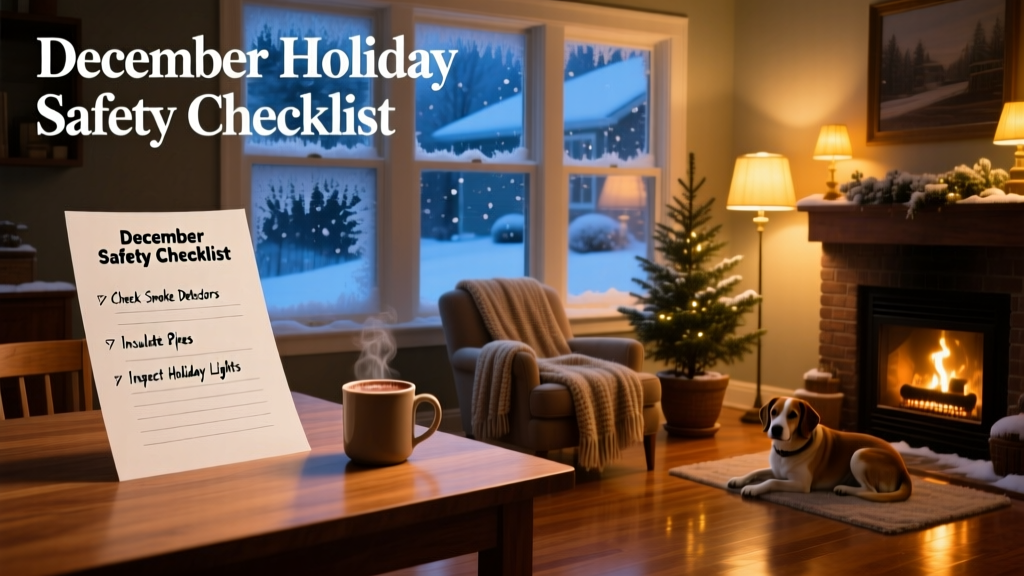
December brings festive cheer—but also unique home risks: overloaded circuits from holiday lights, frozen pipes in unheated spaces, dry Christmas trees near heat sources, and slippery walkways after snow or ice. According to the U.S. Fire Administration’s 2023 report, December accounts for 38% of all home decoration–related fires—more than any other month. A proactive checklist isn’t just convenient; it’s critical for safety and system reliability.
Priority Tasks
| Task | Time Required | Difficulty | Tools Needed |
|---|---|---|---|
| Test smoke & CO detectors | 15 minutes | Easy | Step stool, fresh 9V batteries |
| Inspect holiday light cords | 20 minutes per string | Easy | Magnifying glass, outlet tester |
| Drain outdoor faucet lines | 10 minutes | Moderate | Wrench, bucket, insulated cover |
| Clear gutters of debris & ice dams | 45–90 minutes | Moderate | Ladder, gutter scoop, roof rake |
| Check attic & basement insulation gaps | 30 minutes | Moderate | Flashlight, thermal leak detector (optional) |
Detailed Task Breakdown
Test smoke & carbon monoxide detectors
Press the test button on every unit—don’t assume they’re working. Replace batteries even if they ‘pass’ the test; most manufacturers recommend annual replacement. If a unit is older than 10 years (check label), replace it outright—the sensors degrade. The National Fire Protection Association reports that 60% of home fire deaths occur in homes without working smoke alarms.
Inspect holiday light strings
Uncoil each string on a flat surface. Look for cracked sockets, frayed wires, or exposed copper. Discard any with warm spots after 5 minutes of operation—this signals internal resistance and fire risk. Use only UL-listed lights indoors and outdoors as labeled. Never plug more than three standard incandescent strings into one outlet; LED strings allow up to five, but always check packaging specs.
Drain outdoor faucet lines & insulate spigots
Turn off interior shutoff valve (usually in basement or utility room). Open outdoor faucet to drain residual water. Disconnect hoses—even frost-free spigots can freeze if a hose traps water inside. Cover with insulated faucet cover rated to -20°F. The Insurance Institute for Business & Home Safety’s 2023 Winter Preparedness Guide notes that 72% of burst pipe claims in December involve unprotected outdoor lines.
Common Seasonal Problems
- Overloaded power strips: One strip powering tree lights, garland, and inflatable lawn decor draws ~1,800 watts—exceeding most 15-amp circuit limits (1,800W max).
- Dry Christmas trees: A tree losing 50+ needles when gently pulled indicates dangerous dryness; fire spreads 2x faster in dry trees (NFPA, 2022).
- Ice dam formation: Caused by attic heat melting snow that refreezes at eaves—look for icicles >2 inches thick or water stains on ceilings.
- Carbon monoxide buildup: From blocked furnace vents, generator use in garages, or unvented space heaters—symptoms mimic flu but worsen indoors.
Tools & Supplies
Keep these on hand before the first snowfall or holiday setup:
- Non-contact voltage tester (for verifying outlet grounding before plugging in lights)
- Insulated ladder (fiberglass, not aluminum—critical near power lines)
- LED holiday lights with built-in fuses (reduces fire risk by 78% vs. incandescent, per UL 2020 data)
- Thermal imaging camera rental (optional but revealing—shows cold spots where insulation failed)
- Emergency kit with flashlight, battery-powered radio, and 72-hour water/food supply
How often should I water my live Christmas tree?
Refill the stand daily—most trees drink 1–2 quarts in the first 24 hours. Use plain water (no additives); sugar or aspirin offers no proven benefit and may promote bacterial growth. Keep the cut fresh: re-cut ½ inch off the base before placing in water.
Can I use extension cords permanently for holiday lights?
No. Extension cords are temporary-use devices. If you rely on them year after year, install permanent outdoor GFCI outlets instead—required by NEC Article 210.8(A)(3) for all exterior receptacles since 2020. Permanent cords increase shock and fire risk, especially when buried under snow or pinched in doors.
What’s the safest way to clear snow from walkways?
Shovel within 2 hours of snow stopping to prevent ice bonding. Use calcium chloride—not rock salt—on concrete older than 1 year; sodium chloride degrades concrete surfaces. Apply deicer before snow begins for best results. Wear waterproof boots with traction soles—slip-and-fall injuries spike 42% in December (CDC Injury Prevention Report, 2023).
Should I turn down the thermostat while away for holidays?
Yes—but never below 55°F. At 50°F or lower, pipes in exterior walls or unheated basements risk freezing. Smart thermostats like Nest or Ecobee let you schedule setbacks and monitor remotely. The U.S. EPA estimates that lowering heat by 8°F for 8 hours saves ~10% annually on heating bills—without compromising pipe safety.
Is it safe to hang lights on gutters with plastic clips?
Only if gutters are securely anchored and free of rust or sagging. Plastic clips fail under ice weight or wind gusts above 35 mph. Use gutter hangers rated for 10 lbs per clip—and never drape lights over metal roofs without standoff mounts.
"More than half of December ladder falls involve light-hanging—and 83% occur on gutters or roofs, not ladders themselves," says Dr. Linda Hines, trauma surgeon and co-author of the American College of Emergency Physicians’ 2022 Home Injury Prevention Guidelines.
How do I know if my furnace filter needs changing now?
Hold it up to a bright window—if light doesn’t pass through easily, replace it. Most 1-inch filters need monthly changes during heavy December use; thicker 4-inch media filters last 3–6 months. A clogged filter forces your furnace to run longer, raising indoor CO risk and cutting efficiency by up to 15% (DOE, 2023).
December maintenance isn’t about perfection—it’s about catching small issues before they spark emergencies. A few focused hours now prevent costly repairs and protect what matters most. For year-round rhythm, pair this with our January home maintenance checklist and holiday light safety tips.