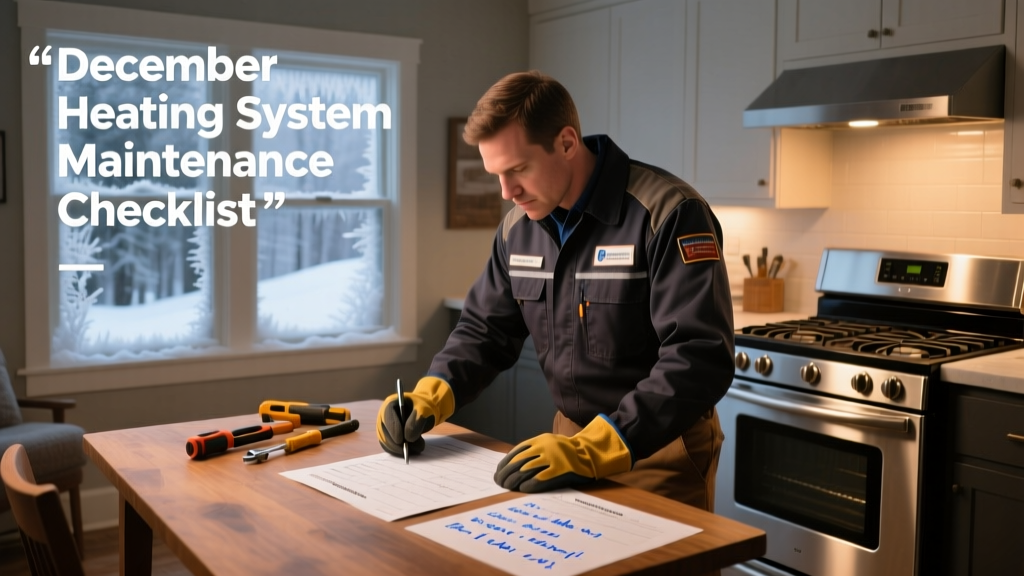
December is the make-or-break month for heating systems—especially in regions where overnight lows regularly hit 20°F or lower. A single failed ignition or clogged filter can mean frozen pipes, emergency service calls costing $250+ after hours, or even carbon monoxide risk if combustion isn’t venting properly. This isn’t about 'tuning up'—it’s about verifying safety, efficiency, and readiness before the coldest stretch hits.
Priority Tasks
| Task | Time Required | Difficulty | Tools Needed |
|---|---|---|---|
| Replace or clean air filter | 5–10 minutes | Easy | Replacement filter or vacuum |
| Inspect heat exchanger for cracks (gas furnaces) | 15–20 minutes | Intermediate | Flashlight, mirror, carbon monoxide detector |
| Test thermostat calibration & battery | 8 minutes | Easy | Digital thermometer, AA batteries |
| Clear condensate drain line (high-efficiency furnaces) | 12–15 minutes | Intermediate | Vinegar, turkey baster, wet/dry vac |
| Check blower motor belt tension & wear (if applicable) | 10 minutes | Intermediate | Wrench set, belt gauge (optional) |
Detailed Task Breakdown
Replace or clean air filter
Restricted airflow forces your system to run longer, raising energy bills by up to 15% and accelerating wear. Pull the filter from its slot—most are behind a return grille or inside the furnace cabinet. If it’s fiberglass, replace it (standard sizes: 16x20x1, 20x25x1). If it’s washable, rinse under cool water, shake dry, and reinstall only when fully air-dried—never damp. According to the U.S. Department of Energy, changing filters monthly in winter cuts HVAC energy use by 5–15%.
Inspect heat exchanger for cracks
Cracks in gas furnace heat exchangers allow combustion gases—including carbon monoxide—to mix with indoor air. Turn off power and gas. Remove the front access panel. Shine a flashlight into the heat exchanger chamber; look for soot streaks, discoloration, or hairline fissures near weld seams. Use a small mirror to see rear surfaces. If you spot anything suspicious, shut off gas and call an HVAC technician immediately—do not operate the furnace.
Test thermostat calibration & battery
Set thermostat to 'Heat', raise temperature 5°F above room temp, and listen for the furnace to ignite within 90 seconds. Hold a digital thermometer 2 inches from the thermostat sensor—compare reading to displayed temp. If variance exceeds ±2°F, recalibrate per manufacturer instructions (often via menu settings) or replace. Replace batteries—even in hardwired thermostats with backup power—as low voltage causes erratic cycling. The EPA estimates 30% of thermostat-related service calls stem from dead or weak batteries.
Common Seasonal Problems
December brings unique stressors: short cycling due to oversized units struggling with rapid outdoor temp drops, ice buildup on heat pump coils during humid 30°F days, and condensate line freeze-ups in unheated basements or garages. Watch for:
- Delayed ignition or repeated clicking without flame (indicates dirty igniter or gas valve issue)
- Musty odor at startup (mold in evaporator coil or ductwork)
- Thermostat showing 'Aux Heat' constantly on heat pumps (suggests refrigerant leak or outdoor coil blockage)
- Water pooling near furnace base (clogged condensate drain or cracked pan)
According to the Insurance Institute for Business & Home Safety's 2023 report, 68% of winter HVAC failures occur between December 15 and January 10—peak demand period with lowest ambient temps.
"A furnace running 24/7 in subfreezing weather with a dirty filter is like asking a marathon runner to sprint wearing a weighted vest—it won't last, and it might collapse mid-race." — HVAC Technician Maria Chen, NATE-certified since 2012
Tools & Supplies
Keep these on hand—not just for December, but year-round:
- High-efficiency pleated filters (MERV 8–11, sized for your unit)
- Digital thermometer with ±0.5°F accuracy
- Carbon monoxide detector with battery backup (test monthly)
- Condensate line cleaning kit (vinegar + turkey baster works, but dedicated kits include flexible brushes)
- Non-contact voltage tester (for safe electrical checks)
- Soft-bristle brush for coil cleaning (avoid wire brushes—they damage fins)
How often should I replace my furnace filter in December?
If you run heat continuously—and especially with pets, allergies, or wood-burning stoves—replace standard 1-inch filters every 2–3 weeks. For thicker media filters (4–5 inch), check monthly but expect 2–3 months of service. Washable filters require weekly rinsing in high-use months.
Can I clean my heat pump’s outdoor unit myself?
Yes—but carefully. Turn off power at the disconnect switch first. Remove leaves, snow, and debris from around the unit (keep 24" clearance). Gently hose down coils from top to bottom using low pressure—never spray sideways or upward, which bends fins. Dry thoroughly before restarting. Skip chemical cleaners unless coils are heavily greased; most grime responds to water alone.
Why does my furnace smell like burning dust in early December?
A faint, smoky odor for the first 1–2 cycles is normal—the heat burns off accumulated dust on heat exchangers and burners. It should fade within 30 minutes. If it persists, smells like rubber or plastic, or triggers smoke alarms, power down the unit and inspect wiring connections or blower motor bearings.
What’s the minimum safe thermostat setting when away during holidays?
Set no lower than 55°F if pipes run through unheated spaces (attics, garages, exterior walls). At 50°F, copper pipes begin risking freeze damage in sustained sub-20°F wind chills. Smart thermostats with geofencing (like Nest or Ecobee) help maintain safe temps while optimizing recovery timing.
Is it worth servicing my furnace if it’s over 15 years old?
Yes—if it’s still running. But shift focus from 'tune-up' to 'risk assessment.' Technicians should check heat exchanger integrity, gas pressure, flue draft, and blower amperage. The average furnace lifespan is 15–20 years; replacement cost averages $5,200 (National Association of Home Builders, 2023), but unplanned failure in January costs 2.3× more in labor and parts due to emergency premiums.
Don’t wait for the first deep freeze to discover your system’s weak points. Cross off each item on this checklist before December 15—and pair it with our January pipe freeze prevention guide for full cold-weather resilience.