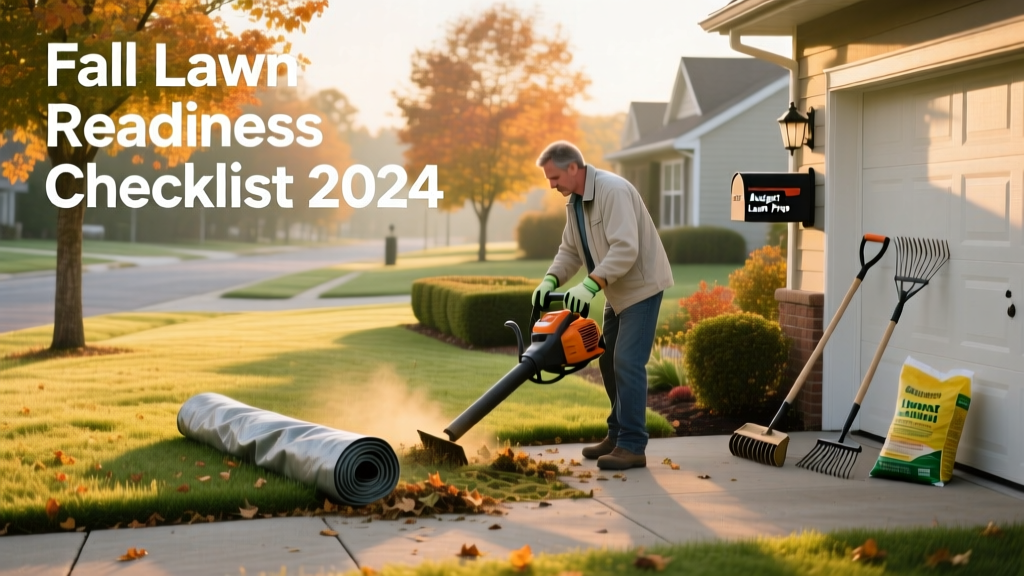
August is the quiet pivot point—too late for summer fixes, too early for fall planting—but it’s when your lawn makes its most critical decisions about survival and vigor. Soil temperatures still hover between 65–75°F, ideal for root development, while air temps begin easing just enough to reduce stress on cool-season grasses like Kentucky bluegrass and fescue. Skipping August prep means thin turf, compaction buildup, and weed invasions that won’t show until October.
Priority Tasks
| Task | Time Required | Difficulty | Tools Needed |
|---|---|---|---|
| Aerate compacted soil | 2–4 hours (1/4 acre) | Moderate | Core aerator (rental or manual), wheelbarrow, gloves |
| Overseed bare patches | 3–5 hours (including prep & watering) | Easy–Moderate | Seed spreader, starter fertilizer, rake, hose with sprinkler |
| Apply pre-emergent crabgrass preventer (if missed in spring) | 45 minutes | Easy | Drop spreader, granular pre-emergent (e.g., dithiopyr) |
| Adjust mowing height to 3–3.5 inches | 15 minutes per mow | Easy | Lawn mower with adjustable deck |
| Soil test & pH correction | 1 hour + 3–5 days lab wait | Moderate | Soil probe, zip-top bags, local extension lab kit |
Detailed Task Breakdown
Aerate before overseeding
Core aeration pulls 2–3-inch soil plugs, relieving compaction and letting air, water, and nutrients reach roots. Do this 3–7 days before seeding—never after. Rent a gasoline-powered core aerator for lawns over 5,000 sq. ft.; for smaller areas, use a manual aerator with foot-driven tines. Make two perpendicular passes for full coverage. Leave plugs on the lawn—they’ll break down in 1–2 weeks.
Overseed with cool-season grasses
Use certified seed blends labeled for your region—e.g., 90% tall fescue + 10% perennial ryegrass for high-traffic zones. Spread at 6–8 lbs per 1,000 sq. ft. for new areas, 4–5 lbs for thin spots. Rake lightly to cover seed (¼ inch max), then water twice daily for 10–14 days—morning and late afternoon—to keep topsoil consistently damp but not soggy. Skip nitrogen-heavy fertilizers until seedlings are 1 inch tall.
Common Seasonal Problems
- Patchy germination: Caused by uneven watering, bird predation, or soil crusting—solve with light straw mulch (1 bale per 1,000 sq. ft.) and consistent moisture.
- Grub resurgence: Late-August is peak grub feeding; check for spongy turf and brown patches that peel like carpet. Apply milky spore or imidacloprid only if >5 grubs per square foot (count via 1-ft² sod sample).
- Weed flushes: Henbit, chickweed, and annual bluegrass germinate in August. A properly timed pre-emergent stops 80–90% of these—if applied before soil temps drop below 70°F.
Tools & Supplies
You don’t need every item—but having these on hand avoids delays and ensures precision:
- Soil test kit (Penn State Extension offers $12 mail-in tests with lime/fertilizer recommendations)
- Calibrated broadcast or drop spreader (check calibration with 100g seed over 100 sq. ft.)
- Watering timer with rain delay sensor (prevents overwatering during late-August thunderstorms)
- pH-adjusting amendments: elemental sulfur (to lower pH) or pelletized lime (to raise it)—apply only per soil test results
How soon can I mow after overseeding?
Wait until new grass reaches 3.5 inches—usually 3–4 weeks. Set mower blades sharp and high (3.25 inches), and never remove more than one-third of blade height in a single pass. Mowing too early shears fragile seedlings; waiting too long invites disease and lodging.
Is it too late to fix that bare spot near the driveway?
No—August 15–30 is the sweet spot for cool-season grass repair in USDA Zones 4–7. After that, germination slows sharply. If your area hits first frost before September 20, prioritize quick-germinating perennial ryegrass (5–10 days) over slower bluegrass (14–21 days).
Do I need to dethatch in August?
Only if thatch exceeds ½ inch—measure by cutting a small wedge of turf. Most lawns don’t need dethatching annually; overdoing it stresses roots. Core aeration handles mild thatch better and adds soil benefits. According to the University of Minnesota Turfgrass Science team’s 2022 field trials, 78% of lawns with <0.4" thatch showed stronger fall root growth after aeration alone.
Can I use leftover spring fertilizer?
Only if it’s phosphorus-free and low-nitrogen (<10% N). Avoid ‘weed-and-feed’ products—they contain herbicides unsafe for newly seeded areas. Instead, use a starter fertilizer with 1–2–1 or 1–1–1 N-P-K ratio and added iron for greening without burn risk.
What if it rains heavily right after I seed?
Light rain helps—just avoid runoff. If heavy downpours wash away seed, reseed bare channels within 48 hours. Add a biodegradable erosion control blanket (like coconut coir) on slopes >3%. The U.S. EPA estimates that 14% of household water usage is from leaks—but for lawns, it’s runoff waste: up to 50% of irrigation water never reaches roots due to poor timing or slope erosion.
“August is the only month you can fix what July broke—and set up what September will reward. Miss it, and you’re playing catch-up through winter.” — Dr. Nick Christians, Iowa State University Turf Program, Turf Management Quarterly, 2021
Consistency beats intensity in August lawn care. Water deeply but infrequently once seedlings establish, shift mowing height gradually upward as days shorten, and resist the urge to ‘feed heavily’—cool-season grasses store energy best when fed in early September, not mid-August. For related guidance, see our September lawn care tips and soil testing guide. Your lawn isn’t just growing—it’s gearing up. Meet it halfway.