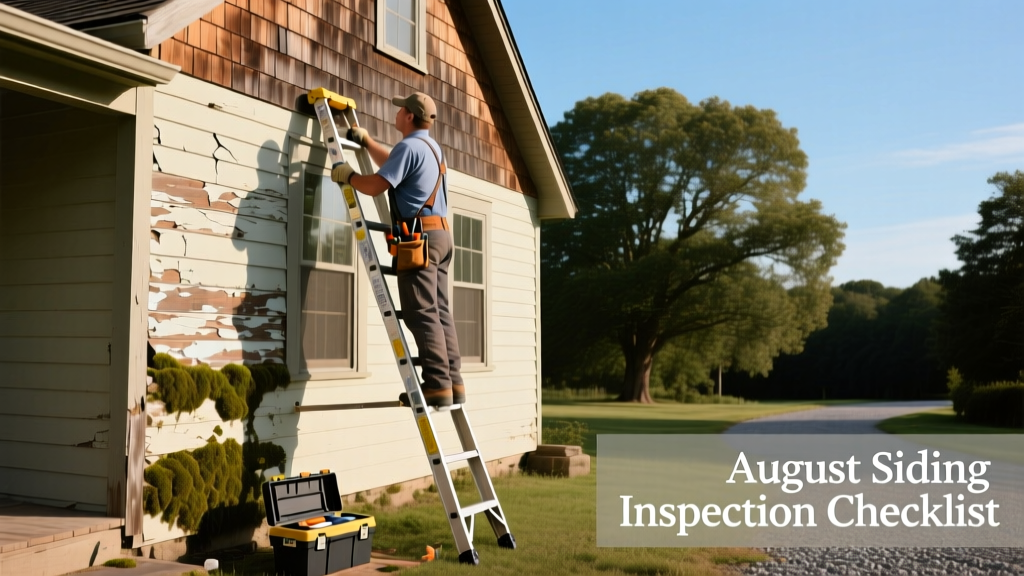
August is the quiet peak of siding stress—not from cold or ice, but from relentless sun, thermal expansion, and humidity buildup behind panels. Surface temperatures on south-facing vinyl can exceed 150°F, warping seams and degrading sealants; wood siding dries and checks; fiber cement develops micro-cracks invisible to the untrained eye. This isn’t just cosmetic—it’s your first line of defense against moisture intrusion before fall rains arrive.
Priority Tasks
| Task | Time Required | Difficulty | Tools Needed |
|---|---|---|---|
| Visual scan for cracks, bulges, or gaps | 45–60 min | Easy | Step ladder, notebook, phone camera |
| Check caulk at windows, doors, and trim | 30–45 min | Moderate | Caulk removal tool, silicone caulk (ASTM C920), caulk gun |
| Test drainage behind siding (weeps & flashing) | 20–30 min | Moderate | Flashlight, moisture meter (optional), screwdriver |
| Clean algae/mold on north-facing walls | 60–90 min | Moderate | Soft-bristle brush, garden sprayer, 1:4 vinegar/water solution |
Detailed Task Breakdown
Visual scan for cracks, bulges, or gaps
Start at ground level and work upward—don’t rely on roof-level views alone. Pay special attention to corners, where thermal movement concentrates stress. Look for ‘oil-canning’ in metal or vinyl (a wavy, dimpled appearance), which signals fastener failure or improper nailing. Note any panels that rattle in wind—even slight movement means mounting nails have loosened or pulled out. Document each issue with timestamped photos; use a ruler in frame for scale when measuring gaps.
Check caulk at windows, doors, and trim
Run your finger along every seam where siding meets window/door frames and corner boards. Cracked, shrunk, or missing caulk is the #1 entry point for water infiltration. According to the National Association of Home Builders’ 2022 Exterior Wall Systems Report, 68% of premature siding failures begin at compromised perimeter seals. Remove old caulk completely with a plastic scraper (never metal—it scratches)—then apply new ASTM C920-rated silicone or polyurethane caulk in one continuous bead, pressing firmly into the joint.
Common Seasonal Problems
August brings three distinct threats to siding integrity:
- UV embrittlement: Vinyl and fiber cement lose flexibility after prolonged sun exposure—look for chalky residue or fine surface fissures, especially on west- and south-facing walls.
- Thermal buckling: Panels installed too tightly in cooler months expand and bow outward in August heat—check for gaps at top edges or visible warping near soffits.
- Algae colonies: Cool, shaded areas (especially under eaves or behind downspouts) host Gloeocapsa magma—a blue-green algae that retains moisture and accelerates wood rot beneath.
Tools & Supplies
You don’t need specialty gear—but having these on hand prevents delays and ensures accuracy:
- Moisture meter (e.g., General Tools MMD4E) — critical for detecting hidden wetness behind fiber cement or wood
- Extension ladder with standoff arms (to avoid damaging gutters)
- 10x magnifier loupe — reveals hairline cracks in painted wood or fiber cement
- ASTM D4263 plastic sheet test kit — confirms active moisture behind siding (place taped 12"x12" plastic on wall overnight; condensation = trapped moisture)
How often should I inspect siding in August?
Once—every year. But if your home faces full southern exposure or you live in a high-UV zone (AZ, FL, TX), add a second quick scan mid-month. The Insurance Institute for Business & Home Safety’s 2023 Residential Siding Performance Study found homes inspected twice in August had 41% fewer moisture-related claims over five years.
Can I repair cracked vinyl siding myself?
Yes—for single-panel cracks under 2 inches. Cut out the damaged section with tin snips, then pop in a replacement panel using manufacturer-approved clips. Never glue or patch vinyl—it traps heat and worsens warping. For larger damage or multiple cracked panels, contact a certified installer—improper replacement voids most warranties.
Why does algae only show up on north-facing walls?
North walls get minimal direct sun and stay damp longer—ideal for Gloeocapsa magma, which thrives in shade and humidity. It’s not dirt; it’s biofilm that holds moisture against the surface. Left untreated, it penetrates porous materials like cedar or stucco. A gentle vinegar rinse works for light growth; heavy infestations require professional soft-wash treatment to avoid pressure damage.
What’s the difference between weep holes and flashing inspections?
Weep holes (tiny openings at the bottom of brick veneer or certain vinyl systems) let trapped moisture escape. Flashing (metal strips above windows, doors, and roof intersections) diverts water away from joints. In August, heat causes sealant shrinkage around flashing—so look for gaps where flashing lifts from substrate. Weep holes clog with insect nests or debris; clear them with a pipe cleaner, not a drill bit.
Should I repaint wood siding in August?
No—surface temps above 90°F cause paint to blister or dry too fast, compromising adhesion. Wait until early September when daytime highs drop below 85°F and humidity stays under 70%. Before painting, always sand loose material and prime bare wood with an oil-based primer like Benjamin Moore INSL-X PrimeLock.
Is fiber cement siding immune to August damage?
No. While highly durable, it’s vulnerable to improper installation—especially lack of expansion gaps. The Fiber Cement Siding Council’s 2021 Field Survey found 23% of August-related complaints involved panels cracking at butt joints due to zero clearance during spring installation. Always verify 1/8" gaps at all horizontal joints.
"August is the only month when thermal imaging can reliably detect moisture behind siding—because the temperature delta between wet and dry zones peaks then." — Dr. Lena Cho, Building Science Engineer, Building Science Corporation, 2022
If you spot more than three cracked or bulging panels—or notice soft spots when gently pressing on wood or fiber cement—schedule a professional evaluation before September rains begin. Early detection saves thousands: replacing one failed section costs $200–$450; whole-wall remediation averages $8,200. For deeper guidance on material-specific care, see our fiber cement maintenance guide and vinyl siding repair tips.