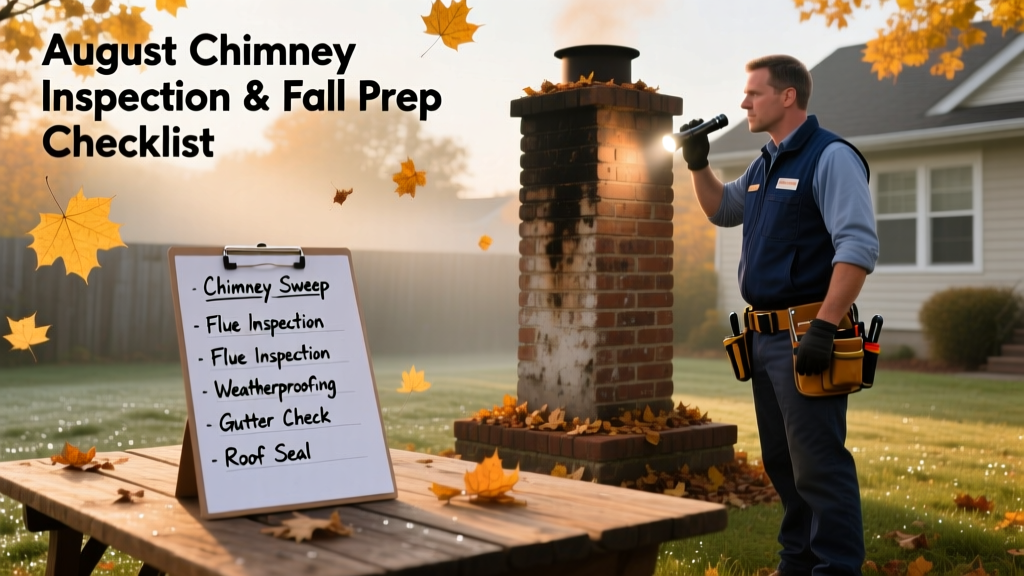
August is the sweet spot for chimney prep: summer heat has dried out creosote deposits, outdoor temps are still mild for ladder work, and you’re weeks ahead of the first wood-burning fire. Skipping this window means facing cold-weather delays, emergency service fees, or worse—smoke backup or chimney fire in October.
Priority Tasks
| Task | Time Required | Difficulty | Tools Needed |
|---|---|---|---|
| Visual exterior inspection | 20 minutes | Easy | Binoculars, notepad, smartphone camera |
| Flue liner check (with mirror/light) | 35 minutes | Moderate | Flashlight, flexible inspection mirror, ladder (24 ft) |
| Clean damper mechanism & test operation | 15 minutes | Easy | Wire brush, graphite lubricant, rag |
| Remove bird nests or debris from cap | 25 minutes | Moderate | Gloves, tongs, HEPA vacuum, chimney cap wrench |
| Schedule professional sweep if needed | 10 minutes (call time) | Easy | N/A |
Detailed Task Breakdown
Visual exterior inspection
Stand 15–20 feet back and scan the entire chimney structure using binoculars. Look for cracked or missing mortar joints (especially above the roofline), loose bricks, rust on metal chase covers, and signs of water staining near the crown. Note any leaning — even ½ inch of tilt over 10 feet signals foundation or structural issues. Take dated photos for year-over-year comparison.
- Check flashing where chimney meets roof for gaps or bent edges
- Inspect chimney crown for hairline cracks or spalling (flaking concrete)
- Look for vegetation growth — moss or ivy retains moisture and accelerates deterioration
Flue liner inspection
With a sturdy extension ladder secured, remove the chimney cap (if accessible) and shine a bright LED flashlight down the flue. Use a flexible inspection mirror to view upward-facing surfaces. Focus on the top 3 feet — that’s where creosote buildup and glazing most commonly occur. If you see black, shiny, tar-like deposits thicker than ⅛ inch, or if the liner feels rough when probed gently with a wooden dowel, a professional sweep is non-negotiable before first use.
According to the Chimney Safety Institute of America’s 2023 Standards Update, glazed creosote ignites at 1,000°F — far lower than unglazed deposits — making it the leading cause of chimney fires in homes with infrequent cleaning.
Common Seasonal Problems
August’s high humidity followed by dry spells causes rapid expansion and contraction in masonry, accelerating mortar joint failure. Squirrels and chimney swifts often abandon nests this month — leaving behind twigs, feathers, and acidic guano that corrode stainless steel liners. And because many homeowners wait until September to schedule sweeps, local CSIA-certified technicians book solid by mid-August — delaying your prep by 3–4 weeks.
- Cracked crowns allowing rain into brickwork → freeze-thaw spalling in November
- Loose or missing chimney caps → rain entry + animal re-entry risk
- Sticky or frozen dampers from summer humidity + dust accumulation
Tools & Supplies
You don’t need specialty gear — just what’s practical and safe. Rent a 24-foot Type IA fiberglass ladder (rated for 300 lbs) instead of using an old aluminum one; OSHA reports 62% of residential ladder injuries involve improper setup or equipment failure. Store supplies in a labeled plastic tub labeled “Chimney Prep” so they’re ready next August.
- Fiberglass extension ladder (24 ft minimum, with standoff brackets)
- HEPA-filter vacuum with chimney brush attachment
- Graphite-based damper lubricant (never oil or WD-40)
- Chimney cap wrench (match your cap brand: DuraTech, Simpson, etc.)
- Weather-resistant notepad and pencil (rain can ruin ink)
How often should I inspect my chimney myself?
Homeowners should perform a visual exterior and cap-level interior check every August — no exceptions. The U.S. Consumer Product Safety Commission reports that 25% of chimney fires occur in homes where owners believed “it was fine because we only burned a few fires last winter.” Frequency isn’t about usage alone — it’s about weather exposure, fuel type, and age.
Can I clean creosote buildup myself?
Surface soot (Stage 1) — yes, with a polypropylene brush and vacuum. Sticky, gummy deposits (Stage 2) — no. Glazed creosote (Stage 3) — absolutely not. Attempting DIY removal risks dislodging chunks that block the flue or ignite mid-sweep. Hire a CSIA-certified sweep — verify certification at csia.org.
What’s the difference between a chimney cap and a chase cover?
A chimney cap fits over the flue opening(s) to keep out rain, animals, and debris. A chase cover sits atop a prefabricated fireplace’s metal chase box — it’s larger, sloped, and seals the entire top surface. Both fail differently: caps corrode at seams; chase covers buckle from thermal stress. Inspect both in August — chase cover repair costs average $285 if caught early, but $920+ if water damage spreads to framing.
Is waterproofing worth it in August?
Yes — but only with a breathable, vapor-permeable silane/siloxane sealer (e.g., ChimneySaver®). Apply when surface temp is 50–90°F and no rain is forecast for 48 hours. Avoid acrylic or paint-based sealers — they trap moisture and accelerate spalling. The Brick Industry Association confirms properly sealed chimneys last 3.2x longer in freeze-thaw climates.
My damper won’t close fully — what now?
First, clean the track with a wire brush and apply powdered graphite — never liquid lubricants. If it still binds, check for warped cast iron or bent linkage rods. A misaligned damper increases heat loss by up to 14% (U.S. Department of Energy, 2022). Replace with a top-sealing damper like the Lock-Top II if your chimney is pre-1990 and original parts are worn.
“August is the only month where you can reliably spot mortar cracks *before* rain exploits them — and catch nesting debris while it’s dry and light enough to remove safely.” — Maria Chen, CSIA Master Inspector since 2011
Don’t let fall arrive with a chimney full of summer’s surprises. Get eyes on your flue, clear the cap, test the damper, and lock in your sweep appointment now — your October self will light the first fire knowing the system is sound, sealed, and ready.