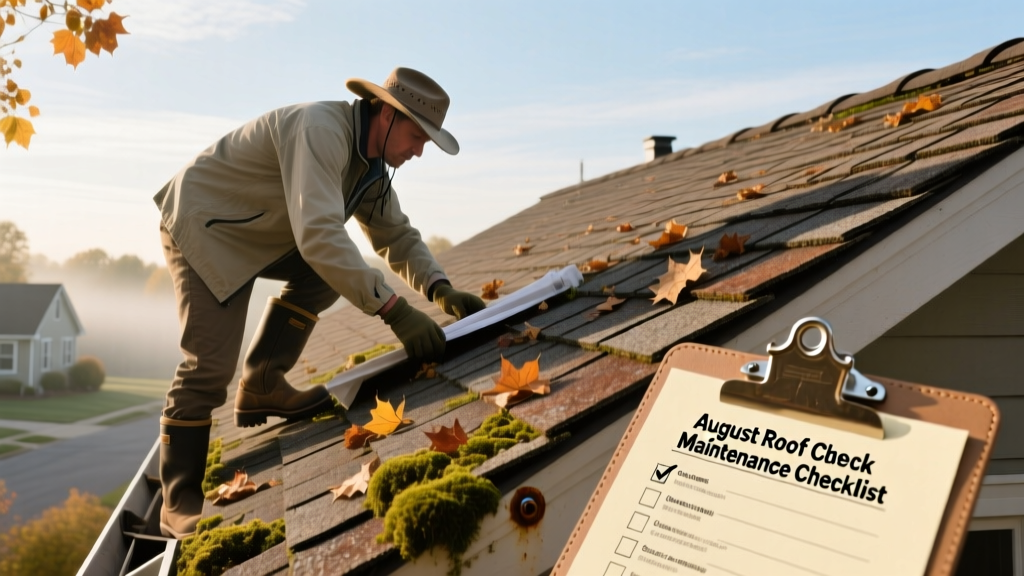
August is the last calm before fall’s wind and rain—and the ideal time to inspect your roof while temperatures are stable and skies are clear. With summer heat stressing shingles and UV exposure accelerating wear, catching issues now avoids emergency repairs later. According to the Insurance Institute for Business & Home Safety's 2023 report, 68% of roof failures begin with undetected minor damage from late-summer thermal cycling.
Priority Tasks
| Task | Time Required | Difficulty | Tools Needed |
|---|---|---|---|
| Visual shingle inspection (ground & ladder) | 45–60 min | Moderate | Ladder, binoculars, notepad, camera |
| Clean gutters and downspouts | 90 min | Easy–Moderate | Gutter scoop, garden hose, gloves, tarp |
| Check flashing around vents, chimneys, skylights | 30 min | Moderate | Flashlight, small pry bar, caulk gun, roofing cement |
| Trim overhanging branches | 20–40 min | Easy | Pruning shears or pole saw, safety glasses |
Detailed Task Breakdown
Inspect shingles for heat-related damage
Start from ground level using binoculars—look for curling, cracking, or granule loss, especially on south- and west-facing slopes. Then climb safely (use a 4-to-1 ladder angle and have a spotter). Focus on ridge caps and valleys where thermal expansion causes early failure. Note any missing or lifted shingles; replace them before September winds arrive. Don’t walk directly on brittle shingles—step only on rafters or use roof pads.
Clean and test gutters and downspouts
Remove debris by hand or with a gutter scoop—never use pressure washers, which can dislodge fasteners. Flush each downspout with a garden hose at full blast to confirm flow. If water backs up or leaks at seams, reseal joints with silicone-based gutter sealant. The U.S. EPA estimates that 14% of household water usage is from leaks—including those caused by clogged gutters overflowing onto fascia boards.
Common Seasonal Problems
- Thermal blistering: Bubbles under asphalt shingles caused by trapped moisture expanding in August heat—often precedes delamination.
- Algae streaking: Accelerates in humid August air; doesn’t harm structure but indicates moisture retention and potential moss growth.
- Fastener pop-out: Nails or staples backing out due to repeated expansion/contraction cycles—check near eaves and ridges.
- Chimney mortar erosion: Summer heat dries mortar, then monsoon humidity (in many regions) triggers spalling—inspect for crumbling joints.
Tools & Supplies
Keep these on hand before you start:
- Extension ladder (with standoff brackets for roof edge safety)
- Roofing cement (e.g., Henry 208 Black Jack) and fiberglass mesh patch for quick shingle repairs
- Non-corrosive gutter sealant (like GE Silicone II Gutter & Flashing)
- Stainless steel roofing nails (1¼” ring-shank) for replacements
- UV-blocking roof coating (for metal roofs or aging asphalt—see roof coating guide)
How often should I inspect my roof in August?
Once—ideally between August 10–25, when daytime temps are consistently above 60°F but below 95°F. This window avoids both brittle-cold shingles and heat-softened asphalt that tears underfoot. If your roof is over 12 years old or has had storm damage, add a second check mid-month.
Can I repair curled shingles myself?
Yes—if only 1–3 shingles are affected and the underlayment is dry and intact. Lift gently with a flat bar, apply roofing cement underneath, then weight with bricks for 24 hours. But if curling affects entire rows or appears on multiple slopes, it’s likely age-related degradation—schedule a professional assessment. See our roof lifespan chart to compare material expectations.
What’s the biggest mistake homeowners make during August roof checks?
Skipping the attic inspection. Heat buildup in August can push moisture upward, condensing on cold roof decking and promoting rot. Pull back insulation near eaves and ridge vents to check for dark stains, mold spots, or dampness. As roofing contractor Maria Chen told Journal of Home Inspection (2022): “Eighty percent of ‘new’ leaks I fix in September started as unseen attic moisture in August.”
“Eighty percent of ‘new’ leaks I fix in September started as unseen attic moisture in August.” — Maria Chen, Certified Roof Inspector, Journal of Home Inspection, 2022
Do solar panels change my August roof check?
Yes—they block visual access and trap heat underneath. Inspect panel edges and mounting rails for sealant cracks or rust. Use an infrared camera (rentable from hardware stores) to scan for hotspots indicating trapped moisture or electrical faults. Schedule panel removal only if you see active leaks beneath mounts—most manufacturers void warranties if DIYers loosen racking.
Is algae treatment safe to apply in August?
Only in early morning or late evening—never midday. High temps cause bleach-based cleaners to evaporate too quickly, reducing effectiveness and risking shingle damage. Mix 1 part sodium hypochlorite (household bleach) with 3 parts water, spray with a pump sprayer, and rinse after 15 minutes. For long-term prevention, install zinc or copper strips under the top course of shingles—these leach ions during rain to inhibit growth.
Don’t wait until leaves start falling to address roof issues—August is your quiet window to catch problems while they’re still manageable. A thorough check now means fewer surprises when autumn winds roll in and winter snow loads settle. Pair this with your August gutter cleaning routine for full upper-structure protection.