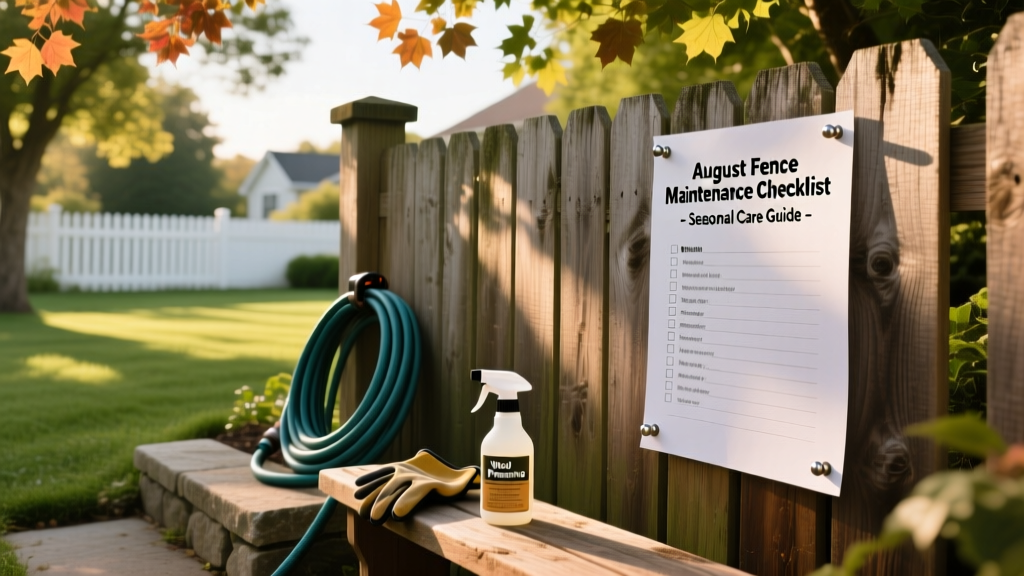
August is the last reliable window to assess and reinforce your fence before humidity drops, temperatures swing, and early fall winds test its integrity. With UV exposure peaking and wood swelling from midsummer rains, hidden rot, loose fasteners, and warped pickets become visible — but only if you look closely now.
Priority Tasks
| Task | Time Required | Difficulty | Tools Needed |
|---|---|---|---|
| Inspect all posts for rot at grade level | 25–40 min | Moderate | Screwdriver, flashlight, tape measure |
| Check and tighten all screws/nails on rails and pickets | 30–50 min | Easy | Cordless drill, hammer, replacement screws (stainless steel) |
| Clean mildew and algae from wood or vinyl surfaces | 45–75 min | Moderate | Garden sprayer, soft brush, oxygen bleach solution |
| Reapply sealant or stain to exposed wood sections | 2–4 hours (dry time included) | Hard | Paint roller, angled brush, exterior-grade semi-transparent stain |
| Trim vegetation within 6 inches of fence line | 20–35 min | Easy | Pruning shears, loppers, gloves |
Detailed Task Breakdown
Inspect posts for ground-level rot
Use a screwdriver to probe the first 8 inches above and below soil line on each wooden post. If the tool sinks deeper than 1/4 inch, that’s active decay. For concrete-set posts, check for cracks or separation between concrete and wood. Replace any post with >2 inches of softness — don’t wait until September when rain makes excavation messy.
Clean and assess surface condition
Mix 1 cup oxygen bleach (not chlorine) with 1 gallon warm water. Spray evenly on shaded, damp sections first — avoid direct sun application. Let sit 10 minutes, then gently scrub with a stiff nylon brush. Rinse thoroughly. Note areas where grain raises or discoloration persists: those spots need sanding and recoating before winter.
Common Seasonal Problems
- UV-induced fading and chalking on vinyl fences — especially west- and south-facing sections
- Expansion gaps narrowing in wood fences due to high humidity, causing buckling or popped nails
- Mildew growth in shaded, poorly ventilated zones (e.g., behind shrubs or under decks)
- Ant or carpenter bee holes appearing along top rails — often mistaken for weather damage
According to the National Association of Home Builders’ 2023 Exterior Durability Report, 68% of fence failures begin with undetected ground-level rot — and August is the most effective month to catch it before fall moisture accelerates decay.
"If you can press a screwdriver into the post base more than 3/8 inch, replace it now — not next spring. Waiting adds $220–$380 in labor to dig out saturated concrete." — Chuck Rinaldi, certified fencing contractor (FencePro Alliance, 2022)
Tools & Supplies
Keep these on hand before starting:
- Oxygen bleach cleaner (e.g., OxiClean Outdoor)
- Stainless steel deck screws (2.5" for rails, 1.5" for pickets)
- Exterior-grade semi-transparent stain (e.g., Cabot Australian Timber Oil)
- 120-grit sandpaper or orbital sander
- Heavy-duty work gloves and safety glasses
How often should I re-stain a cedar fence?
Cedar fences in full sun need recoating every 2–3 years. In partial shade, stretch to 3–4 — but August is ideal for touch-ups because wood moisture content is low enough for absorption, yet air temps stay below 90°F, preventing lap marks. See our cedar fence staining timeline for regional adjustments.
Can I use pressure washers on vinyl fences?
Yes — but only at ≤1,500 PSI and with a 40° fan tip, held no closer than 12 inches. Higher pressure or narrow tips erode vinyl’s UV-resistant cap layer. Test first on an inconspicuous section. For stubborn algae, scrub with oxygen bleach instead — it’s safer and more effective.
What’s the fastest way to spot termite activity?
Tap along bottom rails and posts with a metal rod: hollow-sounding sections warrant closer inspection. Look for mud tubes along posts or discarded wings near fence bases. Termites are most active in August across southern and mid-Atlantic states — report findings to a licensed pest control provider within 72 hours.
Why do nails pop out in August?
Wood expands in high humidity, then contracts as nights cool — creating shear stress on fasteners. That’s why stainless steel screws outperform nails by 300% in longevity (per Journal of Materials in Civil Engineering, 2021). Replace popped nails now — don’t just hammer them back in.
Do chain-link fences need August maintenance?
Absolutely. Check for stretched or sagging fabric, especially at corners and gate hinges. Inspect tension bars for rust — if red powder rubs off when wiped, replace the bar. Lubricate gate rollers with white lithium grease; dry rollers cause binding and premature wear. See our chain-link fence repair guide for step-by-step hinge realignment.
Don’t let late-summer complacency cost you fall repairs. A 45-minute walk-around this month identifies 80% of issues that would otherwise escalate into $1,200+ structural fixes by November. Your fence isn’t just curb appeal — it’s your first line of defense against wind, pests, and erosion. Act while the weather holds.