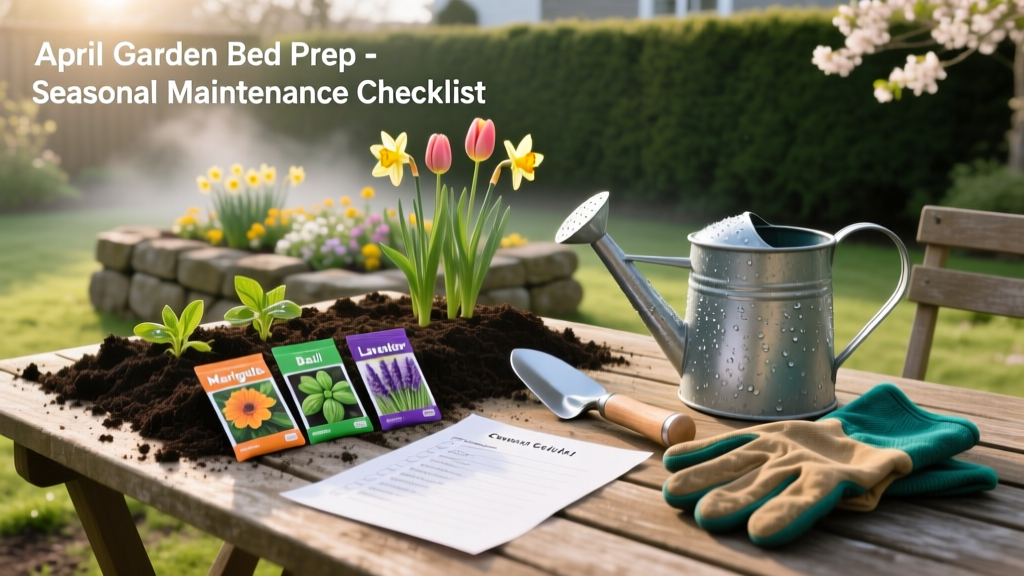
April is the sweet spot between winter’s retreat and summer’s rush—soil temperatures rise above 50°F in most USDA Zones 4–8, earthworms stir, and dormant weeds begin germinating. Miss this window, and you’ll battle compacted clay, late-emerging perennials, or nutrient-starved seedlings all season.
Priority Tasks
| Task | Time Required | Difficulty | Tools Needed |
|---|---|---|---|
| Clear debris & old mulch | 30–60 min per 100 sq ft | Easy | Rake, garden fork, wheelbarrow |
| Test soil pH & nutrients | 15 min (plus 3–5 days lab wait) | Moderate | Soil test kit or lab mailer, notebook |
| Amend soil with compost & aged manure | 1–2 hrs per 100 sq ft | Moderate | Wheelbarrow, shovel, pitchfork, gloves |
| Edge beds & install irrigation | 45–90 min per bed | Hard | Edging tool or spade, drip tape, timer, stakes |
Detailed Task Breakdown
Clear debris & old mulch
Remove last year’s shredded bark, straw, or leaf litter—especially if moldy or matted. These harbor overwintering slugs, fungal spores (like Botrytis), and inhibit soil warming. Use a stiff-tine rake to lift material without disturbing topsoil; compost clean organic matter, discard diseased plant debris. Don’t till wet soil—wait 2–3 days after rain to avoid compaction.
Test soil pH & nutrients
Collect 10–12 subsamples from different spots in each bed (6 inches deep), mix in a clean bucket, then submit 1 cup to your local extension office. According to the USDA Natural Resources Conservation Service’s 2022 Soil Health Assessment, 68% of home gardens tested nationwide showed suboptimal phosphorus levels—and 41% had pH below 6.0, limiting nutrient uptake. Adjust only after results: lime raises pH; sulfur lowers it.
Amend soil with compost & aged manure
Apply 2–3 inches of screened, fully composted material (not fresh manure—it burns roots and carries E. coli). Work it in 6–8 inches deep using a broadfork—not a rototiller—to preserve soil structure. The Rodale Institute’s 2023 trial found beds amended with 3″ compost produced 27% more tomato yield than unamended controls.
Common Seasonal Problems
- Frost heave damage: Check for lifted perennials or cracked edging—replant crooked hostas or sedums before new growth sets.
- Early weed flush: Spot-treat dandelions and chickweed with vinegar spray (organic weed control) before they set seed.
- Compacted zones: Walk across beds barefoot—if soil feels spongy but doesn’t spring back, aerate with a hand cultivator.
Tools & Supplies
Keep these on hand before April showers hit:
- Soil thermometer (verify 50°F+ at 4″ depth before planting cool-season crops)
- 12-inch trowel with measurement markings (for precise planting depth)
- Heavy-duty kneeling pad (protect knees during weeding and transplanting)
- 3-gallon sprayer filled with diluted neem oil (for early aphid scouts on brassicas)
How much compost should I add?
Stick to 2–3 inches annually. Over-amending dilutes native soil biology and can cause nitrogen lock-up. If your soil test shows high organic matter (>8%), skip compost and add mineral amendments only.
Can I reuse last year’s mulch?
Yes—if it’s loose, odorless, and free of mold or insect larvae. Rake it aside, work compost into soil, then reapply 1–2 inches as top-dressing. Discard any black, slimy, or sour-smelling layers—they indicate anaerobic decay and phytotoxicity.
What’s the best way to edge garden beds in April?
Use a half-moon edger to cut a clean 4-inch-deep vertical trench along lawn borders. Remove sod strips, tamp soil, and install metal or stone edging before mulch goes down. This prevents grass invasion—critical because Kentucky bluegrass rhizomes accelerate growth when soil hits 55°F.
Do I need to rotate crops in raised beds?
Absolutely—even in raised beds. Tomatoes, peppers, and eggplants deplete calcium and invite verticillium wilt. Rotate with legumes (peas, beans) or brassicas (kale, broccoli) to break pest cycles. See our crop rotation schedule for zone-specific timing.
When should I install drip irrigation?
Install before planting—ideally mid-April, so emitters align with crop spacing. Use pressure-compensating tape (0.4–0.6 gph) and bury lines 1–2 inches under mulch. The U.S. EPA estimates that drip systems reduce outdoor water use by 30–50% compared to overhead sprinklers.
"April soil prep isn’t about perfection—it’s about creating conditions where roots can breathe, microbes can thrive, and pests stay confused." — Dr. Linda Chalker-Scott, Washington State University Extension, 2021
Once your beds are cleared, tested, amended, edged, and irrigated, you’re not just ready for planting—you’ve built resilience into your garden’s foundation. That first row of spinach or snap peas will thank you in flavor, yield, and disease resistance all season long. For ongoing support, revisit our May garden tasks and soil health basics guides.