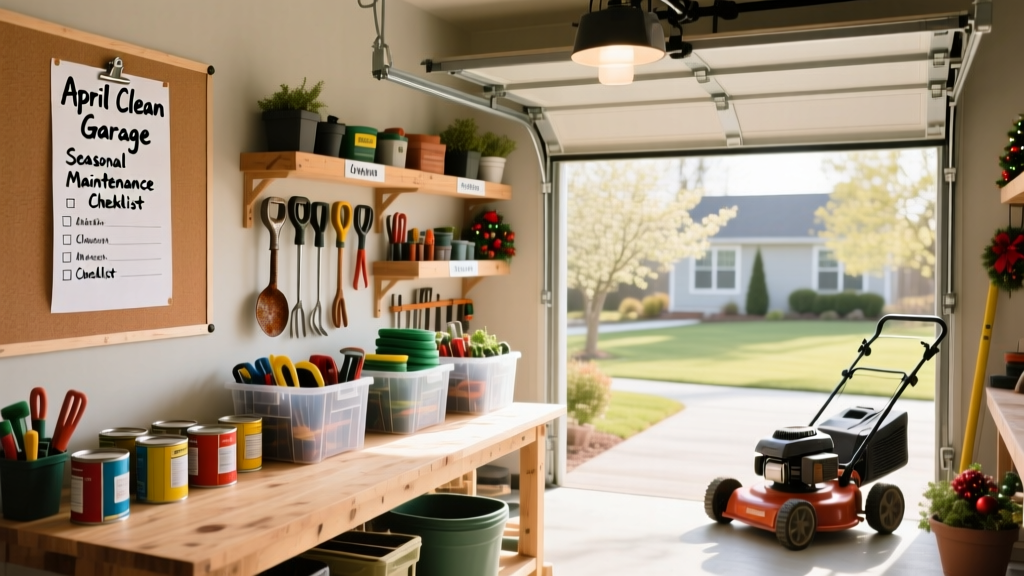
April’s mild temperatures and drier air make it the ideal time to tackle garage maintenance—before summer heat traps moisture, before humidity invites mold, and before you cram in lawn equipment or seasonal gear. Skipping this window means dealing with stuck doors, corroded tools, or rodent nests by June.
Priority Tasks
| Task | Time Required | Difficulty | Tools Needed |
|---|---|---|---|
| Inspect and lubricate garage door springs & tracks | 25–40 min | Moderate | White lithium grease, socket set, flashlight |
| Deep-clean concrete floor (oil stains, debris) | 1.5–2.5 hrs | Easy–Moderate | Baking soda + vinegar or commercial degreaser, stiff-bristle brush, garden hose with spray nozzle |
| Check for rodent entry points & seal gaps ≥¼ inch | 45–75 min | Easy | Steel wool, caulk gun, expanding foam, metal mesh |
| Test GFCI outlets and reset tripped breakers | 10–15 min | Easy | GFCI tester (under $10), voltage tester |
| Organize and label storage bins; discard expired chemicals | 2–3 hrs | Moderate | Label maker, heavy-duty bins, OSHA-compliant chemical disposal bag |
| Inspect HVAC filter (if garage houses furnace/air handler) | 5 min | Easy | New MERV 8–11 filter, ladder (if needed) |
Detailed Task Breakdown
Inspect and lubricate garage door components
Start with the door fully closed. Check torsion springs for cracks or gaps in winding cones—these rarely fail suddenly but show stress over months. Wipe down tracks with a dry rag, then apply white lithium grease (not WD-40—it attracts dust) to rollers and hinges. Test operation: door should lift smoothly with one hand and stay at mid-height when released. According to the Door & Access Systems Manufacturers Association (DASMA), 73% of garage door injuries occur during DIY repairs involving springs—never adjust tension yourself without proper training.
Deep-clean the concrete floor
Begin by sweeping loose grit and scraping dried mud with a metal scraper. For oil stains under the car, sprinkle baking soda or cat litter, let sit 12 hours, then scrub with vinegar-water (1:1) and a push broom. Rinse thoroughly—standing water left overnight can wick into cracks and accelerate spalling. The U.S. EPA estimates that 14% of household water usage is from leaks, so check for damp spots near floor drains or wall bases that could signal hidden plumbing issues.
Seal rodent entry points
Rats squeeze through holes the size of a quarter; mice need only a dime-sized gap. Focus on where utility lines enter (water, gas, electric), gaps around overhead door seals, and foundation cracks near the floor. Stuff steel wool into openings first—rodents won’t chew it—then seal with silicone caulk or copper mesh embedded in polyurethane foam. The National Pest Management Association reports garages account for 68% of residential rodent infestations reported in spring.
Common Seasonal Problems
- Condensation on tools or metal shelves—causes rust within days if not wiped and coated with light oil
- Ant trails along baseboards or near stored pet food—early sign of colony establishment
- Garage door remote range dropping—often due to weak batteries or interference from new smart-home devices installed over winter
- Musty odor near stored cardboard boxes—indicates trapped moisture or early mold growth behind drywall
Tools & Supplies
Keep these on hand before starting—no last-minute hardware store runs:
- Stiff nylon or wire brush (for grout and rust)
- GFCI outlet tester (required by NEC 2023 for all garage circuits)
- OSHA-approved respirator (N95 minimum) for cleaning old paint or insulation dust
- Heavy-duty extension cord rated for outdoor use (12-gauge minimum)
- Label maker with weather-resistant tape (see our garage labeling system)
How often should I replace garage door weatherstripping?
Every 2–3 years—or immediately if you see daylight under the door, feel drafts, or notice water pooling inside after rain. Vinyl strips degrade fastest in UV exposure; rubber lasts longer but hardens in cold snaps. Replace before April showers intensify to prevent water intrusion and energy loss.
Can I pressure-wash my garage floor?
Yes—but only if the concrete is at least 1 year old and fully cured. Newer slabs can delaminate under high PSI. Use ≤2,000 PSI with a 25-degree tip, keep the wand 12 inches from the surface, and never aim directly at expansion joints. Always neutralize residue with baking soda solution afterward to prevent efflorescence.
What’s the safest way to dispose of old paint and solvents?
Never pour them down drains or toss in trash. In 42 states, household hazardous waste (HHW) programs accept latex and oil-based paints year-round. Call your county’s HHW hotline for drop-off locations—many offer April collection events. Latex paint can be dried with kitty litter before disposal; oil-based must go to a facility.
Why does my garage door reverse mid-close sometimes?
It’s likely triggered by misaligned safety sensors (the small black lenses near the track base). Wipe lenses with a microfiber cloth, check alignment (laser dots must hit center of each lens), and verify wiring isn’t pinched. If it persists, test manual release: if door lowers smoothly by hand, the motor assembly may need servicing. Per UL 325 standards, reversal must occur within 2 seconds of contact with a 2-inch obstruction.
Should I insulate my garage walls if it’s attached to the house?
Yes—if your living space shares a wall or ceiling with the garage. The 2021 IECC requires R-13 cavity insulation in attached garages to prevent carbon monoxide infiltration and reduce heating load. Uninsulated walls also promote condensation in April’s temperature swings, leading to mold behind drywall. A pro tip: use unfaced fiberglass batts—no vapor barrier needed on the garage side.
How do I stop my power tools from rusting in humid April air?
Store them off concrete floors on pegboard or metal shelving. After use, wipe blades and casings with a cloth dampened with mineral oil—not vegetable oil, which turns rancid. For long-term storage, place silica gel packs inside toolboxes. According to the National Tool Dealers Association’s 2022 durability study, tools stored on bare concrete lose 3x more surface integrity in 90 days than those elevated 6 inches.
"Garage maintenance isn’t about perfection—it’s about catching the 5% of issues that cause 95% of failures. April is when you spot the hairline crack before it becomes a leak, the frayed wire before it sparks." — Mike R., certified home inspector with 18 years’ field experience
With this checklist done, your garage shifts from cluttered catch-all to a functional, safe, and organized hub. You’ll avoid emergency calls for stuck doors or pest control—and gain real estate for spring projects like bike tune-ups or gardening prep. Next, consider checking your attic insulation and servicing your HVAC system, both critical before summer demand spikes.