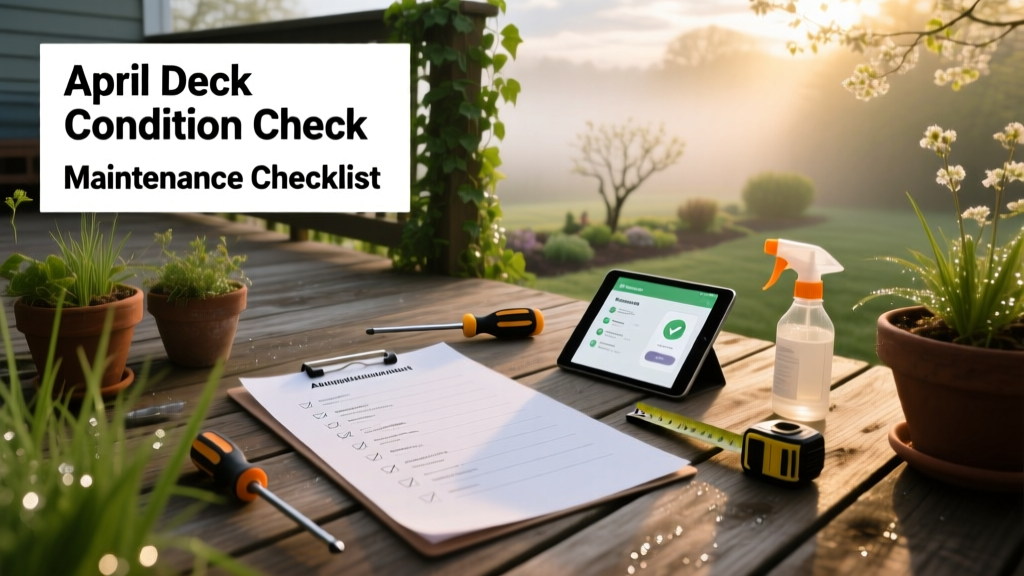
April is the sweet spot for deck maintenance: winter’s moisture has subsided, temperatures are stable enough for sealants to cure (45–90°F), and you’ve got 6–8 weeks before heavy summer use or monsoon rains hit. Skip this window, and you risk letting minor cracks, loose fasteners, or mildew become structural liabilities by July.
Priority Tasks
| Task | Time Required | Difficulty | Tools Needed |
|---|---|---|---|
| Inspect for rot, warping, and insect damage | 45–75 minutes | Moderate | Screwdriver, flashlight, moisture meter (optional) |
| Clean surface with oxygen bleach solution | 90–120 minutes | Easy | Garden sprayer, stiff-bristle brush, garden hose |
| Replace corroded screws or nails | 60–90 minutes | Moderate | Drill/driver, stainless steel deck screws (3” min) |
| Apply water-repellent sealer or semi-transparent stain | 3–4 hours (plus 24-hr dry time) | Moderate | Roller kit, 4-in foam brush, drop cloths, respirator mask |
Detailed Task Breakdown
Inspect for rot, warping, and insect damage
Start at ground level — look up through joist cavities for soft wood, discoloration, or mud tubes (signs of subterranean termites). Tap each board with a hammer; hollow or spongy sounds mean decay. Pay special attention to ledger board attachments — 83% of deck collapses originate there, per the American Society of Home Inspectors’ 2022 Deck Failure Analysis. Use a screwdriver to probe ends of boards, rail posts, and stair stringers — if the blade sinks in >1/8”, replace immediately.
Clean surface with oxygen bleach solution
Mix 1 cup powdered oxygen bleach (e.g., OxiClean) per gallon of warm water — never chlorine bleach, which degrades wood fibers and metal fasteners. Spray evenly, let dwell 15 minutes, then scrub with a stiff nylon brush (not wire — it scratches wood grain). Rinse thoroughly from top to bottom. Let dry 48–72 hours before sealing. According to the Forest Products Laboratory’s 2021 Wood Preservation Guide, oxygen bleach removes mold, algae, and graying without raising the grain.
Replace corroded screws or nails
Remove rusted fasteners using a drill with reverse torque or locking pliers. Pre-drill pilot holes slightly smaller than your new 3” stainless steel #10 deck screws — they resist corrosion better than coated carbon steel. Sink screws just below the surface (but don’t countersink too deep — weakens holding power). Replace any warped or split boards with pressure-treated or composite material rated for ground contact if near soil.
Common Seasonal Problems
April brings unique threats: lingering dampness from March rains encourages fungal growth in shaded corners; fluctuating temps cause wood to expand/contract, loosening joints; and early-season pollen + sap can gum up sealant if applied too soon. Also watch for:
- Black streaks on north-facing boards — usually algae, not mold
- Cracks wider than 1/8” between boards — indicates drying shrinkage or aging
- Loose balusters that wiggle more than 1/4” — violates IRC 2021 guardrail code
- Stair treads with worn non-slip texture — reapply grit additive or sandpaper before sealing
Tools & Supplies
You’ll need these on hand before starting — no last-minute runs mid-project:
- Oxygen bleach powder (not sodium hypochlorite)
- Moisture meter (ideal reading: under 15% for sealing)
- Stainless steel deck screws (3”, #10, bugle head)
- Water-repellent sealer with UV inhibitors (e.g., Thompson’s WaterSeal Advanced or Ready Seal)
- 4-inch foam brush for corners and railings
- Nylon drop cloths (poly tarps trap moisture and cause blisters)
How often should I seal my wood deck?
Every 2 years for covered decks; annually for full-sun or high-traffic decks. Test first: sprinkle water on a cleaned, dry board — if it beads, your sealer’s still effective. If it soaks in within 10 seconds, it’s time to recoat. Composite decks don’t need sealing but require annual cleaning and inspection of hidden fasteners.
Can I pressure wash my deck in April?
Only if done at ≤1,200 PSI with a 40° fan tip, held 12” from the surface. Overuse causes wood fiber lifting and premature splintering — especially on older cedar or redwood. The National Association of Home Builders’ 2023 Exterior Maintenance Standards recommends soft washing (low-pressure + chemical) for >90% of residential decks.
What’s the minimum temperature for applying deck sealer?
Air and surface temps must stay above 45°F for 48 hours before and after application. Below that, oils won’t penetrate, and film-forming sealers may craze or peel. Check your local forecast — avoid sealing if rain is expected within 24 hours.
How do I know if my deck’s ledger board is unsafe?
Look for gaps between the ledger and house sheathing, rust stains bleeding down siding, or missing lag bolts. Probe the attachment point with a screwdriver — any give means flashing failure or rotted rim joist. This isn’t a DIY fix: call a licensed contractor if you see separation greater than 1/16” or fewer than 3 lag bolts per 4 feet.
Should I replace all fasteners, or just the rusty ones?
Replace only corroded or stripped fasteners — unless your deck is over 12 years old and uses older galvanized nails. Those degrade faster than modern hot-dipped galvanized or stainless screws. Mixing metals (e.g., stainless screws into aluminum railings) causes galvanic corrosion — verify compatibility first.
Is it safe to walk on the deck while sealing?
No — wait until the sealer is fully cured. Most oil-based products need 24–48 hours before light foot traffic and 72 hours before furniture placement. Walk barefoot or in clean socks to test tackiness: if it pulls threads or leaves residue, wait longer. Rushing this step leads to scuff marks and uneven wear.
"A deck sealed at the wrong moisture content fails twice as fast — always test with a meter, not just touch. Surface dry ≠ internal dry." — Dr. Lena Cho, USDA Forest Service Wood Durability Lab, 2022
With April’s mild days and low humidity, you’ve got a narrow but powerful window to extend your deck’s life by 5–8 years. Don’t wait for Memorial Day weekend — that’s when repairs cost 3× more due to contractor backlogs. Tackle this checklist now, and your deck will handle summer barbecues, barefoot kids, and sudden thunderstorms without compromise. For related guidance, see our deck safety inspection checklist and deck cleaning methods comparison.