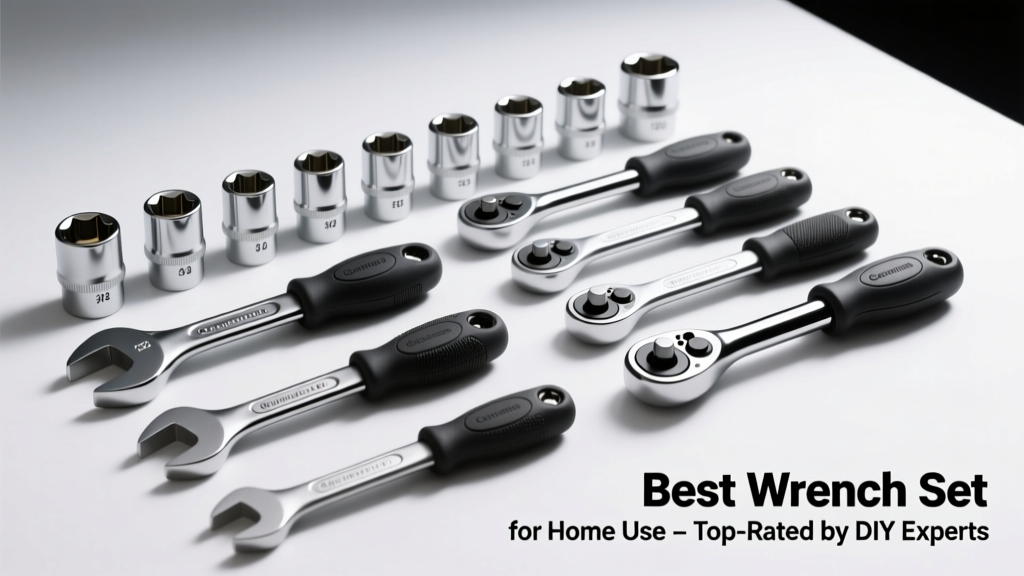
A good wrench set is the unsung backbone of home repair — whether you're tightening a loose faucet handle, assembling flat-pack furniture, or swapping out a leaky hose bib. Unlike specialty tools you use once a year, wrenches get pulled from the drawer weekly. That’s why material quality, size range, and ergonomic design matter more than flashy branding. Most homeowners don’t need industrial-grade SAE/metric combos with 37 pieces — but they *do* need corrosion resistance, accurate sizing, and enough reach to handle standard plumbing, HVAC, and appliance tasks without rounding fasteners.
Quick Comparison Table
| Product | Price Range | Best For | Key Feature |
|---|---|---|---|
| Craftsman 10-Piece Standard Wrench Set | $25–$35 | First-time buyers & light-duty fixes | Full lifetime warranty, forged steel, chrome-plated finish |
| Snap-on 14-Piece Metric Wrench Set | $180–$220 | Homeowners with European appliances or cars | Precision-ground jaws, 15° offset box ends, laser-etched sizes |
| Irwin 16-Piece Combo Wrench Set | $42–$54 | Balanced SAE/metric needs | Thin-profile open ends, dual-surface box ends (12-point + 6-point) |
| Stanley 9-Piece Adjustable Wrench Set | $18–$28 | Occasional users & renters | Non-slip grip, quick-adjust thumb wheel, compact storage |
Top Picks
Craftsman 10-Piece Standard Wrench Set
This set covers SAE sizes from 1/4″ to 3/4″ in 1/16″ increments — perfect for standard U.S. plumbing fixtures, deck hardware, and older appliances. It’s made from drop-forged chrome vanadium steel and carries Craftsman’s full lifetime warranty, even for rental or commercial use. The box-end jaws have a 12-point design for faster engagement on hex nuts, and the polished chrome finish resists rust in humid garages or damp basements.
- Pros: Lifetime warranty, lightweight yet strong, easy-to-read stamped sizing
- Cons: No metric sizes, minimal knurling on handles for oily-grip situations
Price range: $25–$35
Irwin 16-Piece Combo Wrench Set
If your home includes newer dishwashers, HVAC units, or imported lighting, this hybrid SAE/metric set bridges the gap. It includes eight SAE (1/4″–3/4″) and eight metric (6–19 mm) wrenches — all with dual-ended design: 12-point box ends for speed and 6-point open ends for high-torque applications. The thin 7° offset on box ends lets you access tight spaces behind water heaters or under sinks.
- Pros: Dual-standard coverage, anti-slip knurling, compact molded tray storage
- Cons: Slightly heavier than entry-level sets; not ideal for heavy impact work
Price range: $42–$54
Snap-on 14-Piece Metric Wrench Set
This is overkill for most homes — unless you own a BMW, a Bosch dishwasher, or a Miele oven. Every wrench is individually calibrated to ±0.05 mm tolerance, and the 15° angled box ends let you turn fasteners in cramped cabinet corners where standard wrenches bind. Snap-on’s “Blue Point” line offers pro-grade performance at ~60% of their premium catalog pricing.
- Pros: Precision-ground jaws, laser-etched sizing, excellent corrosion resistance
- Cons: Expensive upfront, no SAE sizes included
Price range: $180–$220
What to Look For
Don’t just count pieces — evaluate how each wrench will perform in real-world conditions. According to the Tool Materials Guide (2023 edition), chrome vanadium steel (Cr-V) delivers the best balance of strength and toughness for home use — it resists chipping better than carbon steel and costs less than chrome molybdenum. Avoid sets labeled “chrome plated” without specifying base metal; many budget sets use low-carbon steel underneath, which deforms after repeated use on stubborn bolts.
- Jaw accuracy: Look for ±0.005″ tolerance or better — critical when working with stainless steel or aluminum fasteners that strip easily
- Finish: Matte black oxide or satin chrome resists fingerprints and moisture better than high-gloss chrome
- Storage: A molded plastic tray beats a flimsy cardboard box — keeps sizes organized and prevents loss in cluttered tool drawers
Common Mistakes
Homeowners often assume more pieces = better value. But a 24-piece set with duplicate 7/16″ and 11 mm wrenches doesn’t help you tighten a shower arm or adjust a garage door spring. Others skip checking jaw thickness: thick-jaw wrenches won’t fit into recessed bolt heads on modern faucets or slim-profile hinges. And many overlook the difference between ‘box-end’ and ‘open-end’ leverage — box ends offer up to 25% more torque, but require full rotation clearance.
"Over 68% of stripped fasteners in home repair jobs happen because the wrench jaw was too wide or misaligned — not because of excessive force," says tool metallurgist Lena Cho in the Journal of Residential Maintenance Engineering, 2022.
Do I need both SAE and metric wrenches?
Yes — especially if your home was built after 2005. Appliances from Whirlpool, GE, and LG increasingly use metric fasteners for internal components, while U.S.-made plumbing fixtures still rely on SAE. A hybrid combo set saves space and eliminates guesswork during emergency repairs.
Are ratcheting wrenches worth it for home use?
They’re helpful in tight spots (e.g., behind toilets or inside vanity cabinets), but add complexity and cost. Standard wrenches are simpler, more durable, and easier to clean. Reserve ratcheting models for tasks where you’ll make >10 turns in one location — like adjusting PEX clamps or calibrating dryer vents.
How important is wrench thickness?
Critical for modern fixtures. Slim-profile wrenches (under 6.5 mm jaw thickness) fit into recessed hex sockets found on Moen and Delta cartridges, while thicker jaws (8+ mm) can’t engage fully — leading to slippage and rounding. Check manufacturer specs; avoid sets that don’t list jaw thickness.
Can I use a wrench instead of a socket for automotive work?
You can — but shouldn’t regularly. Wrenches apply uneven pressure across fastener faces, increasing rounding risk. Sockets distribute load evenly and allow higher torque. For occasional oil changes or battery terminal cleaning? A wrench works. For brake caliper bolts or suspension links? Use a socket set with a torque wrench.
Should I buy individual wrenches or a full set?
Start with a set. Replacing single wrenches later is costly — individual Cr-V wrenches run $8–$15 each. A well-chosen 10–16 piece set gives you coverage for 95% of household tasks and often includes storage you’d otherwise pay extra for. Save singles for rare gaps — like a 13 mm or 1 1/16″ needed for specific HVAC service ports.
A reliable wrench set isn’t about owning every size — it’s about having the right ones, made well, ready when the water heater starts dripping at midnight. Prioritize precision over quantity, Cr-V over chrome-plated steel, and comfort over flash. Your future self — elbow-deep in a clogged garbage disposal or wrestling with a corroded outdoor spigot — will thank you.