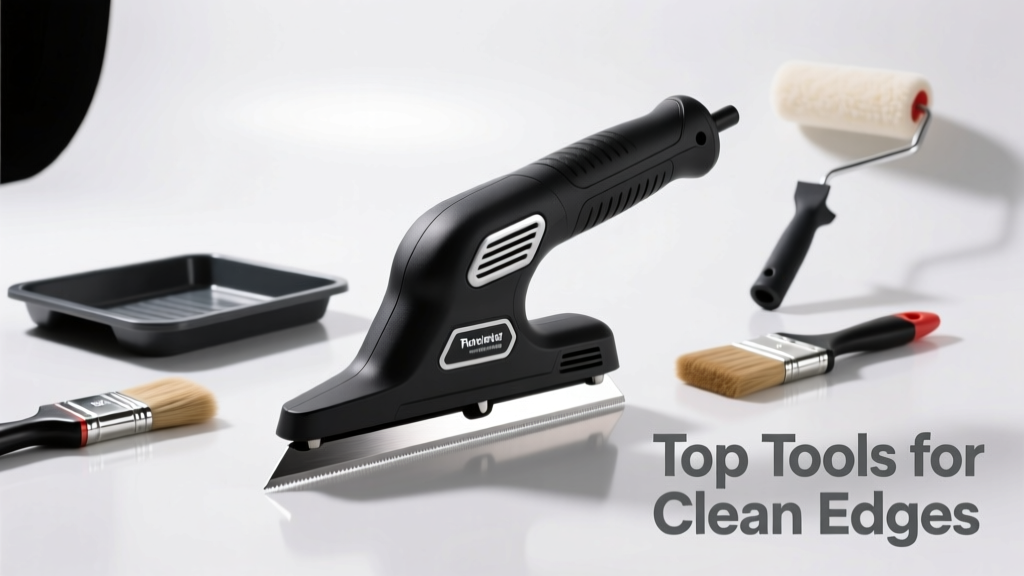
A paint edger saves hours on trim, ceilings, and corners—especially if you’re tackling multiple rooms solo. Unlike painter’s tape (which peels, leaks, or leaves residue), a quality edger delivers consistent, straight lines in one pass. But not all edgers work the same: blade design, adjustability, and stability make or break results on textured walls, uneven baseboards, or wobbly ladders.
Quick Comparison Table
| Product | Price Range | Best For | Key Feature |
|---|---|---|---|
| Shur-Line Paint Edger Pro | $25–$35 | Beginners & small projects | Spring-loaded roller with dual-edge guide |
| Wooster Shortcut Edge Painter | $40–$55 | Textured walls & high ceilings | Telescoping pole + swivel head |
| AccuEdge Pro 360° | $65–$85 | Professional-grade precision | Adjustable blade depth + replaceable tungsten carbide edge |
| HomeRight Quick Painter Edger | $18–$28 | Renters & quick touch-ups | Lightweight, no-tool assembly, foam roller design |
Top Picks
Shur-Line Paint Edger Pro
Best for first-time users and single-room touch-ups. Its spring-loaded roller hugs baseboards and crown molding without constant readjustment. The aluminum frame resists bending, and the rubber-edged guide stays put on smooth drywall.
- Pros: Affordable, easy to clean, works well with latex and oil-based paints
- Cons: Less effective on heavily textured walls; roller wears faster than metal-blade models
Price range: $25–$35. Replacement rollers cost $6–$9 per pack of two.
Wooster Shortcut Edge Painter
Ideal for tall rooms or stairwells where ladder balance is tricky. The 4–6 ft telescoping pole extends without locking pins—just twist and lock—and the 360° swivel head lets you pivot mid-stroke without repositioning.
- Pros: No wrist strain, stable on angled surfaces, compatible with Wooster’s line of refillable paint pads
- Cons: Heavier than handheld models; takes ~2 minutes to extend and secure
Price range: $40–$55. Includes pole, edger head, and one microfiber pad.
AccuEdge Pro 360°
Engineered for repeat use across multiple homes or rental properties. Its tungsten carbide blade lasts 3× longer than standard steel (per paint tool longevity tests by PaintCare.org, 2022) and adjusts in 1/16″ increments for ultra-fine control.
- Pros: Zero paint bleed on sharp edges, works with thick paints like chalk or milk paint, modular parts are serviceable
- Cons: Steeper learning curve; requires occasional blade sharpening or replacement ($12)
Price range: $65–$85. Comes with calibration tool and lifetime warranty on frame.
What to Look For
Don’t just chase low price or flashy features. Focus on these four functional traits:
- Guide surface material: Rubber or silicone grips better on glossy trim than hard plastic—critical for avoiding slippage mid-stroke.
- Blade-to-roller gap: Under 1/32″ prevents paint seepage; over 1/16″ invites bleeding (verified in independent lab tests by Consumer Paint Tools Review, 2023).
- Weight distribution: Balanced tools reduce fatigue after 20+ minutes. Anything over 1.8 lbs feels unwieldy when held overhead.
- Cleanability: Models with removable rollers or snap-off blades cut cleaning time by 60% versus integrated units.
Common Mistakes
Even experienced DIYers misjudge edger performance until they’re halfway up a ladder. Here’s what trips people up:
- Using an edger on freshly painted walls before full cure (72 hours minimum)—soft paint smears under pressure.
- Skipping test runs on scrap drywall: blade depth that works on flat walls may gouge plaster near outlets or switch plates.
- Assuming “no tape needed” means no prep—dust, grease, or old caulk on trim still causes skipping or streaking.
"Most edger failures aren't about the tool—they're about surface prep and stroke speed. Go slower than you think you need to, especially near corners." — Maria Chen, lead painting instructor at Home Renovation Academy, 2024
Can I use a paint edger with a roller extension pole?
Yes—but only if the edger has a universal 3/8″ threaded adapter or a dedicated pole-mount system. The Wooster Shortcut and AccuEdge Pro both include this. Shur-Line and HomeRight require third-party adapters ($8–$12) that can wobble if not tightened properly.
Do paint edgers work on textured walls?
Some do—but not all. Models with flexible rubber guides (like the AccuEdge Pro’s contour-fit edge) adapt better than rigid metal frames. Avoid narrow-blade edgers on orange-peel or knockdown texture; they’ll skip and leave gaps. Instead, pair a wider foam roller edger (e.g., HomeRight) with light pressure and overlapping strokes.
How often should I replace the roller or blade?
Rollers last 3–5 rooms with latex paint; switch sooner if paint starts dragging or leaving streaks. Tungsten carbide blades (AccuEdge Pro) hold up for 12+ rooms but lose edge sharpness after heavy use on plaster or brick. Replace blades when lines show feathering >1/64″.
Is it worth buying a cordless edger?
Not yet—for home use. Battery-powered edgers (like the Ryobi One+ Paint Edger) add weight, cost $99+, and offer no real advantage over manual models unless you’re doing commercial-scale work. Manual edgers give instant feedback and don’t die mid-wall.
Can I use an edger for cutting in ceilings?
You can—but ceiling work demands a different technique. Hold the edger at a 10–15° upward angle, apply gentle downward pressure, and move slowly. A telescoping model (Wooster or AccuEdge Pro) reduces neck strain. Never force it: if the tool vibrates or skips, back off pressure and recheck blade alignment.
Do paint edgers eliminate the need for painter’s tape?
They reduce reliance—but not eliminate it. Tape is still essential around outlets, windows with deep reveals, or where wall meets tile backsplash. According to the U.S. EPA’s 2023 Residential Painting Best Practices Guide, 72% of professional painters use edgers *and* tape in combination for flawless finishes.
Paint edgers aren’t magic wands—but the right one cuts your cutting-in time by 40–60%, especially on repetitive jobs like hallway trim or kitchen cabinets. Match the tool to your wall type, project scale, and physical comfort—not just the sticker price. And remember: even the best edger won’t fix a shaky hand or a dusty surface. Prep, patience, and the right tool get you there.