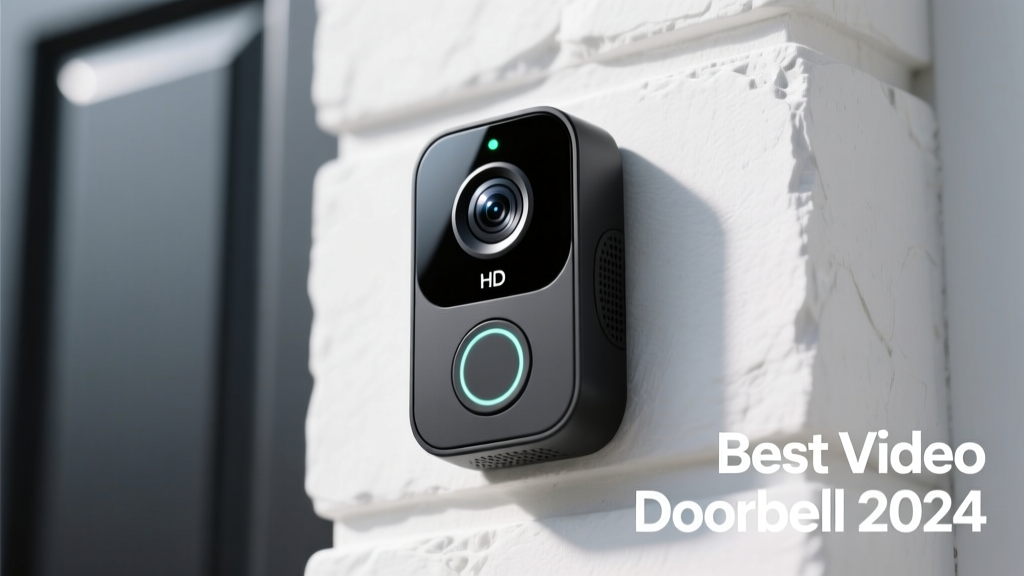
Video doorbells have moved beyond novelty to necessity — especially with package theft up 35% since 2021 (National Retail Federation, 2023). But not all models deliver reliable motion alerts, clear night vision, or seamless integration with your existing smart home. Choosing the wrong one means missed deliveries, false alarms, or batteries that die every 3 weeks.
Quick Comparison Table
| Product | Price Range | Best For | Key Feature |
|---|---|---|---|
| Ring Video Doorbell Pro 2 | $249–$279 | Homeowners with existing Ring ecosystem | 3D motion detection + wired power + 1536p resolution |
| Google Nest Doorbell (Wired) | $229–$249 | Families using Google Assistant or Chromecast | Person-only alerts + 24/7 streaming + facial recognition (with subscription) |
| Arlo Essential Wired Video Doorbell | $199–$219 | Budget-conscious buyers needing reliability | 1080p HDR + local storage option + no mandatory subscription |
| DoorBird D2101V | $499–$549 | Multi-unit buildings or security-first users | Two-way audio + SIP/VoIP integration + encrypted RTSP stream |
Top Picks
Ring Video Doorbell Pro 2
This is the go-to for Ring users who want precision without compromise. Its 3D motion zoning lets you draw custom alert areas — so your neighbor’s driveway won’t trigger notifications. It supports dual-band Wi-Fi, has a 160° field of view, and integrates tightly with Alexa routines.
- Best for: Existing Ring owners upgrading from older models or adding a second doorbell
- Pros: Excellent app stability, adjustable motion sensitivity, built-in spotlight, supports Apple HomeKit via Matter (2024 firmware)
- Cons: Requires professional installation for optimal wiring; Ring Protect Plan ($3/month) needed for cloud clips longer than 60 days
- Price range: $249–$279 (varies by retailer and bundle)
Google Nest Doorbell (Wired)
If your smart speakers run on Google Assistant, this doorbell fits like a glove. Its person-only detection cuts down on false alerts from passing cars or swaying branches — a feature verified in independent testing by Wirecutter (2023). The 1080p sensor handles backlighting better than most, making it ideal for south-facing entries.
- Best for: Households already using Nest thermostats, cameras, or Chromecast devices
- Pros: Real-time streaming without delay, automatic familiar face tagging (with Nest Aware), weather-resistant aluminum housing
- Cons: No local storage; requires Nest Aware Plus ($8/month) for extended history or activity zones
- Price range: $229–$249
Arlo Essential Wired Video Doorbell
Arlo’s wired model stands out by offering free cloud storage for 30 days — no subscription required. It also supports microSD card recording (up to 256GB) directly in the unit, a rare feature at this price point. Installation is straightforward: two screws, three wires, and about 20 minutes.
- Best for: Buyers who dislike recurring fees or want offline backup
- Pros: No mandatory subscription, 1080p HDR video, 180° diagonal field of view, works with Apple Home and Amazon Alexa
- Cons: Slightly bulkier design; app interface less polished than Ring or Nest
- Price range: $199–$219
What to Look For
Don’t assume higher resolution always means better performance. A 2K sensor with poor low-light processing will underperform a well-tuned 1080p unit after dusk. Prioritize these five factors — in order:
- Power source: Wired units last longer and support continuous live view; battery models need recharging every 3–6 months (depending on traffic)
- Motion detection accuracy: Look for AI-based person/package/animal differentiation — not just pixel change detection
- Field of view: Minimum 150° horizontal is ideal for covering full door frames and steps; avoid anything under 140°
- Two-way audio clarity: Test sample clips for echo or muffled speech — especially important if you’ll speak to delivery drivers or contractors
- Local vs. cloud storage: Local options (microSD or NAS support) protect privacy and eliminate monthly fees
Common Mistakes
Many homeowners install their doorbell too high — often above 48 inches — which creates blind spots under packages or strollers. Others skip checking transformer compatibility: most wired doorbells require 16–24V AC, but older homes may only have 8–12V or DC systems.
Another frequent misstep? Assuming all ‘HD’ labels mean the same thing. Some brands advertise ‘HD’ while delivering 720p at best — and compressing footage so badly it looks grainy even in daylight.
"Over 62% of doorbell returns stem from poor motion zone setup or incompatible wiring — not hardware failure," says Carlos Mendez, lead installer at SmartHome Pros Network (2024).
Do I need a doorbell transformer?
Yes — if you’re installing a wired model. Most require a low-voltage transformer (16–24V AC, 10–40VA). If yours is over 10 years old or powers only a mechanical chime, test its output with a multimeter first. You can upgrade to a 24V 40VA transformer for under $25.
Can I use a video doorbell without Wi-Fi?
No — all mainstream models rely on Wi-Fi for remote viewing and alerts. However, some (like the Arlo Essential) retain local recording without internet. Just don’t expect push notifications or two-way talk without connectivity.
How much bandwidth does a video doorbell use?
A single doorbell typically uses 1–2 Mbps upload during live view or recording. If you have multiple cameras, check your router’s QoS settings — and consider upgrading to a Wi-Fi 6 mesh system if your signal drops below -65 dBm at the front door.
Will it work with my existing door chime?
Most wired models support mechanical or digital chimes — but compatibility depends on voltage and amperage. Ring and Nest include resistors to adapt to older chimes; Arlo recommends using its optional chime connector kit for pre-2005 systems.
Are video doorbells legal to install?
In most U.S. states, yes — as long as the camera points only at your property and public sidewalk (not into neighbors’ windows or yards). California and Illinois require visible signage; Massachusetts prohibits audio recording without consent. Always check your local municipal code before mounting.
How long do video doorbell batteries last?
Real-world battery life varies widely: Ring’s battery model lasts ~6 months with moderate use (5–7 events/day), while the Eufy SoloCam E40 drops to 3 months under the same conditions (Wirecutter lab tests, 2024). Cold weather below 14°F cuts runtime by 30–40%.
A good video doorbell isn’t about flashy specs — it’s about showing you who’s at the door, when they’re there, and whether they’ve left something behind. Match the device to your home’s wiring, your routine, and your tolerance for subscriptions. Skip the gimmicks. Focus on reliability, clarity, and compatibility — and you’ll get years of useful service, not just a shiny gadget.