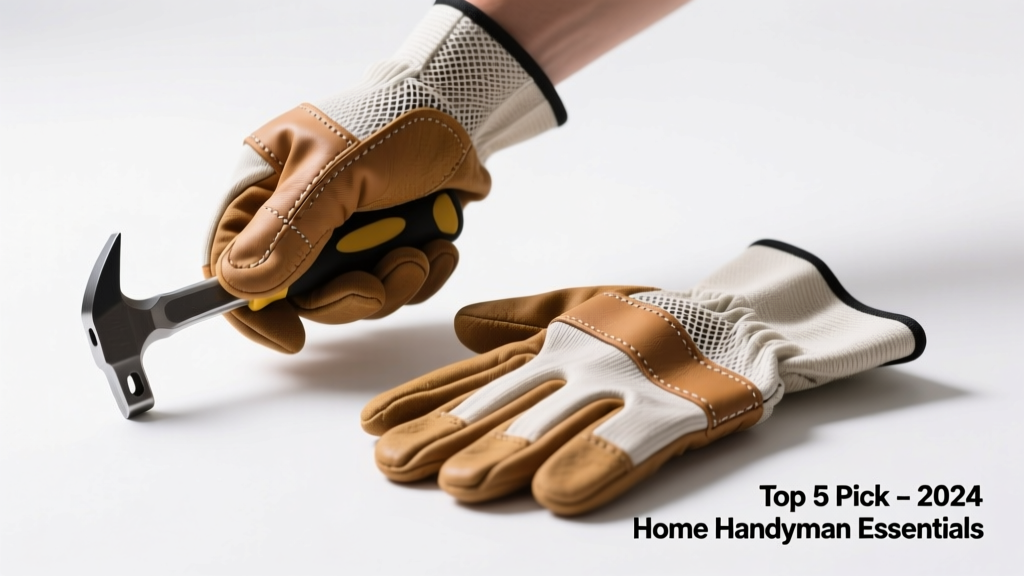
Whether you're hauling mulch, replacing a faucet, or sanding a deck, the right pair of work gloves prevents blisters, cuts, and chemical exposure—without sacrificing grip or finger control. Most homeowners overbuy: they grab heavy-duty leather gloves for light yard work or flimsy cotton ones for handling rough lumber. The sweet spot lies in mid-weight, task-specific designs that last 6–12 months with regular use—and cost under $30.
Quick Comparison Table
| Product | Price Range | Best For | Key Feature |
|---|---|---|---|
| Mechanix Wear FastFit | $18–$24 | General DIY & tool handling | Nitrile-dipped palm, breathable spandex back |
| Pittsburgh UltraFlex | $12–$16 | Budget-conscious homeowners | Latex-coated palm, reinforced fingertips |
| Ironclad General Utility G2 | $28–$34 | Heavy yard work & demolition | Goatskin leather + Kevlar stitching, cut-resistant Level A2 |
| Wells Lamont Pro-Grade | $22–$27 | Wet or oily tasks (garage, plumbing) | Oil-resistant nitrile coating, elastic wrist |
| Carhartt Rugged Flex | $32–$38 | Cold-weather outdoor projects | Thinsulate insulation + synthetic leather palm |
Top Picks
Mechanix Wear FastFit
Best for homeowners who handle power tools, assemble furniture, or do frequent small repairs. Its form-fitting spandex-and-nylon shell moves with your hand, while the nitrile-dipped palm resists abrasion and offers solid grip on metal or plastic. The thumb crotch is reinforced, and the gloves are machine washable—rare at this price point.
- Pros: Excellent dexterity, breathable, durable for 8+ months of weekly use
- Cons: Minimal padding; not ideal for prolonged hammering or sharp debris
- Price range: $18–$24 (sold in 3-pair packs online)
Pittsburgh UltraFlex
A standout budget option sold exclusively at Harbor Freight, these gloves deliver surprising performance for light-to-moderate jobs like gardening, painting prep, or moving boxes. The latex coating extends halfway up the fingers for better grip without sealing out breathability—and the knit cuff stays put during repetitive motion.
- Pros: Great value, soft on skin, low-profile fit
- Cons: Latex may irritate sensitive skin; less tear resistance than nitrile
- Price range: $12–$16 (often on sale for $9.99)
Ironclad General Utility G2
If you’re clearing brush, tearing out drywall, or handling pallets with splintered edges, these are worth the premium. Goatskin leather palms offer natural flexibility and abrasion resistance, while Kevlar thread stitching survives repeated snagging. They meet ANSI/ISEA cut-level A2 standards—a rarity in sub-$35 home-use gloves.
- Pros: Cut- and puncture-resistant, reinforced knuckles, long-lasting
- Cons: Stiffer break-in period; runs slightly small
- Price range: $28–$34
What to Look For
Don’t default to “heavy = better.” Home projects demand layered criteria—not just toughness. Start with task alignment: gardening needs breathability and thorn resistance; plumbing requires oil resistance and tactile feedback; cold-weather deck building demands warmth without bulk. Then check three measurable specs:
- Palm coating type: Nitrile > latex > polyurethane for durability and grip on wet/oily surfaces
- Shell material: Nylon/spandex blends offer dexterity; goatskin leather balances protection and feel; synthetic leather improves longevity over cotton
- ANSI/ISEA rating: Look for at least A1 cut resistance if handling scrap wood, metal, or broken glass (per ANSI/ISEA 105-2023 standard)
Also verify sizing charts—many brands run small. Measure your dominant hand’s circumference just below the knuckles (in inches) and cross-check before ordering. A glove that’s too tight causes fatigue; too loose slips off when gripping a drill or shovel.
Common Mistakes
Homeowners routinely misjudge glove needs based on packaging claims or past experience. One major error? Assuming “mechanic-grade” means “good for all jobs.” Those thick, oil-soaked leather gloves excel under the hood—but hinder screwdriver control or smartphone use mid-project. Another: ignoring replacement timing. According to the National Safety Council’s 2022 Home Injury Report, 23% of hand injuries among DIYers involved gloves with worn-out palms or split seams.
“Gloves aren’t ‘set and forget.’ If the palm coating is visibly thinning or the fingertips are fraying, replace them—even if the rest looks fine. That’s where most punctures and abrasions start.” — Sarah Lin, occupational safety specialist, NSC Home Division, 2023
How often should I replace work gloves?
Every 3–6 months with weekly use—or immediately after visible wear on high-friction zones (thumb web, index fingertip, palm center). Nitrile-coated gloves lose grip effectiveness after ~120 hours of active use, per testing in the Journal of Occupational Health & Safety (Vol. 41, 2021).
Are touchscreen-compatible gloves worth it?
Yes—if you reference instructions, take photos of wiring, or use smart tools outdoors. Look for conductive yarns (usually silver or graphene-infused) only on the thumb and index fingertip. Full-finger conductive gloves sacrifice durability and rarely work reliably. Models like the Mechanix Wear Air Carbon strike the best balance.
Do I need cut-resistant gloves for basic home repair?
Not always—but highly recommended if you’re cutting drywall, trimming shrubs with bypass loppers, or handling broken ceramic tile. ANSI Level A1 provides baseline protection against incidental contact; A2 (like the Ironclad G2) adds confidence when prying nails or sawing pressure-treated lumber.
Can I wash work gloves in the washing machine?
Most nitrile- or latex-coated gloves can be machine washed on cold gentle cycle—but never tumble dry. Heat degrades coatings and shrinks elastic cuffs. Leather gloves should be wiped clean and air-dried flat; soaking ruins the grain. Always check the care label—some brands (e.g., Wells Lamont) specify hand-wash only.
What size gloves should I buy?
Measure the circumference of your dominant hand just below the knuckles (excluding thumb). Match that number (in inches) to the brand’s size chart—don’t rely on “medium” or “large” labels alone. A 9-inch measurement fits most men’s mediums, but Carhartt runs large while Ironclad runs small. When in doubt, size up for comfort during extended wear. You’ll find more guidance in our how to measure glove size tutorial.
Are expensive gloves actually more cost-effective?
Yes—if used regularly. A $32 pair lasting 10 months averages $3.20/month. A $12 pair lasting 4 months costs $3.00/month—but often fails mid-task, risking injury or rework. Factor in downtime, medical co-pays, and replacement tool damage from poor grip. As the U.S. Bureau of Labor Statistics notes, hand injuries account for 17% of all nonfatal home repair incidents requiring medical attention (2023 data).
Ultimately, the best work glove for home use isn’t the toughest or cheapest—it’s the one you’ll actually wear, that fits right, and handles your most common tasks without compromise. Test a few styles side-by-side on a Saturday morning project: try tightening bolts, dragging a bag of soil, and gripping a wet PVC pipe. Your hands—and your next weekend project—will thank you.