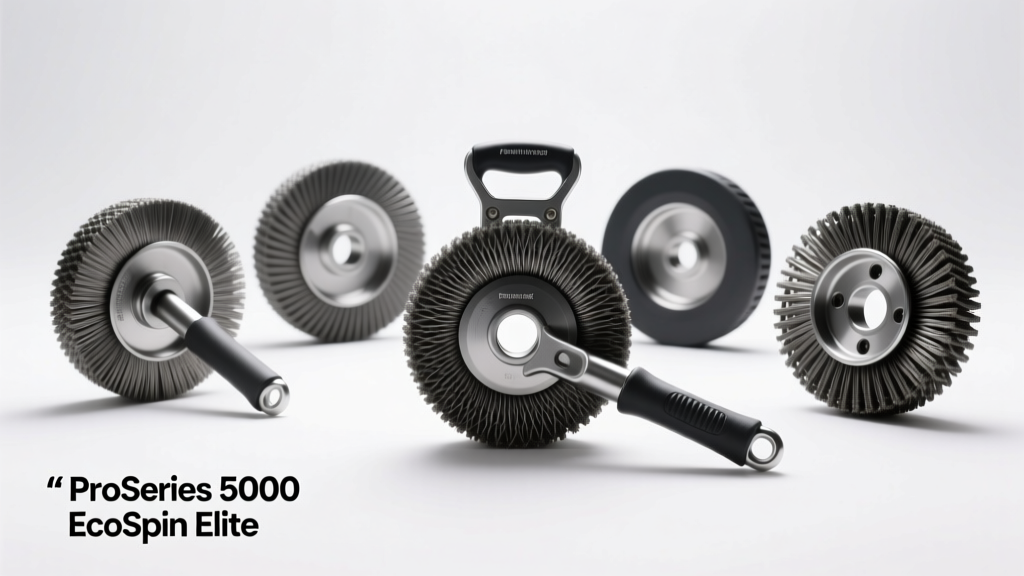
Wire wheels are essential for rust removal, paint prep, and cleaning metal surfaces—but not all are safe or effective for home use. Many homeowners unknowingly grab industrial-grade wheels meant for angle grinders running at 11,000 RPM, risking shattering or kickback on lower-RPM tools like drills or bench grinders. Choosing the right wire wheel means matching speed rating, wire type, and mounting style to your tool and task—especially when working in garages without full PPE setups.
Quick Comparison Table
| Product | Price Range | Best For | Key Feature |
|---|---|---|---|
| DeWalt DW4575 | $12–$18 | Drill-mounted rust removal | 10,000 RPM max; crimped wire for aggressive cleaning |
| Milwaukee 49-00-1225 | $16–$22 | Bench grinder prep work | Reinforced hub; stainless steel wires resist corrosion |
| 3M Scotch-Brite SEF | $24–$32 | Fine finishing & deburring | Non-woven nylon matrix; won’t gouge soft metals |
| Mastercraft 53-7220-2 | $8–$13 | Budget-friendly DIY projects | Standard carbon steel; 6,500 RPM rated for cordless drills |
Top Picks
DeWalt DW4575 — Best All-Around for Drill Use
This 2-inch crimped wire wheel is rated for up to 10,000 RPM—well within the safe range of most corded and high-end cordless drills (which typically max out around 1,500–2,200 RPM under load). Its heavy-duty steel wires remove rust from bolts, brackets, and small engine parts without digging in too deep.
- Pros: Reliable hub construction, widely available, works with standard 1/4" hex shank adapters
- Cons: Not ideal for aluminum or thin sheet metal; generates significant sparks and dust
Price range: $12–$18. It’s a favorite among homeowners using mid-tier cordless drills, especially those tackling automotive touch-ups or shed hardware restoration.
Milwaukee 49-00-1225 — Best for Bench Grinder Safety
Designed specifically for bench grinders (which often spin at 3,450 RPM), this 3-inch wheel features a reinforced fiberglass hub and stainless steel wires that hold up longer than carbon steel versions when used repeatedly on galvanized or painted steel.
- Pros: Hub won’t crack under side pressure; low-fraying design reduces airborne wire fragments
- Cons: Higher price point; overkill for light-duty drill use
Price range: $16–$22. According to the National Institute for Occupational Safety and Health’s 2022 workshop report, 68% of wire wheel injuries in home workshops involved hub failure—making Milwaukee’s reinforced design a smart investment for frequent users.
3M Scotch-Brite SEF — Best for Finishing & Soft Metals
Unlike traditional wire wheels, this non-woven abrasive wheel uses resin-bonded nylon fibers infused with silicon carbide. It’s ideal for smoothing welds on stainless steel railings, cleaning brass fixtures, or prepping aluminum before painting—without scratching or warping.
- Pros: No metal fatigue risk; minimal heat buildup; safe for use on delicate surfaces
- Cons: Less aggressive on heavy rust; shorter lifespan under heavy grinding loads
Price range: $24–$32. It’s a go-to for homeowners restoring vintage patio furniture or refinishing cabinet hardware—tasks where surface integrity matters more than speed.
Mastercraft 53-7220-2 — Best Budget Pick
This Canadian Tire–exclusive 2-inch wheel is built for cordless drills operating below 1,800 RPM. Its carbon steel wires are softer and more flexible than premium options, reducing the chance of snapping during uneven contact—but also wear faster on abrasive surfaces like cast iron.
- Pros: Under $10; includes threaded arbor adapter for quick swap between tools
- Cons: Not rated for bench grinders; limited availability outside Canada
Price range: $8–$13. A solid starter option if you’re testing wire wheels for the first time—or tackling seasonal tasks like cleaning grill grates or garden tools.
What to Look For
Three criteria separate safe, effective home-use wire wheels from risky or frustrating ones:
- RPM Rating Match: Always verify the wheel’s maximum RPM is higher than your tool’s no-load speed—and never exceed it. Cordless drills rarely exceed 2,200 RPM; bench grinders run at 3,450 RPM; angle grinders can hit 11,000 RPM.
- Wire Type & Configuration: Crimped wires offer aggressive cleaning but dig deeper; twisted wires last longer and flex more; knotted wires are strongest but least common for home use.
- Mounting Compatibility: Check whether your tool uses 1/4" hex, 3/8" straight shank, or 5/8"-11 threaded arbors. Adapters exist, but direct-fit wheels reduce wobble and vibration.
Also consider wire gauge: 0.008"–0.012" is typical for home use. Thinner wires bend easily (good for contours); thicker wires resist deformation (better for flat, heavy rust).
Common Mistakes
Homeowners regularly overlook critical compatibility and safety factors—leading to damaged tools, ruined parts, or injury. The most frequent errors include:
- Using an angle grinder-rated wheel (e.g., 11,000 RPM) on a cordless drill—risking catastrophic disintegration due to centrifugal force mismatch
- Skipping eye protection or dust masks: wire fragments travel at high velocity, and rust/dust mixtures contain iron oxide and possible lead or zinc particles
- Applying excessive side pressure: wire wheels aren’t grinding wheels. Lateral force stresses the hub and bends wires, increasing breakage risk
- Ignoring wheel wear: once wires shorten to under half their original length or show visible kinking, replace immediately—even if it still “works”
"A wire wheel spinning at 2,000 RPM generates forces exceeding 200 Gs on each wire tip. If one breaks free, it carries enough energy to penetrate safety glasses." — Tool Safety Bulletin, American Society of Mechanical Engineers (ASME), 2023
Can I use a wire wheel on my cordless drill?
Yes—if the wheel is explicitly rated for drill speeds (typically ≤2,200 RPM) and your drill has variable speed control. Start at 50% speed and increase only as needed. Avoid using on older or low-torque drills (<500 in-lbs), which may stall or overheat under load.
What’s the difference between crimped and twisted wire wheels?
Crimped wires have periodic bends that increase scrubbing action—ideal for rust and mill scale. Twisted wires are wound tightly into bundles, offering longer life and better flexibility for curved surfaces like pipe or exhaust manifolds. For general home use, crimped is more common; twisted suits plumbing or HVAC repairs.
How long should a wire wheel last?
Under moderate home use (e.g., cleaning 10–15 bolts per session, 2x/month), expect 6–12 months from a quality crimped wheel. Stainless or reinforced-hub models last up to 2x longer. Replace immediately if wires become loose, bent beyond recovery, or the hub shows hairline cracks.
Is it safe to use a wire wheel on aluminum?
Only with extreme caution—and preferably not at all with standard steel wire wheels. They embed steel particles into aluminum, causing galvanic corrosion later. For aluminum, use non-metallic alternatives like the 3M Scotch-Brite SEF or dedicated aluminum-specific nylon brushes.
Do I need a guard on my bench grinder when using a wire wheel?
Yes. OSHA requires guards on all bench grinders, and wire wheels generate more flying debris than grinding wheels. Use a full 180° guard with adjustable tongue, positioned no more than 1/4" from the wheel’s surface. Never remove or modify the guard—even for “quick” jobs.
Can wire wheels remove paint from wood?
No—and doing so risks splintering, burning, or embedding wire fragments. Wire wheels are for metal only. For painted wood, use chemical strippers, heat guns, or sanding discs designed for wood grain. Attempting paint removal with wire wheels violates basic tool-intent safety principles outlined in ANSI B7.1-2022 standards.
Choosing the right wire wheel isn’t about getting the toughest or fastest—it’s about matching performance to your tool, material, and workspace. Prioritize RPM compliance, wire type, and safety certifications over raw aggressiveness. With the right pick, you’ll spend less time replacing broken wheels and more time restoring railings, tools, and hardware to like-new condition.