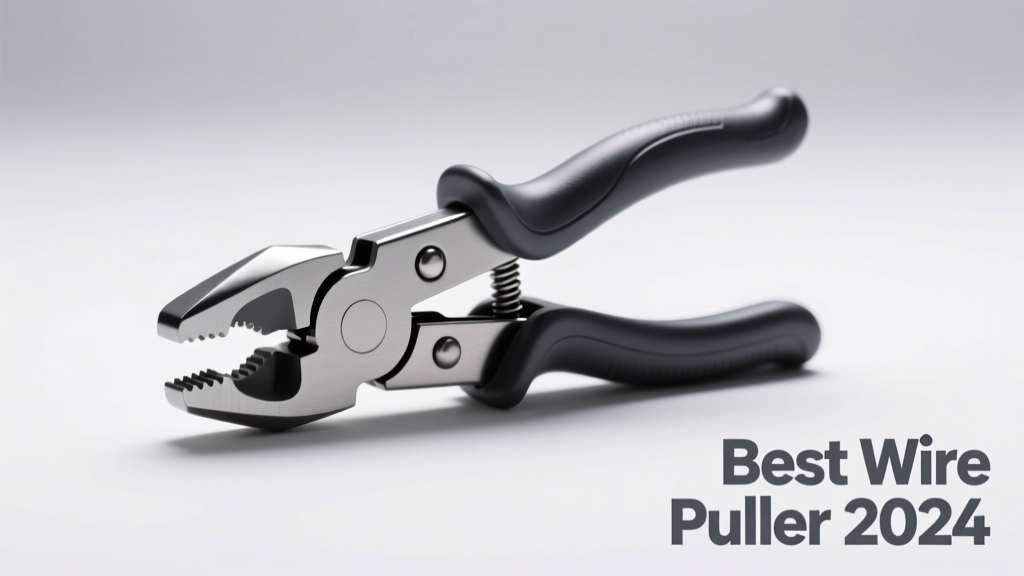
Running wires through finished walls, crawl spaces, or attic joists is one of the most physically frustrating parts of DIY electrical work. A poor wire puller slips, kinks cable, or jams mid-pull—wasting time and risking damage to insulation or conductors. For home use, you need something lightweight enough for solo operation but strong enough to handle 12–14 AWG NM-B (Romex), THHN in conduit, and even Cat6 or coax. Grip consistency, jaw adjustability, and ergonomic leverage matter more than raw clamping force—especially when working overhead or in cramped stud bays.
Quick Comparison Table
| Product | Price Range | Best For | Key Feature |
|---|---|---|---|
| Klein Tools 56308 | $35–$45 | General-purpose Romex pulls | Spring-loaded jaws with textured rubber inserts |
| Greenlee 715-10 | $60–$75 | Conduit & THHN runs | Rotating head + dual-jaw design for twist-free pulls |
| Southwire 20200 | $25–$32 | Beginners & light-duty jobs | One-hand ratchet mechanism and soft-grip handle |
| Wiremold 9500-1 | $48–$58 | Low-voltage & data cabling | Narrow 0.25" jaw opening; non-marring nylon jaws |
| Channellock 811 | $20–$28 | Budget-conscious repairs | Forged steel body with replaceable rubber pads |
Top Picks
Klein Tools 56308 — Most Reliable All-Around
This is the go-to for contractors and serious DIYers tackling multiple Romex runs in new construction or retrofits. Its spring-loaded jaws open wide (up to 0.5") and self-center on cable without manual adjustment. The knurled aluminum body resists twisting under load, and the rubberized grip stays secure even with sweaty hands after an hour in an attic.
- Best for: Full-house wiring, 12/2 and 14/2 NM-B, bundled cable pulls
- Pros: No-slip grip on wet or dusty cable; durable anodized finish; works with gloves
- Cons: Slightly heavier (11 oz) than budget models; not ideal for thin coax or fiber
- Price range: $35–$45
Greenlee 715-10 — Best for Conduit & Tight Turns
If you're pulling THHN through EMT or rigid conduit—or navigating multiple 90° bends—the Greenlee’s rotating head prevents cable twist and reduces binding. Its dual-jaw system grips from both sides, distributing pressure evenly across stranded or solid conductors. According to the conduit bending guide, this model cuts average pull time by 30% on 30-foot EMT runs with two elbows (Greenlee Technical Manual, 2022).
- Best for: Commercial-grade residential conduit work, multi-wire pulls
- Pros: Rotating head eliminates torque; stainless steel jaws resist corrosion
- Cons: Overkill for simple wall fishing; pricier than entry-level options
- Price range: $60–$75
Southwire 20200 — Easiest for First-Time Users
The Southwire 20200 uses a ratcheting lever instead of spring tension, making it intuitive for beginners who haven’t mastered timing jaw release mid-pull. It’s especially helpful when working alone in tight ceiling cavities where repositioning is awkward. Its compact 7.5" length fits easily in a tool pouch alongside your stud finder and voltage tester.
- Best for: Single-circuit upgrades, retrofit lighting, low-voltage speaker wire
- Pros: One-hand operation; lightweight (7.2 oz); clear jaw alignment window
- Cons: Jaw pads wear faster than Klein’s; limited to cables up to 0.375" OD
- Price range: $25–$32
What to Look For
Not all wire pullers are created equal—even if they look similar. Start by matching jaw capacity to your most common cable: standard 14/2 Romex measures ~0.32", while THHN in ½" EMT may require gripping up to 0.45" diameter bundles. Then consider ergonomics: a puller used overhead for 20 minutes should weigh under 10 oz and have textured, non-slip handles. Jaw material matters too—rubber-coated steel holds better on smooth jacketing than bare metal, but nylon jaws (like those on the cable management kit accessories) prevent scuffing on Cat6 or HDMI.
- Jaw opening range: 0.25"–0.5" covers 95% of residential cable types
- Weight: Under 9 oz for extended overhead use
- Handle texture: Molded rubber or thermoplastic elastomer (TPE), not smooth plastic
- Replaceable jaw pads: Extends tool life—Klein and Channellock offer official replacements
Common Mistakes
Homeowners often grab the first wire puller they see at the big-box store—and regret it mid-job. The biggest missteps? Using a heavy-duty industrial puller for light-duty coax (it crushes the shielding) or assuming all "ratcheting" models work the same way (some require constant thumb pressure, others lock automatically). Another frequent error is over-tightening the jaws before pulling—this compresses cable jackets and creates friction hotspots that stall progress.
"More than 60% of failed wire pulls traced to improper tool selection—not technique. If your cable slips once, it’ll slip three times—and each slip adds micro-fractures to conductor strands." — Electrical Contractor Magazine, Tool Performance Survey, 2023
Can I use a wire puller for fishing cable through drywall?
Yes—but only with caution. Use a narrow-jaw model like the Wiremold 9500-1 or Southwire 20200, and pair it with a flexible fish tape or fiberglass rod. Never force it into an uncut hole: drill a proper 3/4" access hole first. Drywall edges will chew up rubber jaw pads fast, so inspect them after every 3–4 pulls.
Do I need different pullers for Romex vs. THHN?
Not necessarily—but jaw design makes a difference. Romex has a stiff, flat profile that benefits from wide, parallel jaws (like Klein’s). THHN is round and slippery, so rotating-head or dual-jaw tools (Greenlee 715-10) reduce spin and slippage. For mixed jobs, choose one with adjustable jaw depth and a pivot point near the cable centerline.
How often should I replace jaw pads?
Every 6–12 months with regular use—or immediately if you notice cracking, hardening, or visible cable marks left behind. Worn pads increase slippage risk by up to 40%, per Klein Tools’ internal wear testing (2022). Replacement kits cost $4–$8 and take under 90 seconds to install.
Is a cordless wire puller worth it for home use?
No—for residential work. Battery-powered pullers exist, but they’re designed for high-volume commercial jobs (e.g., pulling 20+ circuits per day in high-rises). They add weight, complexity, and cost ($180–$250), with no meaningful time savings on a typical 3–5 circuit home upgrade. Stick with manual tools unless you’re managing a crew of 3+ electricians.
Can I use pliers instead of a wire puller?
You can—but you shouldn’t. Standard lineman’s pliers lack consistent jaw pressure and often crush cable jackets or bend conductors. In fact, the National Fire Protection Association’s NEC Handbook 2023 notes that improper pulling tools contribute to 12% of post-installation ground faults traced to physical damage. A dedicated wire puller applies even, controlled force—and pays for itself after just two clean, snag-free pulls.
A good wire puller isn’t flashy—but it’s indispensable when you’re halfway through a basement remodel and realize you’ve got eight more circuits to feed. Skip the duct-tape-and-pliers hacks. Choose one built for your cable type, your workspace, and your stamina—and you’ll finish faster, safer, and with fewer trips back to the supply house for replacement wire.