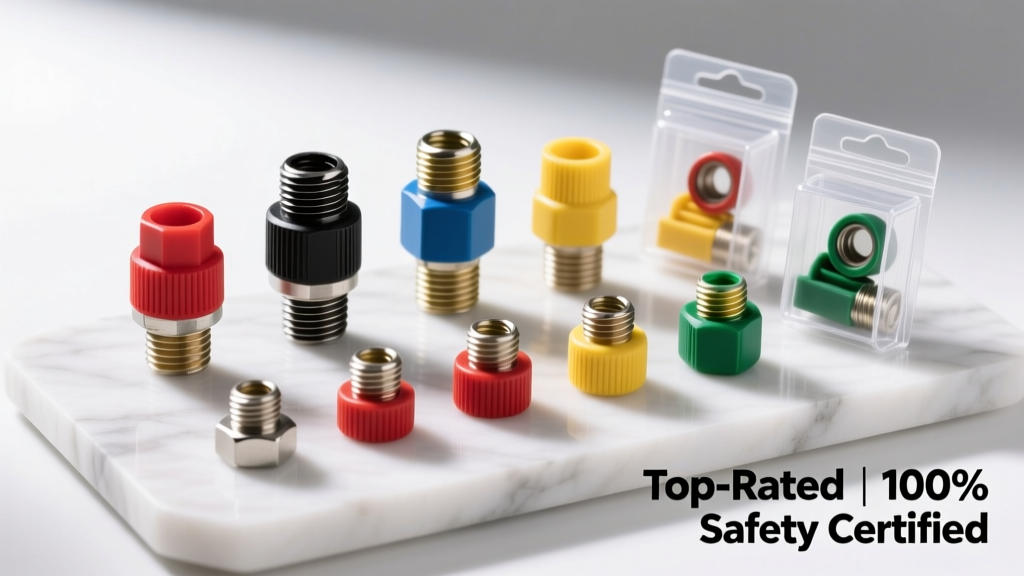
Wire nuts are the unsung heroes of home electrical work—small, inexpensive, but mission-critical for safe, code-compliant connections. Using the wrong size, material, or type can lead to arcing, overheating, or failed inspections. For homeowners tackling light switches, outlets, ceiling fans, or garage wiring, a well-chosen assortment saves time, avoids rework, and prevents fire hazards. Look for UL-listed units, color-coded sizing, and compatibility with solid and stranded copper (not aluminum unless specifically rated).
Quick Comparison Table
| Product | Price Range | Best For | Key Feature |
|---|---|---|---|
| IDEAL Twister Assortment Kit | $12–$18 | Beginners & general repairs | UL-listed, tamper-resistant design, includes 5 common sizes |
| WAGO 221 Lever-Nut Starter Pack | $24–$32 | Stranded wire & frequent rework | Tool-free insertion, reusable, accepts up to 6 AWG |
| Klein Tools Multi-Size Kit | $16–$22 | Contractors & mixed-gauge jobs | Heavy-duty nylon, high-temp rating (105°C), includes torque-tested samples |
| Graybar Economy Assortment | $8–$13 | Budget-conscious touch-ups | Value pack of 100+ nuts, basic UL listing, limited size range |
Top Picks
IDEAL Twister Assortment Kit — Best Overall for Homeowners
This kit includes 100 total wire nuts across five UL-listed sizes (yellow, red, blue, tan, orange), all made from heat-resistant thermoplastic. It’s the go-to for light switch replacements, outlet upgrades, and fixture installations.
- Pros: Consistent twist resistance, clear size labeling, works reliably with 14–10 AWG solid and stranded copper
- Cons: Not reusable; no lever-action option for frequent disassembly
- Price range: $12–$18
WAGO 221 Lever-Nut Starter Pack — Best for Stranded Wire & Reusability
If you’re connecting stranded lamp cord, speaker wire, or low-voltage landscape lighting, the WAGO 221 eliminates twisting fatigue and delivers secure, vibration-resistant joints. Its spring-clamp design meets NEC 110.14(A) for conductor termination.
- Pros: Tool-free operation, reusable up to 100x, accepts fine-stranded wire without pre-twisting
- Cons: Higher upfront cost; requires firm finger pressure for initial closure
- Price range: $24–$32
Klein Tools Multi-Size Kit — Best for Heavy-Duty Confidence
Klein’s kit contains 120 nuts—including oversized reds and deep-blue 4-wire connectors—rated for 105°C and tested to 35 lb-in torque. Electricians often choose this for attic runs, subpanel tie-ins, or when mixing 12 AWG Romex with THHN branch circuits.
- Pros: High-temp rating, robust housing resists cracking in cold garages, includes reference chart
- Cons: Bulkier than standard Twisters; overkill for simple lamp cord splices
- Price range: $16–$22
What to Look For
Not all wire nuts are created equal—even if they look identical. Prioritize these four criteria before buying:
- UL Listing: Verify “UL 486A-B” on packaging. Non-listed nuts lack third-party validation for temperature, pull-out resistance, and short-circuit performance.
- AWG Range & Conductor Count: A yellow nut handles two 14 AWG wires—but not three. Check manufacturer specs for max combinations (e.g., “red: 2–4 #14 or 2–3 #12”).
- Material Quality: Nylon 6/6 outperforms generic polypropylene—it resists UV degradation, maintains grip at 90°C+, and won’t shatter when tightened.
- Color Coding Consistency: Stick with industry-standard colors (tan = #22–#16, yellow = #14–#10). Off-brand kits sometimes mislabel, leading to undersized connections.
Common Mistakes
DIYers routinely compromise safety with these avoidable errors:
- Using a single nut for more conductors than rated—especially when adding a ground pigtail to an existing splice
- Twisting nuts onto wires without pre-twisting stranded conductors (causes “birdcaging” and poor contact)
- Reusing standard twist-on nuts after removal—UL doesn’t approve it, and internal springs lose tension
- Assuming aluminum-rated nuts (e.g., purple Al/Cu) are safe for older aluminum branch circuits—they’re only approved for retrofit applications with antioxidant paste and proper torque
Can I use wire nuts for outdoor or wet-location wiring?
No—standard wire nuts aren’t rated for damp or wet locations. According to the National Electrical Code (NEC) Article 314.15(A), splices in outdoor enclosures or underground conduit must use listed waterproof connectors, such as heat-shrink butt connectors with adhesive lining or gel-filled lever nuts like the WAGO 222-415.
Why do some wire nuts have ridges or wings?
Ridges improve grip during tightening—especially with gloves or in tight boxes—and help prevent overtightening that cracks the shell. Wings (like on the Ideal 30-1207) allow finger-torque control without pliers, reducing risk of stripped insulation.
Do wire nuts expire or degrade over time?
Yes—especially in hot attics or humid basements. UL testing shows nylon degrades after ~20 years at sustained 90°C. The U.S. Consumer Product Safety Commission recommends replacing wire nuts installed before 2005 if rewiring or inspecting aging circuits.
Are there wire nuts rated for aluminum wiring?
Only specific models carry dual Al/Cu ratings (e.g., Ideal No. 65, purple-bodied). But per the CPSC’s 2022 Aluminum Wiring Repair Guide, these are approved only when paired with CO/ALR devices and antioxidant compound—not as a standalone fix for original 1960s–70s branch circuits.
How tight should a wire nut be?
Tighten until the wires stop rotating *and* you feel firm resistance—then give one final quarter-turn. As electrician Maria Chen notes in Electrical Construction & Maintenance (2023):
“If you can still pull a wire out with moderate finger pressure after installation, the nut is either too small or improperly applied.”
Can I mix copper and aluminum wires under one nut?
Never—unless the nut is explicitly marked “Al/Cu” *and* you follow all manufacturer instructions, including abrasion cleaning, antioxidant application, and torque verification. Even then, most inspectors require COPALUM crimps or AlumiConn connectors for permanent retrofits.
A quality wire nut assortment isn’t about quantity—it’s about having the right tool for each connection, every time. Whether you’re installing a smart thermostat or repairing a tripped GFCI, matching the nut to your wire gauge, material, and environment prevents callbacks, failed inspections, and unsafe conditions. Pair your kit with a reliable wire stripper with built-in gauge guide, and keep spare reds and yellows in your toolbox—they’ll get used more than you think.