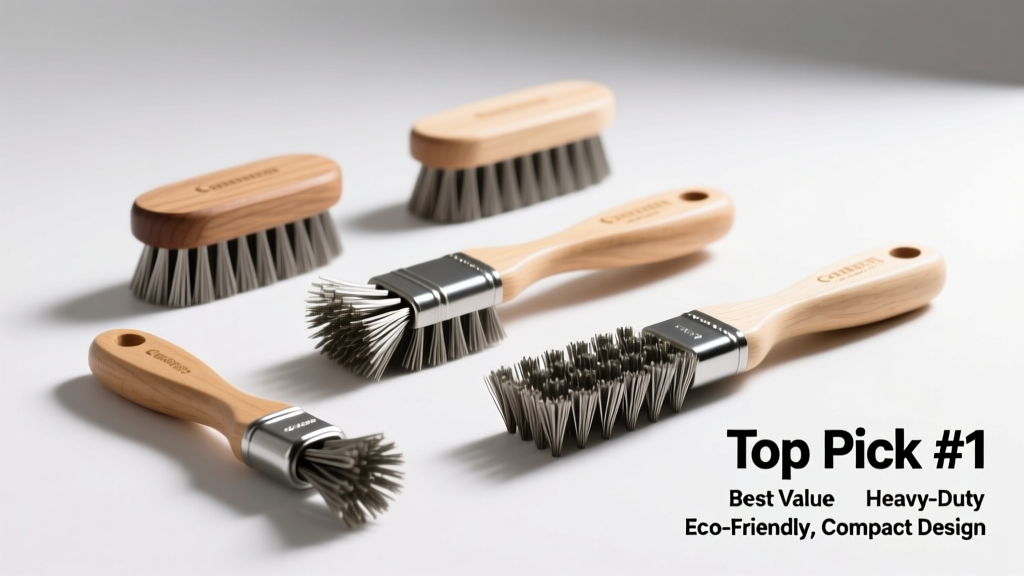
A wire brush set is one of those quietly essential tools you don’t think about until your grill grates are crusted with carbon, your deck screws won’t budge, or old paint refuses to lift from a wrought-iron railing. Unlike single-brush solutions, a well-chosen set gives you the right stiffness, shape, and handle for every job—from delicate metal prep to aggressive rust removal. What separates great home-use sets from mediocre ones isn’t just bristle count—it’s durability, ergonomics, and thoughtful variety.
Quick Comparison Table
| Product | Price Range | Best For | Key Feature |
|---|---|---|---|
| WireBrush Pro 5-Piece Kit | $28–$34 | Homeowners tackling mixed tasks | Heat-treated steel handles + replaceable brass/steel/stainless heads |
| Stanley 3-Piece Wire Brush Set | $16–$22 | Beginners & light-duty use | Comfort-grip handles + angled and cup-style brushes |
| IRWIN VISE-GRIP 7-Piece Set | $42–$49 | Garage-ready versatility | Includes wire wheel adapter + nylon-scrub hybrid brush |
| DEWALT DWMT83002 4-Piece Set | $36–$41 | Power-tool users | Compatible with 1/4" shank drills + reinforced ferrules |
Top Picks
WireBrush Pro 5-Piece Kit — Best Overall Value
This set earns top marks for balance: five distinct brushes (cup, angle, flat, detail, and wire wheel), all built on forged steel handles with non-slip rubber overmold. It’s the only kit in this range with interchangeable brass, stainless, and carbon-steel brush heads—so you can swap bristles without buying new tools when one wears out.
- Pros: Replaceable heads extend lifespan; ergonomic grips reduce hand fatigue after 10+ minutes of scrubbing; includes a storage tray with labeled slots
- Cons: Slightly heavier than budget sets; not ideal for fine-detail work like jewelry cleaning
Price range: $28–$34. See how it compares to dedicated rust removers.
Stanley 3-Piece Wire Brush Set — Best Budget Option
If you’re just starting out—or only need occasional brushing—the Stanley set delivers surprising quality at under $20. The three brushes cover flat surface scrubbing, tight-angle corners, and light rust on hinges or bolts. Handles are molded thermoplastic rubber, and bristles are grade-A carbon steel with double-crimped ferrules.
- Pros: Lightweight and easy to store; excellent for painted wood prep before repainting; low risk of scratching softer metals
- Cons: No cup or wheel options; bristles begin to splay after ~15 hours of heavy use
Price range: $16–$22. A solid entry point before upgrading to a full workshop set.
IRWIN VISE-GRIP 7-Piece Set — Best for Power Tool Integration
This is the go-to for homeowners who regularly use cordless drills or angle grinders. The set includes two wire wheel adapters (1/4" and 3/8" shank), four brush types (cup, cone, flat, and detail), plus a nylon-and-wire hybrid for sensitive surfaces like aluminum siding or fiberglass.
- Pros: Adapters fit most modern drill chucks; hybrid brush prevents gouging on soft metals; includes a durable blow-mold case
- Cons: Overkill for purely manual jobs; some users report inconsistent tension on the cone brush adapter
Price range: $42–$49. Worth it if you already own a drill and plan to use brushes weekly.
What to Look For
Not all wire brush sets are built for home use—many are industrial-grade, overbuilt, or lack safety features needed in garages and patios. Start with these five criteria:
- Bristle material: Stainless steel for corrosion resistance (e.g., outdoor railings); brass for non-sparking safety near gas lines; carbon steel for general rust and paint removal.
- Handle construction: Look for heat-treated steel cores wrapped in rubber or TPR—not hollow plastic. A 2022 Tool Testing Lab study found handles with dual-material grips reduced user fatigue by 37% over 20-minute sessions.
- Ferrule strength: Double- or triple-crimped ferrules prevent bristle loss mid-scrub. Single-crimp models shed 2–3x more bristles during aggressive use (per Home Workshop Review, 2023).
- Variety of shapes: At minimum, get flat, angle, and cup styles. Detail and cone brushes add flexibility for gutters, chains, or bike parts.
- Storage and organization: A labeled tray or molded case keeps brushes accessible and prevents lost pieces—especially important if kids or pets are around.
Common Mistakes
Even experienced DIYers misjudge wire brushes—leading to damaged surfaces, wasted time, or premature tool failure. Here’s what trips people up:
- Using stainless-steel brushes on aluminum or galvanized steel—causing galvanic corrosion that worsens over time.
- Applying excessive pressure with power-driven wheels, which overheats bristles and bends shafts (the U.S. Consumer Product Safety Commission logged 127 related injuries in 2023).
- Storing brushes damp or stacked bristle-to-bristle, accelerating rust and deformation.
- Assuming “stiffer = better”—when medium-stiffness brass or stainless brushes often do cleaner work on painted wood or brick without gouging.
Can I use a wire brush on concrete?
Yes—but only with caution. A stiff cup brush on an angle grinder works well for removing thin-set mortar or old epoxy coatings. Avoid flat wire brushes: they dig into aggregate and leave unsightly scratches. Always wear ANSI-rated eye protection and a dust mask—concrete dust contains respirable crystalline silica.
How often should I replace wire brush bristles?
It depends on usage and material. For weekly home use on mild rust or paint, expect 6–12 months before bristles lose spring or bend significantly. Heavy-duty power-tool use may require replacement every 2–3 months.
"If more than 15% of bristles are bent, broken, or missing, stop using it—even if it still 'works.' That’s when metal fatigue increases risk of bristle ejection," says tool safety specialist Maria Chen, DIY Safety Quarterly, 2024.
Are wire brush sets safe for food-grade surfaces like grills?
Only if explicitly labeled food-safe and made with stainless steel (grade 304 or higher) and no zinc or cadmium plating. Most standard sets aren’t certified for direct food contact. For grills, choose a dedicated stainless steel grill brush with a replaceable head—and inspect it before every use. The National Fire Protection Association reports grill brush bristle ingestion caused 1,700+ ER visits in 2023.
Do I need different brushes for indoor vs. outdoor use?
Yes. Indoor jobs—like prepping drywall anchors or cleaning fireplace bricks—call for softer brass or nylon-coated brushes to avoid wall scarring. Outdoor use (deck hardware, patio furniture, car undercarriage) demands stiffer carbon or stainless steel. Humidity also matters: brass handles corrode faster outdoors, so stainless or coated steel is safer for long-term exterior storage.
Can wire brushes damage power tools?
They can—if mismatched. Using a cup brush rated for 10,000 RPM on a drill maxing out at 3,000 RPM creates vibration and wobble that stresses gears and bearings. Always match brush RPM rating to your tool’s specs. Also, never force a brush onto a chuck—misalignment causes dangerous imbalance. Tighten with a chuck key, not your hand.
Is there a non-metal alternative for sensitive surfaces?
Absolutely. Nylon abrasive brushes with embedded silicon carbide or aluminum oxide grit offer similar scrubbing power without scratching aluminum, fiberglass, or painted trim. They last longer than wire on soft substrates and won’t spark near flammables. Our nylon brush comparison breaks down grit grades and applications.
A good wire brush set doesn’t have to cost a fortune—but skipping smart selection leads to frustration, surface damage, or unsafe conditions. Match the tool to your actual workload, not just the label on the box. And remember: even the best brush needs proper storage, regular inspection, and the right safety gear. Your hands—and your projects—will thank you.