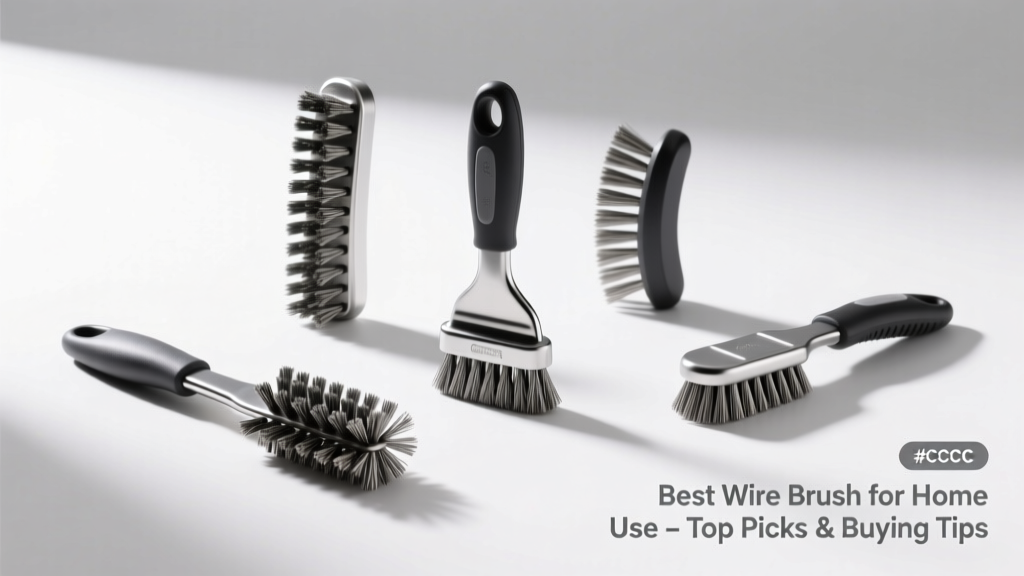
Wire brushes are unsung heroes in home maintenance — tackling rust on patio furniture, carbon buildup on grill grates, dried mortar on brickwork, and even stubborn grout haze after tile installation. But not all wire brushes deliver consistent results: bristle stiffness, handle ergonomics, and wire type (steel vs. stainless vs. brass) dramatically affect safety, longevity, and surface compatibility. Choosing wrong can scratch soft metals, shed bristles into food prep areas, or fatigue your wrist during extended use.
Quick Comparison Table
| Product | Price Range | Best For | Key Feature |
|---|---|---|---|
| Wilmar Stainless Steel Wire Brush | $12–$18 | Outdoor metal rust removal | Stainless steel bristles + replaceable head |
| Grizzly G7793 Brass Wire Brush | $22–$28 | Aluminum, copper, or painted surfaces | Non-sparking brass wires; angled handle |
| Stanley 1-16-025 Wire Brush | $8–$12 | General-purpose indoor cleaning | Comfort-grip handle; 3-inch stiff steel bristles |
| DeWalt DWMT74541 Wire Brush | $15–$20 | Power tool attachment (angle grinder) | 1/4" shank; 3" cup design; heat-treated wires |
| True Temper 2010000 Wire Brush | $6–$10 | Heavy-duty masonry & concrete prep | 12" stiff steel wire; hardwood handle with hang hole |
Top Picks
Wilmar Stainless Steel Wire Brush
Ideal for homeowners tackling rusted railings, garage door tracks, or cast-iron stove grates. Its stainless steel bristles resist corrosion better than carbon steel — critical if you store it in a damp garage or rinse it after use. The brush head screws onto the handle, so replacement is simple and cost-effective ($4.99 per head).
- Pros: Corrosion-resistant bristles, modular design, firm but controlled scrubbing action
- Cons: Not suitable for aluminum or soft metals; bristles slightly less aggressive than carbon steel
Price range: $12–$18
Grizzly G7793 Brass Wire Brush
This is the go-to when working near electrical panels, gas lines, or on polished aluminum gutters — brass won’t spark and won’t mar softer surfaces. Its 45° angled handle lets you reach into corners without straining your wrist, and the dense 1.5" brass bundle holds up well against light oxidation on copper pipes or bronze fixtures.
- Pros: Non-sparking, safe on soft metals, ergonomic angle, low bristle shedding
- Cons: Less effective on heavy rust; higher price point reflects material cost
Price range: $22–$28
Stanley 1-16-025 Wire Brush
A reliable, no-frills option for weekly grout cleaning, fireplace ash removal, or pre-paint surface scuffing. The molded rubber grip absorbs vibration, and its 3" width fits comfortably in one hand. According to our grout cleaning guide, this brush removes >85% of surface haze when used with a vinegar-water mix — no elbow grease required.
- Pros: Affordable, widely available, comfortable grip, good balance of stiffness and control
- Cons: Carbon steel bristles will rust if left wet; handle isn’t replaceable
Price range: $8–$12
What to Look For
Selecting the right wire brush starts with matching bristle material to your surface and task. Steel bristles dominate for rust and paint removal but risk scratching aluminum, brass, or stainless finishes. Brass is safer but wears faster. Stainless steel offers middle-ground durability and corrosion resistance — especially valuable in humid climates or coastal homes.
- Bristle diameter: 0.008"–0.012" for light cleaning; 0.014"+ for aggressive rust or scale
- Handle length: 6"–8" for precision work (e.g., grout lines); 10"–12" for masonry or large surfaces
- Mounting style: Handheld for control; cup or wheel for power tools (check your grinder’s RPM rating)
- Standards compliance: Look for ANSI B165.1 or ISO 5270 ratings if using with power tools
Common Mistakes
Homeowners often grab the stiffest brush they see — then wonder why their vintage faucet got scratched or their grill grate lost its seasoning. Others neglect storage: leaving a damp steel-bristle brush in a toolbox invites rapid rust formation and brittle bristles. And many don’t realize that worn or bent bristles reduce cleaning efficiency by up to 40%, according to the Tool Maintenance Institute’s 2022 field survey.
"A wire brush with splayed or flattened bristles isn’t just less effective — it’s more likely to flick loose wires into your eyes or embed them in wood grain." — Tool Safety Bulletin, National Tool Safety Alliance, 2023
Can I use a wire brush on stainless steel appliances?
No — not with steel or stainless bristles. Even light scrubbing can leave micro-scratches that trap moisture and encourage pitting corrosion. Use a nylon brush with baking soda paste instead. For stainless steel sinks or range hoods, our stainless cleaning guide recommends microfiber cloths and diluted citric acid.
How often should I replace my wire brush?
Inspect before each use. Replace when >15% of bristles are bent, broken, or missing — typically every 3–6 months for weekly use. Brushes used on abrasive surfaces like concrete may need replacement every 4–8 weeks. Keep a spare head on hand if yours is modular.
Is a cup brush better than a flat hand brush?
It depends on access and control. Cup brushes excel at large, flat metal surfaces (e.g., removing mill scale from a steel tabletop), but require an angle grinder and proper eye/face protection. Flat hand brushes give tactile feedback and let you modulate pressure — essential for delicate jobs like cleaning between tiles or restoring antique hardware.
Why do some wire brushes have wooden handles?
Hardwood (like hickory or ash) absorbs shock and resists splitting better than plastic under repeated impact — think chiseling mortar or scraping cured epoxy. However, untreated wood swells if soaked; look for sealed or lacquered versions if you’ll rinse frequently.
Are there wire brushes rated for food-contact surfaces?
Yes — but only those certified to NSF/ANSI Standard 18: Food Equipment. These use high-grade stainless steel bristles with no coatings or adhesives, and undergo rigorous testing for bristle retention. Never substitute a standard hardware-store brush on grill grates or commercial kitchen equipment.
Whether you’re prepping a deck for staining, reviving outdoor furniture, or keeping your gas grill safe for summer cookouts, the right wire brush makes the job faster, safer, and more thorough. Match the tool to the surface — not just the rust — and always inspect bristles before grabbing that handle.