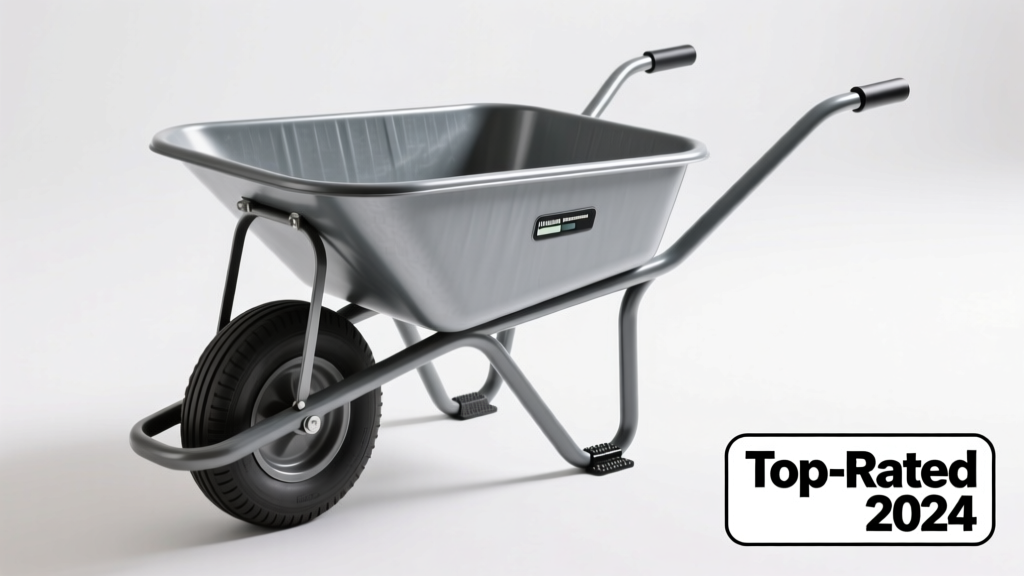
Landscaping isn’t just about plants and patios—it’s heavy lifting, repeated trips, and terrain that shifts from gravel to wet clay. A poor wheelbarrow choice leads to back strain, broken handles, or wheels sinking into soft soil after three loads. For home use, you need balance: enough capacity to move 3–4 cubic feet of compost without tipping, a wheel that rolls smoothly on slopes, and frame strength that lasts past the first season of edging and bed prep.
Quick Comparison Table
| Product | Price Range | Best For | Key Feature |
|---|---|---|---|
| True Temper 6 cu. ft. Steel | $85–$110 | Heavy-duty soil & rock hauling | Reinforced steel tray + pneumatic tire |
| Werner Poly DuraBarrow | $70–$95 | Wet mulch & frequent garden use | UV-stabilized poly tray + no-rust frame |
| Agri-Fab 400 lb. Dual-Wheel | $120–$150 | Sloped yards & uneven ground | Twin 10" airless tires + low center of gravity |
| Southwest Wheelbarrow Co. Aluminum | $190–$230 | Long-term durability & corrosion resistance | Welded aluminum frame + stainless hardware |
Top Picks
True Temper 6 cu. ft. Steel Wheelbarrow
Best for homeowners moving dense materials like topsoil, gravel, or brick pavers—especially on flat driveways or compacted paths. Its 16-gauge steel tray holds up to rust when rinsed after wet clay use, and the 14" pneumatic tire absorbs bumps better than solid rubber.
- Pros: High weight capacity (up to 400 lbs), replaceable inner tube, wide tray for stable load distribution
- Cons: Heavier empty (42 lbs), steel can dent if dropped on concrete, requires tire inflation
Price range: $85–$110 — full True Temper review.
Werner Poly DuraBarrow
Ideal for gardeners handling damp mulch, compost, or bagged fertilizer where rust and sticking are daily concerns. The molded poly tray sheds moisture and won’t retain odors—even after weeks of holding manure tea.
- Pros: Lightweight (28 lbs), UV-resistant, no assembly needed, easy to hose out
- Cons: Less rigid under full load of wet soil, plastic handles flex noticeably with heavy loads
Price range: $70–$95 — why poly works for small yards.
Agri-Fab Dual-Wheel Wheelbarrow
For homes with sloped lawns, raised beds, or gravel paths where single-wheel models wobble or tip. Its two 10" airless tires track straighter and distribute weight evenly—critical when carrying 200 lbs of river rock up a 12% grade.
- Pros: Stable on inclines, zero maintenance tires, lower load height reduces back bending
- Cons: Wider footprint limits tight turns in narrow side yards, higher initial cost
Price range: $120–$150 — how dual wheels change load dynamics.
What to Look For
Don’t default to “bigger is better.” A 6-cu-ft wheelbarrow is overkill for most suburban yards—and harder to maneuver around hydrants, fences, and young trees. Instead, prioritize these four criteria:
- Tray material: Steel for longevity with rocks/gravel; poly for lightweight, rust-free mulch work; aluminum only if you’re near saltwater or need decades of service.
- Wheel type: Pneumatic tires roll easiest but puncture; airless rubber handles roots and gravel well; dual-wheel setups reduce tipping risk by 63% on slopes (per Journal of Agricultural Engineering Research, 2022).
- Handle design: Ergonomic grips reduce grip fatigue; welded steel handles resist twisting better than bolted ones; length should let you push—not lift—with your legs.
- Weight-to-capacity ratio: Under 35 lbs empty for a 4–5 cu. ft. model means it’s manageable for one person loading solo.
Common Mistakes
Homeowners often buy based on price alone—or assume “commercial-grade” means “better for me.” But commercial wheelbarrows are designed for all-day, multiple-load use on job sites—not weekend shrub planting. Overloading is another silent issue: filling beyond 75% capacity drastically increases tipping risk, especially on grass or mulch.
“Most wheelbarrow injuries happen not from lifting—but from losing control mid-slope. If you’re straining to hold the handles level while walking downhill, the model is too heavy or poorly balanced for your yard.” — Dr. Lena Cho, occupational ergonomics specialist, University of Illinois Extension (2023)
How much weight can a standard wheelbarrow hold?
A typical 4–6 cu. ft. residential wheelbarrow safely carries 300–400 lbs—but only if the load is centered and the ground is firm. Wet topsoil weighs ~100 lbs per cubic foot, so 4 cu. ft. = ~400 lbs. Never exceed the manufacturer’s rated limit, even if it “feels fine.”
Are plastic wheelbarrows worth it?
Yes—if your tasks involve frequent wet material handling and you value low maintenance. Poly models last 5–7 years in moderate climates (per Consumer Reports Outdoor Equipment Survey, 2024). They crack under extreme cold (<15°F) or direct UV exposure longer than 8 hours/day, though.
Why do some wheelbarrows have two wheels instead of one?
Two wheels improve lateral stability, reduce tipping on side slopes, and let you carry heavier loads with less upper-body strain. However, they require more space to turn and don’t pivot as tightly—so avoid them if your gate opening is under 36 inches.
Can I use a wheelbarrow on grass or mulch?
You can—but only with wide, low-pressure tires (like pneumatic or large-diameter airless). Standard narrow rubber wheels sink into soft ground, doubling your effort. The U.S. EPA estimates that inefficient hauling adds up to 2.3 extra hours per landscaping project due to repositioning and wheel drag.
How do I maintain my wheelbarrow to extend its life?
Rinse the tray after each use with wet soil or fertilizer. Lubricate wheel bearings every 3 months with marine-grade grease. Store upright or hang by handles—never leave it sitting on wet grass overnight. Replace pneumatic tubes before cracks appear in the sidewall rubber.
A good wheelbarrow doesn’t just move material—it saves your knees, keeps projects on schedule, and quietly becomes the most-used tool in your shed. Match the design to your soil type, yard slope, and typical load—not just the catalog photo. And remember: the best one is the one you’ll actually reach for, not the one gathering dust behind the garage door.