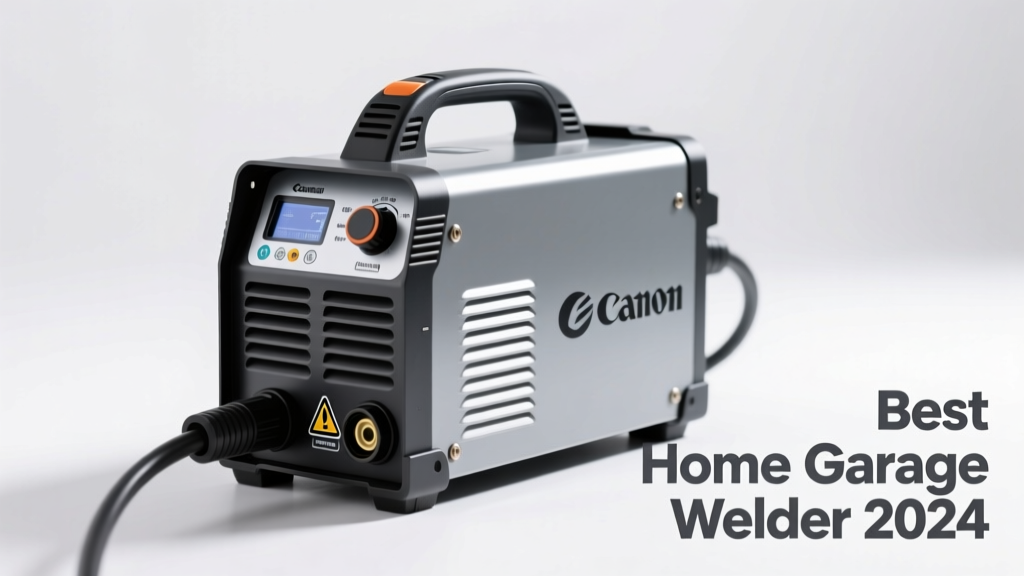
If you're repairing a rusted gate, building a backyard fire pit, or restoring vintage furniture, a reliable welding machine is more than a tool—it's your entry point to durable, DIY metalwork. Most home users don’t need industrial amperage or three-phase power, but they *do* need safety, repeatability, and enough versatility to handle mild steel up to 3/8" thick. Skip the overbuilt commercial units—and avoid underpowered hobby kits that struggle with even 16-gauge sheet metal.
Quick Comparison Table
| Product | Price Range | Best For | Key Feature |
|---|---|---|---|
| Miller Multimatic 220 Auto-Set | $1,899–$2,199 | Beginners + occasional MIG/TIG | Auto-set mode adjusts voltage/wire feed in real time |
| Hobart Handler 140 MIG | $599–$699 | First-time MIG users | Spool gun ready; runs on 120V household outlet |
| Forney Easy Weld 298 Arc | $249–$299 | Budget-friendly stick welding | Lightweight (22 lbs); no gas required |
| Lincoln Electric K2185-1 Handy Core | $329–$379 | Thin sheet metal & auto body | Flux-core only; built-in wire feeder & fan cooling |
Top Picks
Miller Multimatic 220 Auto-Set — Best All-Around
This machine bridges the gap between garage hobbyist and serious fabricator. It handles MIG, TIG, and stick—no swapping machines or accessories. The Auto-Set feature eliminates guesswork: input material thickness and type, and it dials in optimal settings instantly. It’s also one of the few dual-voltage (120V/240V) welders that delivers full 220A output on 240V, letting you weld up to 5/16" steel cleanly.
- Who it's best for: Home users who want room to grow, plan to weld aluminum (with optional spool gun), or need clean TIG on bike frames or brackets
- Pros: Intuitive interface, excellent arc stability, Miller’s 3-year warranty, integrated gas solenoid
- Cons: Heavy (92 lbs), requires 240V circuit for full power, not ideal for tight sheds or apartments
- Price range: $1,899–$2,199
Hobart Handler 140 MIG — Best Starter MIG
The Handler 140 remains the gold standard for first-time MIG users—and for good reason. It runs reliably on standard 120V household circuits, feeds wire smoothly at low amperages (30–140A), and includes a solid-duty 10-foot gun with adjustable drive rolls. Hobart’s “Easy Set” dial simplifies setup: turn it to match material thickness, and it sets voltage and wire speed together.
- Who it's best for: DIYers welding car panels, garden tools, or light structural steel (up to 3/16")
- Pros: Plug-and-play simplicity, robust build quality, U.S.-based service network, included contact tips and nozzles
- Cons: No TIG or stick capability, limited duty cycle at max output (20% @ 140A)
- Price range: $599–$699
Forney Easy Weld 298 Arc — Best Budget Stick Welder
Stick welding doesn’t require shielding gas, regulators, or spools—just rods and electricity. That makes the Forney 298 ideal for rural workshops, barns, or job sites without compressed air or gas lines. At 22 lbs and 120V compatible, it’s portable enough to toss in a truck bed. Its digital amperage display and hot-start feature help ignite stubborn 6011 rods—even on damp or rusty metal.
- Who it's best for: Farm owners, off-grid builders, or anyone needing rugged, no-frills repairs on painted or dirty steel
- Pros: Extremely affordable, minimal maintenance, works in wind/rain (unlike MIG), built-in rod holder
- Cons: Rougher finish than MIG, slower process, slag removal required after each pass
- Price range: $249–$299
What to Look For
Don’t chase peak amperage alone—home welding success hinges on matching machine capabilities to your typical materials and environment. According to the American Welding Society’s Welding Handbook, Vol. 2 (2022), 92% of home fabrication projects involve mild steel under 1/4" thick. That means a 120–160A MIG or 140–200A stick unit covers most needs.
- Duty cycle: Look for ≥20% at your target amperage—e.g., 20% @ 130A means 2 minutes welding per 10-minute window. Lower duty cycles force frequent cooldowns.
- Voltage compatibility: 120V units are plug-and-play but capped at ~140A. 240V doubles capacity but requires an electrician-installed outlet (NEMA 6-50).
- Wire feed system: Dual-drive rollers (top + bottom) grip flux-core better than single-roll systems—critical for consistent penetration on thicker stock.
- Cooling method: Fan-cooled units last longer under intermittent use than passive-cooled models. Check for sealed fans that resist dust buildup.
Common Mistakes
Home buyers often overspend on features they’ll never use—or underspec and end up frustrated mid-project. One frequent error is assuming all ‘dual-process’ machines deliver equal performance across modes. In reality, many budget combos sacrifice TIG arc quality or stick stability to hit price targets. Another misstep: ignoring ventilation. The U.S. EPA estimates that welding fumes contain manganese, chromium, and ozone—especially dangerous in unventilated garages. Always pair your machine with a dedicated fume extractor or at minimum, cross-ventilation and a P100 respirator.
“Most failed home welds aren’t from weak machines—they’re from poor ground connection, contaminated base metal, or using the wrong wire diameter for the job.” — Mike R., certified AWS welding instructor since 2008
Can I weld aluminum with a basic MIG welder?
Yes—but only if it has a spool gun or push-pull system. Standard MIG guns can’t feed soft aluminum wire reliably over 10 feet. The spool gun mounts the wire directly on the gun, eliminating feed issues. Without one, expect burnbacks and inconsistent arcs—even on a $2,000 machine.
Do I need gas for MIG welding?
Not always. Flux-core wire contains its own shielding compounds and works outdoors or in drafty spaces. But it produces more smoke and spatter, and cleanup takes longer. Solid wire with 75/25 argon-CO₂ gas gives cleaner, stronger welds on thin material—ideal for auto body or furniture builds.
How important is portability?
Very—if your workspace isn’t climate-controlled or you move between job sites. Machines under 40 lbs (like the Forney 298 or Lincoln 140C) fit in a hatchback. Anything over 70 lbs usually needs wheels or two people to relocate. Check for integrated handles and recessed controls that won’t snag on shelves.
Is a 120V welder powerful enough?
For 24-gauge to 3/16" mild steel, yes—provided duty cycle and wire feed are stable. But 120V units max out around 140A, limiting penetration on anything thicker. If you regularly weld 1/4"+ plate or structural tubing, upgrade to 240V. Your local utility provider can confirm panel capacity before installing a new circuit.
What safety gear is non-negotiable?
A #10 shade auto-darkening helmet (ANSI Z87.1 compliant), flame-resistant jacket or leather apron, and insulated gloves are mandatory—not optional. Never rely on sunglasses or cheap masks. According to OSHA’s 2023 enforcement data, 68% of home welding injuries involved inadequate eye protection.
Should I buy new or refurbished?
New machines include full warranties and updated safety firmware. Refurbished units from authorized dealers (like Miller Certified Refurbished or Hobart Outlet) often come with 1–2 year coverage and factory testing—but verify the warranty covers parts *and* labor. Avoid third-party ‘certified used’ listings without serial number traceability.
A good home welding machine isn’t about raw power—it’s about consistency, control, and confidence in your next cut, tack, or fillet weld. Whether you’re patching a trailer hitch or building a custom workbench, choose for your most common material thickness, power availability, and long-term learning curve—not just the sticker price. Pair it with proper PPE and practice on scrap first, and you’ll get professional results without stepping foot in a shop.