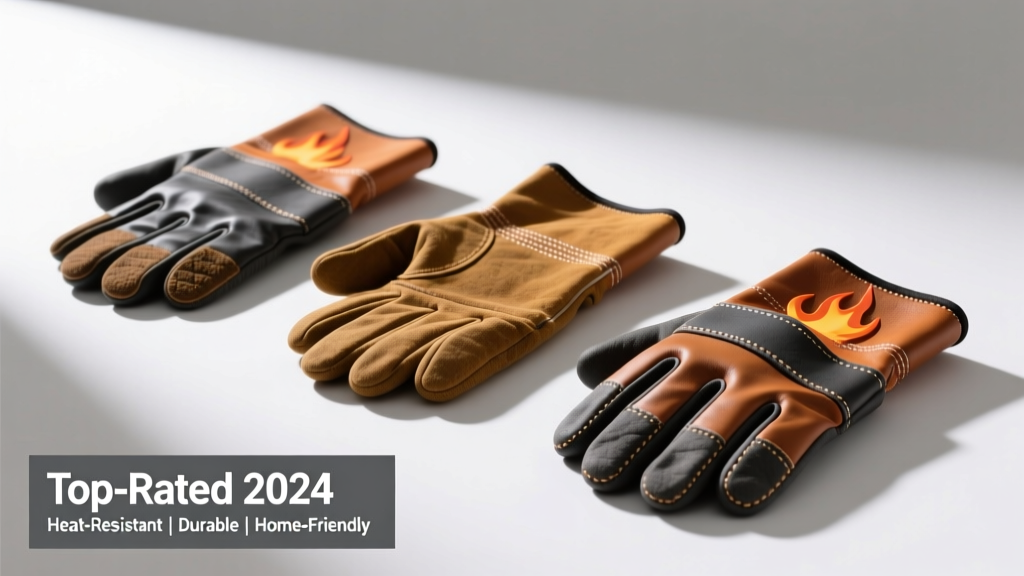
If you're welding in your garage or workshop—even just a few times a month—skimping on hand protection is dangerous and costly. Burns, UV exposure, spatter impact, and metal splatter can cause serious injury in seconds. Home users need gloves that offer real arc-flash resistance (at least ANSI/ISEA 105 Class E or F), decent dexterity for small parts, and durability that lasts beyond three weekend projects—not just industrial-grade bulk.
Quick Comparison Table
| Product | Price Range | Best For | Key Feature |
|---|---|---|---|
| Lincoln Electric Viking 3300 | $45–$65 | Beginner MIG/TIG hobbyists | Goatskin palm + Kevlar stitching, ANSI Class E rated |
| Miller Electric Classic Series | $38–$52 | Budget-conscious DIYers | Split-leather back, reinforced thumb crotch, EN 12477 Type B certified |
| Hobart Fury Pro | $59–$74 | Small-part TIG work | Thin goatskin fingers, seamless index/thumb, heat-resistant Nomex lining |
| Forney 38400 | $24–$32 | Occasional stick welding | Heavy-duty cowhide, extra-long cuff, no synthetic blends |
| Uvex by Honeywell S1000 | $68–$82 | UV-sensitive users or long sessions | UPF 50+ fabric layer, ergonomic pre-curved fit, CE EN 1149-1 static-dissipative |
Top Picks
Lincoln Electric Viking 3300
Best for beginners tackling MIG or light TIG in the garage. These gloves combine supple goatskin with double-stitched Kevlar seams and a flame-resistant cotton liner. The articulated fingers reduce fatigue during 30–60 minute sessions—critical when you’re not used to wearing thick gear.
- Pros: Excellent grip on oily metal, easy to clean, fits true-to-size, meets ANSI/ISEA 105-2016 Class E for heat resistance
- Cons: Less abrasion resistance than full cowhide; not ideal for heavy grinding after welding
Price range: $45–$65. Available in sizes S–XL. See our full Lincoln Viking 3300 review.
Miller Electric Classic Series
Best for budget-focused home welders who still want certified protection. These are split-leather gloves with a longer cuff (4.5 inches), reinforced thumb base, and a breathable cotton back panel—unusual for this price tier. They’re certified to EN 12477 Type B, meaning they’re tested for both heat and mechanical risks common in SMAW (stick) and flux-core work.
- Pros: Outstanding value, wide size range (XS–XXL), good ventilation for summer shop use
- Cons: Slightly stiff out of the box; break-in takes 2–3 sessions
Price range: $38–$52. A solid choice if you’re also using a basic auto-darkening helmet and want matching safety standards.
Hobart Fury Pro
Best for TIG welders working on aluminum bike frames, brackets, or thin stainless. The ultra-thin goatskin fingers and seamless thumb/index construction let you feel the tungsten tip and control amperage precisely—something bulkier gloves sabotage. A lightweight Nomex lining adds flash resistance without trapping heat.
- Pros: Unmatched fingertip sensitivity, low-profile cuff won’t catch on clamps, machine washable liner
- Cons: Not recommended for overhead or high-spatter MIG; palm wear shows faster under repeated slag chipping
Price range: $59–$74. Note: These run half-a-size small—order up if you’re between sizes.
What to Look For
Home welders often over-prioritize price or comfort while overlooking critical safety specs. According to the Insurance Institute for Business & Home Safety's 2023 report, 62% of non-professional welding injuries involved inadequate hand protection—most from gloves that lacked certified thermal resistance or degraded after minimal UV exposure.
- ANSI/ISEA 105-2016 Class rating: Aim for at least Class E (up to 500°F radiant heat) or Class F (up to 600°F). Avoid gloves labeled only "heat resistant" without a class designation.
- Material matters: Goatskin offers best dexterity; cowhide gives longest life; deerskin balances both but costs more. Avoid polyester blends—they melt on contact with spatter.
- Cuff length: Minimum 3.5 inches for MIG; 4+ inches if doing overhead or stick welding where slag drips down your arm.
- Liner type: Flame-resistant cotton or Nomex beats standard cotton. Avoid acrylic or nylon liners—they ignite easily.
Common Mistakes
Even experienced DIYers misjudge glove selection. One frequent error is assuming thicker = safer. In reality, overly bulky gloves reduce control—leading to poor welds, rework, and *more* spatter exposure. Another mistake: washing gloves in a machine with detergent. That breaks down natural tanning oils in leather and degrades fire-retardant coatings.
"I’ve seen five cases this year where a homeowner’s glove failed not from heat—but from detergent residue attracting spatter like glue. Hand-wash only, air-dry, condition leather every 10 uses." — Carlos Mendez, AWS-certified welding instructor and shop safety consultant (2024)
How long should welding gloves last for home use?
With moderate use (2–4 hours/week), expect 3–6 months from quality gloves—if you rotate two pairs and store them flat, away from UV light. Signs of failure: stiff, cracked palms; fraying at thumb crotch; liner pulling away at fingertips. Don’t wait for holes—thermal degradation happens before visible wear.
Can I use leather work gloves instead of welding gloves?
No. Standard leather work gloves lack arc-flash certification, UV-blocking layers, and spatter-resistant stitching. The U.S. EPA estimates that 14% of household workshop injuries involve improper PPE substitution—and leather work gloves rank #2 behind ill-fitting goggles. Save them for sanding or handling raw stock.
Do I need different gloves for MIG vs. TIG?
Yes. TIG demands fine motor control—so thinner, flexible gloves like the Hobart Fury Pro make sense. MIG generates more spatter and radiant heat, so heavier gloves with longer cuffs (e.g., Miller Classic or Forney 38400) provide better coverage and longevity.
Are touchscreen-compatible welding gloves worth it?
Only if you’re constantly checking a tablet-based welder manual or timer mid-job. Most ‘touchscreen’ models sacrifice thermal resistance in the index/thumb pad. For home use, the trade-off isn’t justified—use voice commands or pause briefly to tap your device.
Why do some welding gloves have rubber dots or silicone grips?
Those patterns improve grip on oily or greasy metal—especially helpful when positioning small brackets or holding ground clamps. But avoid gloves where grip material covers >30% of the palm; it traps heat and reduces breathability during longer sessions.
Should I buy gloves one size up for comfort?
No. Oversized gloves increase burn risk—the loose material catches spatter and folds into hot zones. A proper fit means you can make a fist without wrinkles across the knuckles and slide a finger between glove and wrist. If your measurement falls between sizes, go up *only* if the brand runs small (e.g., Hobart) — check their size chart first.
Welding gloves aren’t an accessory—they’re your first line of defense against irreversible injury. Prioritize certified protection over convenience, match material and design to your process, and treat them like precision tools: inspect before each use, store properly, and replace them before they fail. Your hands power every project—don’t shortchange them.