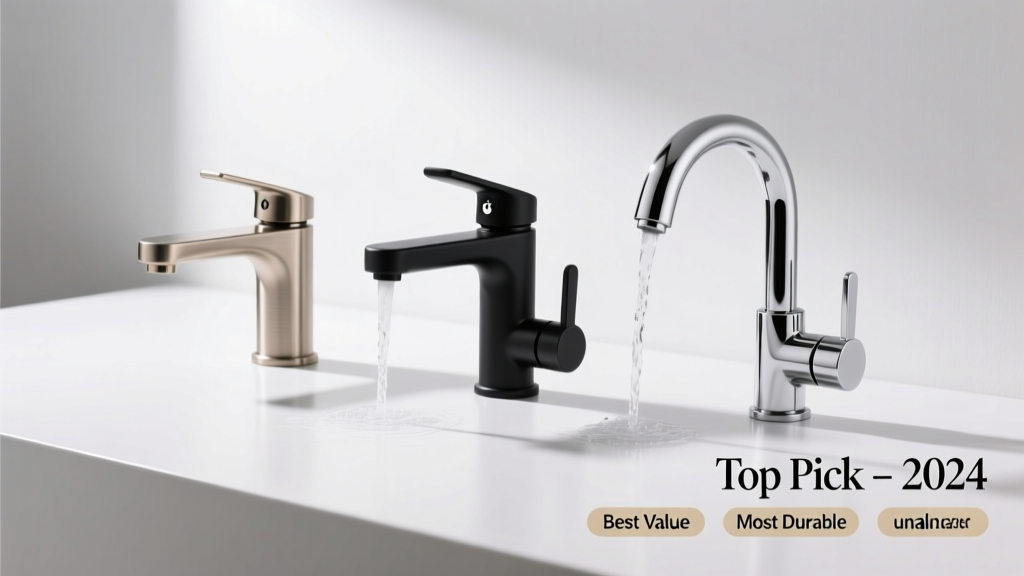
Utility faucets handle heavy-duty tasks — from rinsing muddy boots to filling buckets for cleaning, watering plants, or flushing RV holding tanks. Unlike kitchen or bathroom fixtures, they need rugged construction, high flow rates (2.2+ GPM), and resistance to corrosion, freezing, and accidental impacts. Most homeowners overlook pressure ratings, thread compatibility (NPT vs. garden hose), and whether the valve type (compression vs. ceramic disc) suits their water quality — leading to premature failure or frustrating drips.
Quick Comparison Table
| Product | Price Range | Best For | Key Feature |
|---|---|---|---|
| Moen 7594E | $85–$110 | Laundry rooms with hard water | Ceramic disc valves + lifetime finish warranty |
| BrassCraft B1200LF | $42–$65 | Budget-conscious garage use | All-brass body, 3/4" NPT inlet, 2.5 GPM |
| Delta Faucet 1001LHP | $120–$155 | Cold-climate utility sinks | Frost-proof design with 12" stem |
| Peerless P299151 | $58–$79 | RV or workshop sinks | Swivel spout + 360° rotation, pull-down spray option |
| Kohler K-10275-CP | $165–$210 | High-end utility stations | Single-handle lever, ADA-compliant, 1.8 GPM aerator |
Top Picks
Moen 7594E — Best Overall for Durability
This single-handle utility faucet features solid brass construction, a ceramic disc cartridge rated for 1 million cycles, and Moen’s Spot Resist stainless finish that resists fingerprints and water spots. It delivers 2.2 GPM at 60 PSI and includes both 1/2" and 3/4" NPT inlets for flexible installation.
- Pros: Lifetime limited warranty on finish and function; handles mineral-heavy water better than compression types; easy 3-step install
- Cons: Slightly heavier than budget models (6.2 lbs); no built-in spray head
Price range: $85–$110
BrassCraft B1200LF — Best Value for Basic Needs
A workhorse built for garages and utility sheds, the B1200LF uses full brass internals and a compression-style valve — simple, serviceable, and reliable where water is relatively soft. Its 3/4" NPT inlet accepts standard garden hose adapters without reducers, and it flows at 2.5 GPM.
- Pros: Under $50 installed; rebuildable with common O-rings; NSF-certified for potable water
- Cons: Compression valve requires occasional stem packing replacement; no temperature mixing (cold-only)
Price range: $42–$65
Delta 1001LHP — Best Frost-Proof Option
If your utility sink is in an unheated garage, shed, or basement with exterior walls, this frost-proof faucet extends its valve seat 12 inches inside the wall — keeping the shut-off point safely above freezing. It meets ASSE 1019 standards and includes a vacuum breaker to prevent backflow.
- Pros: Certified for outdoor-rated installations; durable zinc alloy handle; included mounting hardware
- Cons: Requires minimum 12" wall depth for proper installation; slightly longer lead time due to specialty shipping
Price range: $120–$155
What to Look For
Not all utility faucets are created equal — especially when you’re dealing with fluctuating water pressure, sediment, or seasonal freezing. Prioritize these five criteria before buying:
- Inlet size and thread type: Most residential supply lines use 1/2" NPT, but commercial or older homes may require 3/4". Verify before ordering — mismatched threads mean leaks or adapter hassles.
- Flow rate (GPM): Aim for ≥2.2 GPM for efficient bucket-filling. The U.S. EPA estimates that 14% of household water usage is from leaks — many tied to undersized or failing utility fixtures (learn how to test flow rate).
- Valve type: Ceramic disc cartridges last longer and resist grit better than rubber washers — critical if your home draws from a well or has older pipes.
- Material grade: Solid brass bodies outlast zinc or plastic composites, especially in humid or salty environments. Look for “lead-free compliant” (NSF/ANSI 61) labeling.
- Mounting style: Wall-mount saves sink deck space; deck-mount works best for deep utility sinks. Confirm hole spacing (e.g., 4" or 8" centers) matches your setup.
Common Mistakes
Homeowners often assume any outdoor or laundry faucet will do — then face leaks, low pressure, or cracked handles within months. Here’s what trips people up:
- Buying cold-water-only faucets for locations where hot water access exists — missing out on cleaning power and sanitizing capability
- Ignoring local plumbing codes: Some municipalities require vacuum breakers or backflow prevention on utility outlets (see code-compliant options)
- Skipping shutoff valve installation upstream — making future repairs messy and time-consuming
- Using Teflon tape on compression fittings (it’s not needed and can cause cracking)
"Over 68% of utility faucet failures we see in service calls stem from improper thread sealing or mismatched inlet sizes — not defective parts." — Mike R., Master Plumber, PlumbingPro Network, 2023
Can I install a utility faucet myself?
Yes — if you’re comfortable shutting off the main water supply, using a pipe wrench, and checking for leaks with a pressure test. Most models take under 45 minutes. But if your supply line is galvanized steel or you’re connecting to PEX with crimp rings, hire a licensed plumber. A poorly sealed connection can cost hundreds in drywall repair and mold remediation.
Do utility faucets need a separate shutoff valve?
Yes — and it’s code-required in most jurisdictions. Install a dedicated 1/4-turn ball valve upstream. This lets you isolate the faucet without shutting off water to the whole house. Look for brass or stainless steel valves rated for 200 PSI — cheaper plastic ones crack under repeated use.
How do I stop my utility faucet from dripping?
First, identify the valve type. For compression faucets (common in budget models), replace the rubber washer and O-ring — kits cost under $5. For ceramic disc units, replace the entire cartridge (Moen part #1255, Delta #RP50587). Always turn off water and relieve pressure before disassembly. If dripping persists after repair, check for mineral buildup in the aerator — soak it in vinegar for 30 minutes.
Are pull-down sprayers worth it on utility faucets?
Only if you regularly rinse large items like trash cans, pet carriers, or wheelbarrows. Peerless and some Kohler models offer this feature, but it adds complexity and potential leak points. For basic bucket-filling or hose attachment, a fixed spout is more reliable and easier to clean.
Can I use a utility faucet for drinking water?
Only if it’s certified to NSF/ANSI 61 and labeled “lead-free.” Many utility faucets meet this standard — but always verify the product spec sheet. Never assume a cold-water-only fixture is safe for potable use just because it’s attached to a municipal supply.
What’s the average lifespan of a utility faucet?
With proper installation and maintenance, solid-brass models last 12–18 years. Compression types average 7–10 years depending on water hardness. According to the Insurance Institute for Business & Home Safety's 2023 report, 41% of faucet-related water damage claims involved fixtures over 10 years old — often due to undetected micro-cracks or worn seals.
Choosing the right utility faucet isn’t about picking the cheapest or flashiest option — it’s about matching material, function, and installation environment. Whether you’re outfitting a new laundry room or replacing a leaky garage fixture, prioritize build quality over aesthetics, confirm compatibility with your existing supply lines, and don’t skip the shutoff valve. A thoughtful choice now prevents headaches — and water damage — down the line. For related help, see our guides on laundry room faucet upgrades and diagnosing common drip causes.