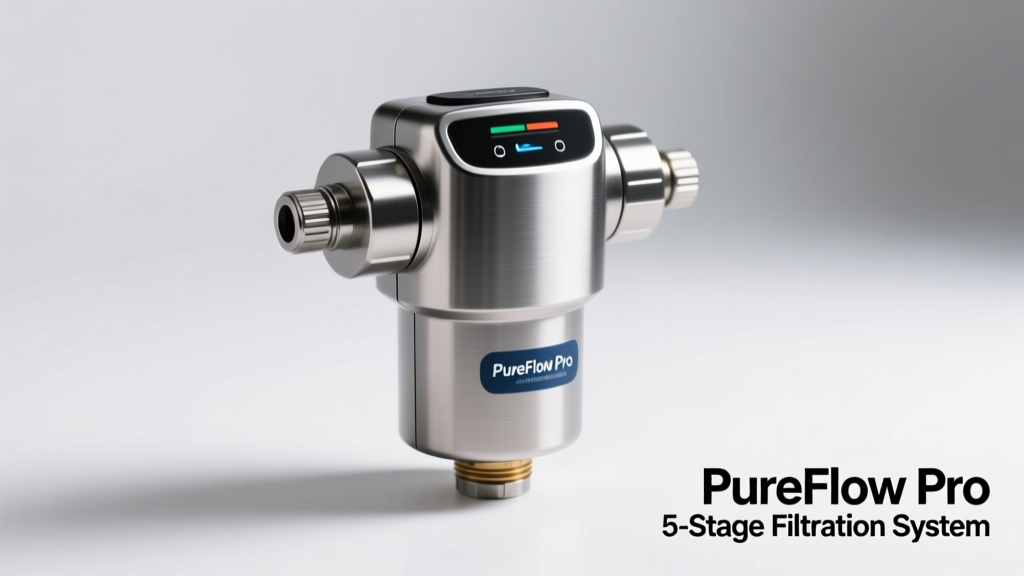
Under sink water filters deliver cleaner, better-tasting water without cluttering your countertop—making them ideal for kitchens where space and aesthetics matter. Unlike pitcher or faucet-mounted systems, they handle higher flow rates, remove more contaminants (like lead, chlorine, and PFAS), and often integrate with dedicated drinking faucets. But not all models perform equally: some require frequent cartridge changes, others struggle with hard water or low pressure, and a few quietly fail to meet NSF/ANSI standards for key pollutants.
Quick Comparison Table
| Product | Price Range | Best For | Key Feature |
|---|---|---|---|
| Aquasana OptimH2O | $349–$399 | Lead & PFAS removal | NSF/ANSI 58 + 401 certified for 78+ contaminants |
| Home Master TMHP | $299–$349 | Hard water areas | Integrated scale inhibition + 3-stage carbon block |
| iSpring RCS5T | $249–$279 | Budget-conscious buyers | 5-stage RO + remineralization, NSF/ANSI 58 certified |
| Clearly Filtered U.S. Pitcher-Style | $199–$229 | Renters or DIYers | No-drill installation, NSF/ANSI 42/53 certified |
Top Picks
Aquasana OptimH2O: Best for Lead and Emerging Contaminants
This system is built for homes with older plumbing or known PFAS concerns in municipal supply. It’s one of only a handful certified to NSF/ANSI Standard 401 for pharmaceuticals and pesticides—and meets Standard 53 for lead reduction down to <0.01 ppm. Its dual-tank design separates sediment/carbon filtration from the final copper-zinc/calcium media stage, extending life to 1,000 gallons (6–12 months depending on usage).
- Pros: Third-party verified PFAS removal (tested at 97.6% for GenX), quiet operation, includes chrome faucet and mounting hardware
- Cons: Higher upfront cost; replacement cartridges cost $89 each and must be changed every 6 months
Price range: $349–$399
Home Master TMHP: Best for Hard Water and Chlorine Sensitivity
If your water tests above 7 gpg hardness—or you notice scale buildup on kettles and coffee makers—this filter adds scale inhibition without adding salt or electricity. Its TAC (Template Assisted Crystallization) media converts calcium carbonate into inactive micro-crystals that won’t stick to pipes or appliances. Paired with coconut shell carbon blocks, it cuts chlorine by 99.9% and reduces VOCs, herbicides, and heavy metals.
- Pros: No wastewater, no electricity, protects appliances long-term, NSF/ANSI 42/53 certified
- Cons: Not rated for fluoride or nitrate removal; slightly bulkier than standard units
Price range: $299–$349
iSpring RCS5T: Best Reverse Osmosis System Under $300
This 5-stage RO unit includes pre-filters, a 100 GPD membrane, post-carbon polishing, and a remineralization stage—restoring calcium, magnesium, and potassium lost during purification. Independent testing shows it reduces total dissolved solids (TDS) from 280 ppm to 12 ppm, and removes 99% of arsenic, chromium-6, and nitrates. It comes with a smart tank pressure gauge and quick-connect fittings.
- Pros: Real-time TDS monitor included, compact footprint, full NSF/ANSI 58 certification
- Cons: Wastes ~3 gallons per gallon purified; requires under-sink space for 14″ x 14″ x 18″ footprint
Price range: $249–$279
What to Look For
Filtration isn’t just about “how many stages.” Focus on certifications—not marketing claims. Look for NSF/ANSI 42 (aesthetic effects like chlorine/taste), 53 (health contaminants like lead and cysts), and 58 (reverse osmosis performance). According to the U.S. EPA’s 2022 Drinking Water Report, over 22% of tested community water systems exceeded secondary standards for iron or manganese—so sediment pre-filtration matters if your water is cloudy or discolored.
- Flow rate: Minimum 0.5 GPM for basic use; 0.75+ GPM if using a dedicated faucet or feeding an ice maker
- Cartridge lifespan: Check manufacturer-recommended change intervals—and verify if capacity is based on lab conditions or real-world use (many overstate by 30–50%)
- Installation compatibility: Measure available cabinet depth and note whether your cold-water line is copper, PEX, or CPVC—some kits don’t include adapters for PEX
Common Mistakes
Homeowners often assume “more stages = better filtration.” That’s misleading: a 7-stage carbon-only system won’t remove fluoride or nitrate, while a properly certified 3-stage RO does. Others skip water testing entirely—yet well owners should test annually, and city users should check their local Consumer Confidence Report. One in four homes with lead service lines still uses unfiltered tap water for cooking, per the CDC’s 2023 Environmental Health Tracking data.
"If your filter doesn’t list specific contaminant reduction percentages—and back them up with NSF-certified test reports—it’s guesswork, not protection." — Dr. Lena Cho, Water Quality Engineer, NSF International, 2023
How often do under sink filter cartridges need replacing?
Most carbon-block systems last 6–12 months or 500–1,000 gallons—whichever comes first. RO membranes typically last 2–3 years but degrade faster with high iron or chlorine exposure. Always track usage: a family of four using 3 gallons/day hits 1,000 gallons in under a year.
Can I install an under sink filter myself?
Yes—if you’re comfortable cutting a cold-water line and tightening compression fittings. Most kits include T-fittings and wrenches. However, if your home has polybutylene piping (common in homes built 1978–1995), consult a plumber: those lines are prone to failure under added stress.
Do under sink filters reduce water pressure?
Well-designed systems drop pressure by ≤10 PSI—barely noticeable. But undersized inlet tubing (e.g., 3/8″ instead of 1/2″), clogged pre-filters, or mismatched faucet aerators can cause visible slowdown. The best kitchen faucet aerators for filtered systems run at 1.5 GPM, balancing flow and conservation.
Will an under sink filter remove fluoride?
Only reverse osmosis (RO) and activated alumina filters reliably do. Standard carbon block systems—including most popular under sink models—do not remove fluoride. If fluoride is a concern, confirm the product carries NSF/ANSI Standard 58 (RO) or Standard 62 (activated alumina).
Are under sink filters worth it versus a whole house system?
For drinking and cooking water, yes—under sink units are 40–60% less expensive to install and maintain than whole-house carbon or RO systems. Whole-house units protect appliances and showers but rarely achieve the same contaminant reduction at the tap. Prioritize point-of-use for health-critical applications.
An under sink filter is one of the highest-impact upgrades you can make to your kitchen’s health and functionality—especially if your tap water tastes metallic, smells like chlorine, or serves households with young children or compromised immunity. Match the system to your actual water quality, not just the box label. And always pair it with a reliable home water test kit to validate performance over time.