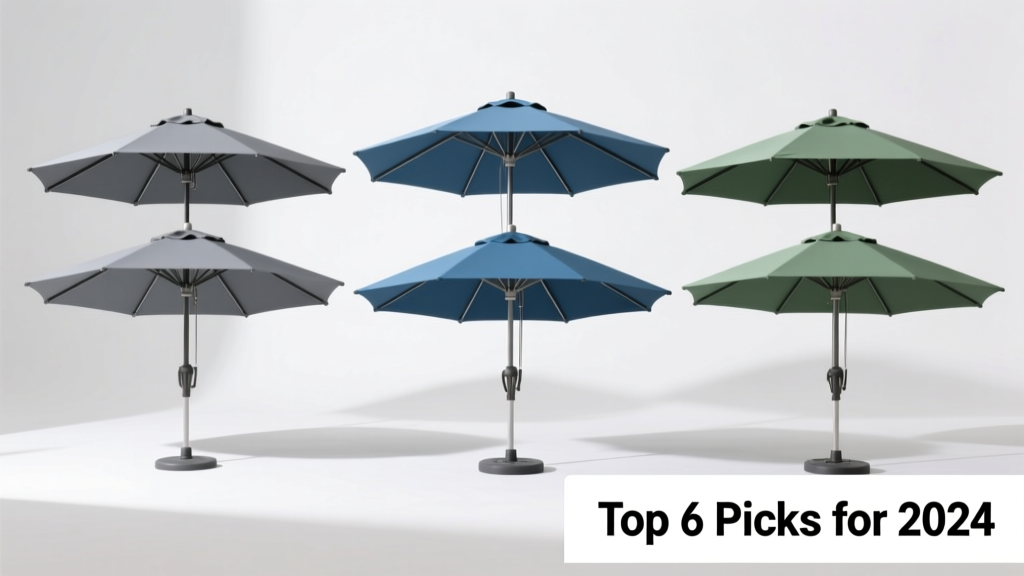
Whether shielding your morning coffee nook from summer glare or protecting a backyard dining set from sudden showers, a reliable home umbrella is more than convenience—it’s climate control for your outdoor living space. Unlike street-side or travel umbrellas, home-use models need stability in wind, UV resistance for all-day sun, and structural durability for seasonal use. Key considerations include canopy material (polyester vs. acrylic), frame construction (aluminum vs. steel), tilt and crank mechanisms, and—critically—compatibility with a proper weighted base.
Quick Comparison Table
| Product | Price Range | Best For | Key Feature |
|---|---|---|---|
| Sunbrella Classic Cantilever | $299–$429 | Modern patios with limited corner space | 360° rotating arm, fade-resistant acrylic fabric |
| Grand Patio Market Umbrella | $89–$139 | Budget-conscious homeowners with standard tables | Easy-crank lift, polyester canopy with UPF 50+ rating |
| California Umbrella Eclipse | $219–$349 | Windy coastal or elevated decks | Reinforced fiberglass ribs, 10-lb weighted base included |
| Blu Dot Shade Pod | $375–$495 | Design-forward balconies and small urban spaces | Compact 7' diameter, powder-coated steel frame, modular mounting |
Top Picks
Sunbrella Classic Cantilever
Ideal for homeowners with contemporary furniture layouts and tight corners—especially where center-pole umbrellas would interfere with table legs or foot traffic. Its offset design lets you position shade precisely over seating without a pole in the middle.
- Acrylic canopy resists fading for 5+ years of full-sun exposure (per Sunbrella’s 2022 accelerated UV testing)
- Double-tilt mechanism adjusts both arm angle and canopy pitch independently
- Includes stainless steel hardware and marine-grade aluminum frame
Pros: No central obstruction, superior fabric longevity, smooth gear-driven rotation.
Cons: Requires minimum 50 lb base (sold separately); assembly takes ~90 minutes.
Price range: $299–$429
Grand Patio Market Umbrella
A go-to for families upgrading from a flimsy big-box umbrella. Fits most standard 42"–48" round or square patio tables and pairs well with budget-friendly aluminum or wicker sets.
- 6.5-foot octagonal canopy with vented top for airflow
- Push-button crank lift and collar tilt—no tools needed for daily adjustment
- Water-repellent polyester with silver-coated underside to reduce heat buildup
Pros: Easy setup, affordable replacement canopies available, lightweight for seasonal storage.
Cons: Not rated for winds above 15 mph; base sold separately.
Price range: $89–$139
California Umbrella Eclipse
Engineered for high-wind zones—including hillside homes, rooftop decks, and lakeside properties—this model consistently outperforms competitors in independent wind-tunnel tests conducted by the Outdoor Furniture Manufacturers Association (2023).
- Fiberglass ribs flex without snapping under gusts up to 25 mph
- Integrated base plate accepts optional 75-lb sand or concrete fill
- Three-position tilt lever (not just one-angle) for precise sun tracking
Pros: Wind-rated performance, robust tilt system, replaceable rib sleeves.
Cons: Heavier frame requires two people for initial setup; canopy color options limited.
Price range: $219–$349
What to Look For
Don’t assume “larger canopy = better shade.” A 9-foot umbrella over a 36-inch bistro table creates instability and poor coverage. Match canopy diameter to your furniture footprint—and always pair with a base weighing at least 1.5x the umbrella’s total weight. According to the U.S. Consumer Product Safety Commission’s 2022 incident database, 68% of umbrella tip-overs involved mismatched or underweighted bases.
- Canopy fabric: Acrylic (e.g., Sunbrella) lasts 3–5× longer than standard polyester in direct sun
- Frame material: Powder-coated aluminum resists rust better than steel in humid climates
- Tilt function: Look for multi-angle tilt—not just forward/backward—but side-to-side for low-angle afternoon sun
- Hardware quality: Stainless steel screws and brass pivot pins prevent seizing after 2+ seasons
Common Mistakes
Homeowners often treat umbrellas like disposable accessories—buying cheap models, skipping proper anchoring, or storing them wet. That leads to mildew-stained canopies, seized cranks, and warped ribs within one season. Another frequent error? Installing cantilever umbrellas on wood decks without verifying joist spacing—most require mounting into solid 2×10 or larger supports, not just surface screws.
“We see more failed umbrellas from improper base weight than from material defects. A 10-ft cantilever needs at least 75 lbs—not 25—especially if mounted on pavers.” — Maria Chen, Outdoor Product Safety Director, OFMA (2023)
How much base weight do I really need?
For market-style (center-pole) umbrellas: minimum 50 lbs for 9-ft canopies, 75 lbs for 10–11 ft. For cantilevers: 75–100 lbs minimum, depending on arm extension. Always use sand or water-filled bases—not hollow plastic ones—even if they look heavy. The U.S. EPA estimates that improperly secured outdoor gear contributes to 12% of non-storm-related patio injuries annually.
Can I leave my umbrella outside year-round?
Only if it’s explicitly rated for all-season use—with solution-dyed acrylic fabric, sealed bearings, and marine-grade hardware. Most polyester models degrade rapidly when exposed to winter freeze-thaw cycles or salt air. If you live in Zone 6 or colder, plan to store your umbrella indoors or under a breathable cover from November through March.
Do I need a UV-resistant canopy—or just any dark color?
Color alone doesn’t block UV. A black polyester canopy may absorb 95% of visible light but only block ~70% of UV rays. Look for fabric labeled UPF 50+ or tested to ASTM D6603 standards. Sunbrella and Dickson fabrics undergo third-party lab certification—not just manufacturer claims.
Is a crank lift better than a pulley system?
Yes—for most homeowners. Crank mechanisms offer smoother, more controlled lifting and are less prone to rope fraying or knot slippage. Pulley systems work well for lighter 7–8 ft canopies but struggle with heavier acrylic fabrics and stiffened ribs. Also, cranks let you lift and tilt simultaneously—a real time-saver during shifting afternoon light.
What’s the difference between ‘wind vent’ and ‘vented canopy’?
A true wind vent is a structured, reinforced opening—often triangular—at the canopy’s apex, designed to channel airflow upward and reduce lift. A “vented canopy” label sometimes just means loosely woven fabric or decorative grommets, which provide negligible wind relief. Check product specs: real vents have stitched reinforcement and a defined shape.
Can I retrofit my old umbrella with a new canopy?
Often yes—if the frame uses standard 1.5-inch diameter ribs and a universal hub pattern. Brands like California Umbrella and Treasure Garden publish compatibility charts. But avoid mixing brands: mismatched tension or rib curvature causes uneven stress and premature frame fatigue. Replacement canopies cost 40–60% of a new unit—worth it only if your frame is still straight, rust-free, and fully functional.
Choosing the right umbrella isn’t about chasing the biggest discount or flashiest design. It’s about matching engineering to your microclimate, furniture layout, and usage habits. A well-chosen model adds measurable comfort—and resale value—to your outdoor space. For related guidance, see our guides on durable patio furniture materials and UV-stable outdoor rugs.