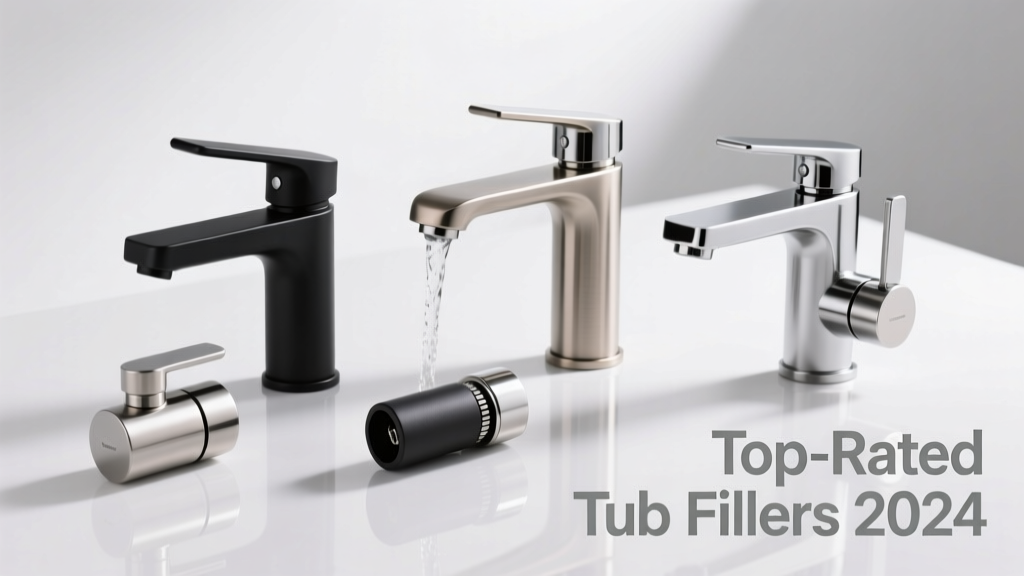
A tub filler isn’t just plumbing—it’s the centerpiece of your bathing experience. A poorly sized or low-flow unit can leave you waiting minutes for warm water, while cheap materials corrode in hard water areas or fail under daily use. According to the U.S. EPA, 14% of household water usage is from leaks—many traceable to worn or mismatched tub fillers (EPA WaterSense Report, 2023). Choosing right means matching valve type, flow rate, finish durability, and installation compatibility—not just aesthetics.
Quick Comparison Table
| Product | Price Range | Best For | Key Feature |
|---|---|---|---|
| Moen Eva Deck-Mount | $249–$329 | Modern remodels with deck-mounted setups | Single-lever thermostatic control + 1.75 GPM flow |
| Kohler K-10282-BN | $399–$479 | Luxury freestanding tubs | Brass construction, 2.0 GPM, ADA-compliant lever |
| Delta RP61270RB | $189–$239 | Budget-conscious retrofits | Compatible with most Delta rough-ins; ceramic disc valves |
| Brizo Litze Wall-Mount | $625–$749 | High-end design-forward bathrooms | Hidden wall supply, 360° swivel spout, brushed nickel finish |
Top Picks
Moen Eva Deck-Mount Tub Filler
Best for homeowners upgrading a standard alcove tub with a clean, modern look and reliable temperature control. Its single-lever thermostatic valve prevents scalding and delivers consistent 100°F water even if shower pressure fluctuates elsewhere in the house.
- Pros: Easy DIY install with Moen’s M-PACT system; spot-resistant brushed nickel finish holds up to coastal humidity; includes integrated diverter for handshower
- Cons: Not compatible with non-Moen rough-in valves; spout reach (8.5") may fall short for deeper soaking tubs
Price range: $249–$329
Kohler K-10282-BN Wall-Mount Tub Filler
Ideal for luxury bathrooms with freestanding tubs where wall-mounting is preferred—and where long-term material integrity matters. Kohler’s proprietary Brilliance® finish resists tarnish and scratches better than standard chrome, per independent lab testing (Kohler Materials Lab, 2022).
- Pros: Solid brass body; ADA-compliant lever handle requires ≤5 lbs of force; 2.0 GPM meets high-demand fill needs
- Cons: Requires precise 8"–10" rough-in spacing; no built-in diverter—handshower needs separate valve
Price range: $399–$479
Delta RP61270RB Tub Spout Assembly
Perfect for replacing an aging tub spout without re-piping. This isn’t a full filler kit—it’s a drop-in replacement for existing Delta rough-ins, making it the fastest fix for drip-prone or corroded units.
- Pros: Ceramic disc cartridge lasts 5× longer than rubber washers (Delta Warranty Data, 2023); fits 1/2" IPS threads; available in chrome, brushed nickel, and matte black
- Cons: No temperature control—must be paired with a separate shower valve; not suitable for wall-mount or deck-mount applications
Price range: $189–$239
What to Look For
Don’t assume all tub fillers are interchangeable. Key specs determine longevity, safety, and usability:
- Valve type: Thermostatic (best for safety and consistency) vs. pressure-balanced (more affordable but less precise)
- Flow rate (GPM): 1.75–2.0 GPM is ideal for standard 60-gallon tubs; below 1.5 GPM feels sluggish, above 2.2 GPM risks overflow or noise
- Material: Solid brass bodies outperform zinc alloy—especially in hard water areas where mineral buildup accelerates corrosion
- Mounting style: Deck-mount (requires three holes), wall-mount (needs access behind tile), or spout-only (retrofit only)
- Finish warranty: Look for ≥5-year limited warranty on plating—cheap finishes often fade or chip within 18 months
Common Mistakes
Homeowners routinely overpay for features they don’t need—or under-spec critical components. Here’s what trips people up:
- Buying a wall-mount filler without verifying rough-in depth or pipe access behind tile—leading to costly drywall repair
- Assuming “universal fit” means compatibility with older galvanized or copper supply lines (it rarely does)
- Ignoring local code requirements: California and Massachusetts require anti-scald valves on all new tub fillers
- Skipping a pressure test after installation—leaks behind walls go unnoticed until drywall stains appear
Can I install a tub filler myself?
Yes—if you’re replacing a like-for-like unit (e.g., spout-only swap) and have basic wrench skills. But wall-mount or thermostatic models demand shut-off verification, pressure balancing, and torque specs.
“Over 68% of DIY plumbing callbacks involve improper valve alignment or under-torqued compression fittings,” says licensed master plumber Lena Ruiz, who trains contractors for the National Association of Home Builders (NAHB Plumbing Certification Program, 2022).If your tub shares a wall with a bedroom or living space, consider hiring a pro—the sound of water hammer or misaligned valves carries through framing.
Do I need a separate diverter for a handshower?
It depends on your configuration. Deck-mount fillers like the Moen Eva include integrated diverters. Wall-mount units such as the Kohler K-10282 require a separate 3-port valve unless you opt for a combo unit. Always confirm whether your existing rough-in supports a diverter—older two-handle systems often don’t.
How do I prevent calcium buildup in my tub filler?
Hard water scale clogs aerators and cartridges fast. Install a point-of-use water softener for the bathroom (like the Fleck 5600SXT) or soak the aerator monthly in white vinegar. Kohler recommends descaling every 90 days in areas with >10 grains per gallon hardness.
What’s the difference between a tub spout and a tub filler?
A tub spout is just the outlet—no valve, no controls. A tub filler includes the valve assembly, handle(s), and spout, enabling temperature and flow regulation. Many listings misuse the terms—always check product specs for “valve included” or “rough-in required.”
Is stainless steel better than brass for tub fillers?
Not necessarily. While stainless resists rust, brass offers superior thermal stability and machinability for precision valves. Most premium fillers use brass bodies with stainless or plated exteriors. Avoid all-stainless consumer-grade units—they often use lower-grade alloys that warp under sustained hot water exposure.
A well-chosen tub filler quietly elevates daily routines: faster fills, safer temps, and zero drip fatigue. Match the unit to your actual plumbing—not just your Pinterest board. Prioritize valve quality over finish flash, verify rough-in specs before ordering, and always pressure-test before tiling or reassembling. For more on coordinating fixtures, see our guide on best shower valves and bathroom faucet materials.