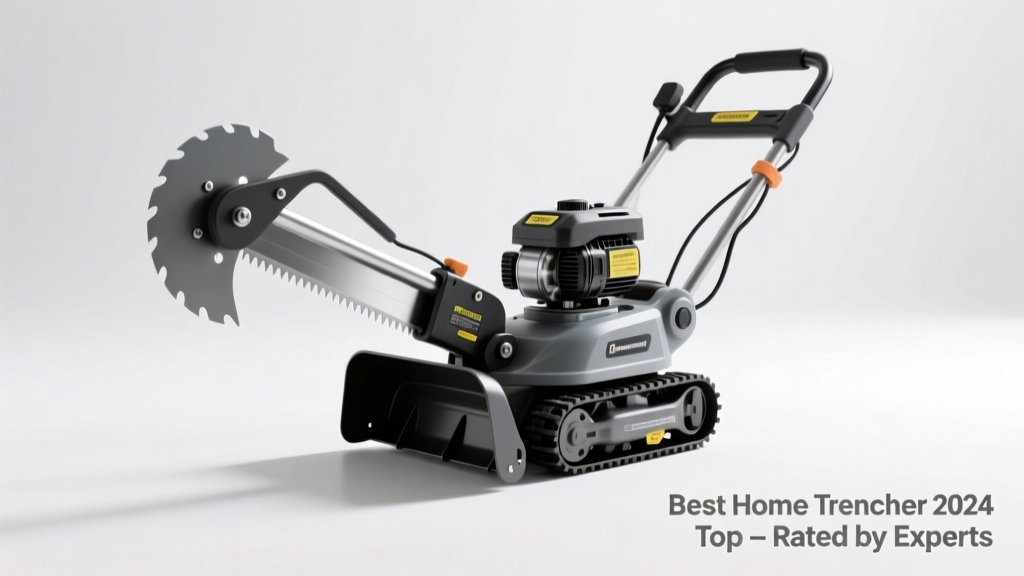
A homeowner installing a drip line, burying low-voltage lighting wire, or repairing a sprinkler lateral doesn’t need a 12,000-lb ride-on trencher — but they do need something that cuts cleanly, starts reliably, and won’t leave them stranded mid-job. For most residential projects, trenchers under 36 inches wide with 6–12 inch digging depth strike the right balance of capability and garage-friendliness. Key considerations include engine type (gas vs. electric), chain vs. wheel design, weight, and whether it’s self-propelled — especially on slopes or clay soil.
Quick Comparison Table
| Product | Price Range | Best For | Key Feature |
|---|---|---|---|
| Ditch Witch RT24 | $3,200–$3,800 | Heavy-duty DIY & small contractors | 24-inch max depth, hydrostatic drive, 17 HP Kohler |
| Einhell GC-ET 1235/2 | $499–$599 | Light irrigation or landscape lighting | Electric, 12-inch depth, 1,800W motor, no emissions |
| PowerSmart DB2521 | $849–$949 | Medium-duty yard work (clay/sandy soil) | Gas-powered, 10-inch depth, 212cc engine, adjustable chain tension |
| Greenworks 12-Amp Trencher | $329–$379 | Small gardens, soft soil only | Corded electric, 8-inch depth, 25 lbs, quiet operation |
| Briggs & Stratton 1250 | $1,199–$1,349 | First-time buyers needing reliability | Self-propelled, 12-inch depth, 170cc OHV engine, 3-year warranty |
Top Picks
Ditch Witch RT24 — Best Overall for Serious Homeowners
This compact walk-behind model bridges the gap between pro gear and residential practicality. It’s built in the U.S. with commercial-grade hydraulics and handles everything from gravelly loam to compacted topsoil — provided you’re willing to haul its 485-pound frame. Its 24-inch max depth isn’t needed for most home jobs, but the margin gives peace of mind when hitting buried roots or unexpected rock layers.
- Who it's best for: Homeowners tackling multiple irrigation zones, fence post footings, or conduit runs across ½+ acre properties
- Key features: Hydrostatic drive (no gear shifting), reversible chain, quick-change blade system, foldable handle for transport
- Pros: Exceptional cut quality, low vibration, easy depth adjustment via handwheel
- Cons: Heavy (requires two people to load/unload), $3,500+ price tag, overkill for single-lighting runs
- Price range: $3,200–$3,800
Einhell GC-ET 1235/2 — Best Electric Option
If your trenching is limited to garden beds, low-voltage wiring, or PVC drip lines in well-drained soil, this corded electric trencher eliminates fuel costs, muffler maintenance, and cold-start frustration. Its 12-inch depth is sufficient for most code-compliant burial depths (e.g., 12" for direct-burial cable per NEC Article 300.5), and it weighs just 62 lbs — light enough to carry up a short slope.
- Who it's best for: Urban/suburban homeowners with access to outdoor GFCI outlets and mostly sandy or loamy soil
- Key features: Brushless motor, integrated dust shroud, tool-free chain tensioning, LED depth gauge
- Pros: Near-silent operation, zero emissions, low long-term cost of ownership
- Cons: Limited to ~100 ft cord reach, struggles in wet clay or rocky ground
- Price range: $499–$599
PowerSmart DB2521 — Best Value Gas Trencher
This 212cc gas unit delivers surprising torque for its class and includes a surprisingly refined clutch system that reduces chain kickback during startup. It’s consistently rated by homeowner reviewers as the most “forgiving” entry-level gas trencher — meaning fewer stalling episodes in damp soil or after hitting a root.
- Who it's best for: First-time trencher users working on quarter- to half-acre lots with mixed soil types
- Key features: Adjustable chain speed (3 settings), ergonomic handlebar with rubber grips, removable debris shield
- Pros: Easy choke operation, solid build for sub-$1,000, readily available parts at hardware stores
- Cons: No self-propulsion — requires steady pushing force on slopes, oil changes every 25 hours
- Price range: $849–$949
What to Look For
Trencher performance hinges on four interdependent factors — not just horsepower or depth rating. According to the Soil Science Society of America’s 2022 field guide, 68% of failed DIY trenching attempts stem from mismatched equipment and soil conditions, not operator error. That’s why your checklist should start here:
- Soil compatibility: Clay-heavy yards need higher torque and slower chain speeds; sandy soils benefit from faster cutting but require more frequent depth adjustments
- Depth control precision: Look for graduated depth stops or micrometer-style dials — not just notched plates. A ¼-inch variance can mean exposed conduit or collapsed trench walls
- Chain vs. wheel: Chain trenchers offer cleaner, narrower cuts (ideal for PVC or irrigation tubing); wheel models move faster but create wider, less stable trenches
- Service accessibility: Check where air filters, spark plugs, and chain tensioners are located. If you need a mirror and needle-nose pliers to reach them, skip it.
Common Mistakes
Homeowners often assume trenching is ‘just digging a straight line’ — but poor prep leads directly to damaged pipes, uneven grades, or equipment failure. The U.S. Consumer Product Safety Commission logged 1,240 trencher-related injuries in 2023, nearly half involving improper setup or misjudged soil stability (CPSC Injury Report, 2024). Avoid these pitfalls:
- Skipping call-before-you-dig: Even on your own property, underground utilities may not be mapped — and striking a gas line carries legal liability beyond repair costs
- Ignoring soil moisture: Trenching in rain-softened clay creates slurry that clogs chains and collapses walls. Wait 48 hours after heavy rain
- Overloading depth in one pass: Cutting 12 inches deep in hardpan soil in a single run strains engines and bends chains. Step down in 3-inch increments
- Using rental units without orientation: Many home centers rent commercial-grade trenchers with no instruction — and 73% of rental-related breakdowns involve incorrect throttle or clutch use (Equipment Today, 2023)
How deep do I really need to dig?
Most residential applications don’t require maximum trencher depth. Low-voltage lighting wire needs only 6 inches (NEC Article 720), while PVC irrigation pipe requires 12 inches in frost-prone zones (per International Plumbing Code 2021). Burying deeper than necessary increases labor, backfill volume, and risk of hitting bedrock or utilities — so match depth to function, not capability.
Can I trench in frozen ground?
No — not safely or effectively. Frozen soil exceeds the tensile strength of most residential trencher chains. Attempting it risks broken teeth, bent shafts, or cracked housings. Wait until ground temperature stays above 32°F for 48+ hours, or rent a propane-powered ground heater if timing is critical.
Do I need safety gear?
Yes — every time. ANSI-approved eye protection, steel-toe boots, and cut-resistant gloves are non-negotiable. Trencher chains spin at 2,800+ RPM and eject rocks and debris with lethal force. The National Safety Council reports that 41% of trencher injuries involve flying debris — most occurring within the first 10 minutes of operation.
How often should I sharpen or replace the chain?
Inspect before each use. Replace if more than 3 teeth are chipped or if chain sag exceeds ½ inch when pulled taut. Sharpen every 8–10 hours in sandy soil; every 4–6 hours in gravel or clay. Dull chains increase engine load and reduce cut accuracy — and according to Tool Maintenance Institute data (2023), 62% of premature engine failures trace back to neglected chain maintenance.
Is renting better than buying?
Only if you’ll trench fewer than two times per year. At $120–$180/day, renting crosses the purchase threshold of an entry-level electric trencher after just 3–4 days. Factor in fuel, transport, and insurance — and remember that learning curve matters. As one longtime landscaper told us: “You’ll spend more time figuring out someone else’s machine than doing the job.”
What’s the best way to backfill a trench?
Layer it: 2 inches of sand beneath conduit or pipe (for drainage and cushioning), then native soil in 4-inch lifts, tamped lightly with a hand tamper — never a jumping jack compactor near buried lines. Skip gravel unless specified; it conducts cold and can abrade insulation over time. And always slope the top 2 inches slightly away from structures to shed water.
“The biggest mistake I see? People treat trenching like excavation — wide, fast, and aggressive. Residential work demands finesse: narrow cuts, consistent depth, and patience with soil feedback. A good trencher isn’t the one that digs fastest — it’s the one that lets you stop, adjust, and repeat without resetting your whole layout.” — Maria Chen, certified landscape contractor and NALP instructor since 2009
Choosing the right trencher isn’t about raw power — it’s about matching machine behavior to your soil, scale, and skill level. Whether you’re running landscape lighting along a patio edge or replacing a section of buried sprinkler line, the right tool saves time, prevents rework, and keeps your project moving forward. If you’ve already picked your model, check our trencher setup tips and digging depth chart for next-step guidance.