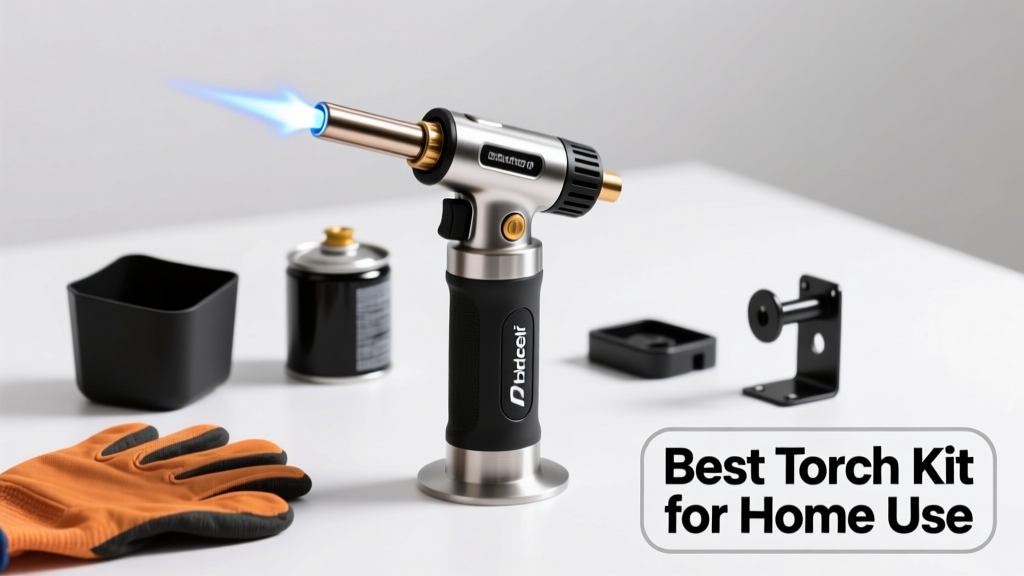
A quality torch kit is essential for homeowners tackling plumbing repairs, jewelry soldering, heat-shrinking wire insulation, or even culinary tasks like caramelizing sugar. Unlike disposable butane lighters or unregulated propane torches, a purpose-built kit gives you consistent flame temperature, precise control, and built-in safety features—critical when working near drywall, wood framing, or gas lines. According to the U.S. EPA estimates that 14% of household water usage is from leaks—many of which could be fixed faster and more reliably with a proper torch and soldering setup.
Quick Comparison Table
| Product | Price Range | Best For | Key Feature |
|---|---|---|---|
| BernzOmatic TS8000 Trigger Start | $35–$45 | Plumbing & HVAC repairs | Instant ignition, adjustable flame up to 5,000°F |
| Weller WLC100 Soldering Station | $65–$85 | Circuit board repair & electronics | Variable temperature control (up to 900°F), ceramic tip |
| Map-Pro + Propane Combo Kit (BernzOmatic) | $40–$55 | General DIY & brazing | Higher BTU than propane alone; works down to 20°F |
| Hakko FX-888D Digital Soldering Station | $120–$140 | Advanced electronics work | Digital temp display, ESD-safe, 70W heating |
| Smith Little Torch Kit (Micro) | $180–$220 | Jewelry making & fine metalwork | Two-stage regulator, oxygen-acetylene capable |
Top Picks
BernzOmatic TS8000 Trigger Start
Best for weekend plumbers and HVAC helpers who need fast, repeatable flame without fumbling with matches or piezo igniters. Its trigger-start mechanism eliminates accidental ignition, and the brass nozzle resists warping during extended use. Comes with a standard propane cylinder adapter and fits most hardware-store fuel canisters.
- Pros: Lightweight (1.2 lbs), intuitive single-hand operation, flame locks in place at 3 settings
- Cons: Not suitable for fine electronics; no temperature readout
Price range: $35–$45. Includes carrying case and instruction booklet. Pair it with lead-free solder for copper pipes for leak-proof joints.
Weller WLC100 Soldering Station
Ideal for hobbyists repairing game consoles, replacing phone batteries, or assembling Arduino projects. It’s not a flame-based torch—but its heated tip delivers controlled thermal energy without open flame risk. The iron heats to 900°F in under 90 seconds and holds stable within ±10°F.
- Pros: Affordable entry into temperature-controlled soldering, interchangeable tips, low-voltage safety
- Cons: Requires 120V outlet; not for large-scale plumbing or brazing
Price range: $65–$85. Add a soldering iron stand with sponge to extend tip life and prevent bench burns.
Map-Pro + Propane Combo Kit
This dual-fuel system bridges the gap between basic propane and high-temp oxy-acetylene setups. Map-Pro (methylacetylene-propadiene) burns hotter (3,730°F) and more efficiently than propane alone—especially useful for silver brazing or heating stubborn pipe fittings.
- Pros: Works reliably in cold weather; compatible with BernzOmatic regulators and hoses
- Cons: Fuel cylinders cost ~25% more than standard propane; requires separate hose/regulator purchase
Price range: $40–$55 (kit only; add $12–$18 for regulator/hose). A smart upgrade if you’re already using propane but hitting limits on joint strength or speed.
What to Look For
Not all torch kits deliver equal reliability—or safety. Prioritize these five criteria before buying:
- Ignition method: Trigger-start or push-button piezo beats match-lighting every time—especially when working overhead or in tight spaces.
- Flame adjustability: At least three distinct settings (low/medium/high) lets you adapt to copper tubing vs. steel brackets vs. shrink tubing.
- Fuel compatibility: Check whether it accepts disposable propane canisters, bulk tanks, or specialty fuels like Map-Pro.
- Ergonomics: A non-slip grip and balanced weight reduce hand fatigue during 15+ minute soldering sessions.
- Safety certifications: Look for UL 763 or CSA certification—especially important if using indoors or near combustibles.
Common Mistakes
Homeowners often overestimate what a basic torch can handle—or underestimate the risks. Here’s what trips people up:
- Using a kitchen torch (like a crème brûlée tool) for plumbing: These max out around 2,500°F—too cool for proper copper solder flow, leading to weak, leak-prone joints.
- Skipping flashback arrestors on dual-gas setups: Even small oxygen-propane kits can backfire if pressure isn’t balanced—a risk highlighted in the National Fire Protection Association’s NFPA 51B Standard for Fire Prevention During Welding and Cutting (2023).
- Storing fuel canisters inside garages or basements: Heat buildup or poor ventilation increases explosion risk. Store upright, away from direct sun, and never indoors per OSHA guidelines.
Can I use a torch kit indoors?
Yes—but only with strict ventilation. Open windows and use a fan to exhaust combustion byproducts (CO, NO₂). Never use acetylene or MAPP gas indoors unless equipped with certified venting. Propane-only kits are safest for brief indoor use, like soldering a sink supply line.
How hot does a typical home torch get?
Standard propane torches reach 3,600°F; Map-Pro hits 3,730°F; air-acetylene (like the Smith Little Torch) reaches 5,200°F. For context: copper melts at 1,984°F, so even basic kits exceed what’s needed to melt solder (361–840°F depending on alloy).
Do I need oxygen with my torch?
For most home tasks—no. Oxygen adds complexity, cost, and hazard. Reserve oxygen-assisted torches for jewelry casting or stainless steel brazing. As
"Over 90% of residential plumbing repairs succeed with air-propane alone—if flame size and distance are properly managed," says master plumber and NFPA-certified instructor Marcus Lee (2022 workshop notes, PHCC National Conference)
How long do torch fuel canisters last?
A standard 16.4 oz propane cylinder lasts ~1.5–2 hours of continuous use on medium flame. Map-Pro burns slightly faster due to higher energy density. Always check gauge pressure before starting—low pressure causes sputtering and inconsistent heat.
Are cordless torches worth it?
Currently, no major brands offer true cordless, high-BTU torches. Battery-powered units exist but max out below 2,000°F—fine for shrink tubing or wax melting, but inadequate for soldering or brazing. Stick with regulated gas systems for structural repairs.
Can I convert a propane torch to use Map-Pro?
Only if the manufacturer explicitly approves it—and most don’t. Map-Pro requires different nozzle sizing and regulator tuning. Using it in a propane-only torch risks overheating the valve body or causing flame instability. Buy a dual-fuel-rated model instead.
Choosing the right torch kit isn’t about chasing the highest temperature—it’s about matching tool capability to real-world jobs. Whether you’re sealing a leaky faucet or building a custom lamp, the best kit earns its place in your toolbox by working safely, consistently, and without drama. If you’re also upgrading your pipe wrenches or soldering flux, consider how each piece supports the others in your workflow.