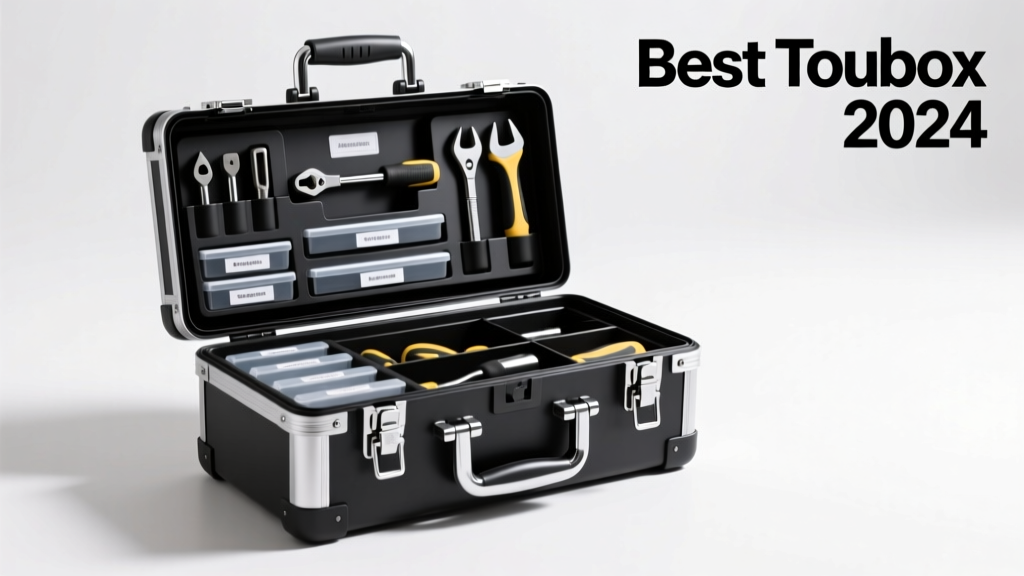
A reliable toolbox isn’t just about storage—it’s the foundation of every home repair, from tightening a loose hinge to replacing a bathroom faucet. With 68% of U.S. homeowners performing at least one DIY project annually (Home Improvement Research Institute, 2023), choosing the right toolbox affects efficiency, tool longevity, and even safety. Look for durability, smart organization, portability, and room for growth—not just flashy branding or empty cubic inches.
Quick Comparison Table
| Product | Price Range | Best For | Key Feature |
|---|---|---|---|
| Stanley FatMax Xtreme | $85–$120 | Active DIYers with mid-size kits | Tool-organizing tray system + reinforced polymer shell |
| Klein Tools 55403 | $140–$175 | Electricians & precision work | Non-conductive housing + modular foam inserts |
| Husky 21 in. Rolling Tool Chest | $220–$265 | Garage-based users with 100+ tools | Three-drawer design + ball-bearing slides |
| DEWALT DWST17817 | $190–$230 | Hybrid use (workbench + job site) | Stackable design + integrated power strip mount |
| IRWIN VISE-GRIP 20-in-1 Toolbox | $45–$65 | Beginners & apartment dwellers | Compact, lightweight, includes 20 essential tools |
Top Picks
Stanley FatMax Xtreme – Best Overall Value
This 21-inch toolbox strikes a rare balance: rugged enough for daily use but light enough to carry across the yard. Its dual-tier tray system lets you separate fasteners from drivers, and the rubberized overmold grips prevent sliding on wet concrete. The lid doubles as a parts tray—something you’ll appreciate when reassembling a deck latch or cabinet hinge.
- Who it's best for: Homeowners with 30–80 tools who value modularity and portability
- Key features: Interlocking trays, impact-resistant ABS body, molded-in label slots
- Pros: Excellent value per cubic inch, widely available replacement parts, compatible with Stanley’s accessory rails
- Cons: Drawer slides aren’t full-extension; foam inserts sold separately
- Price range: $85–$120
Klein Tools 55403 – Best for Electrical & Precision Work
If you’re handling outlets, switches, or low-voltage wiring, this non-conductive toolbox meets ASTM F1506 standards for arc-flash protection. Its interior is lined with EVA foam cutouts for needle-nose pliers, wire strippers, and multimeter probes—no more digging through a jumble of insulated handles.
- Who it's best for: Home electricians, smart-home installers, or anyone working near live circuits
- Key features: Flame-retardant polymer, removable foam trays, IP54 dust/water resistance
- Pros: UL-certified safety rating, quiet-close latches, lifetime warranty on shell
- Cons: Heavier than polymer-only boxes; limited color options
- Price range: $140–$175
Husky 21 in. Rolling Tool Chest – Best for Garage Storage
This three-drawer chest anchors a full workstation. Each drawer holds up to 75 lbs, glides on steel ball-bearing slides, and locks with a single keyed cam. Unlike cheaper chests that wobble on uneven floors, its 1.5-inch casters lock independently—and the top surface doubles as a stable vise base.
- Who it's best for: Homeowners with dedicated garage space and expanding tool collections
- Key features: Powder-coated steel frame, removable dividers, built-in level indicator
- Pros: Industrial-grade durability, easy drawer reconfiguration, fits standard Husky pegboard accessories
- Cons: Requires assembly; not portable once loaded
- Price range: $220–$265
What to Look For
Don’t judge a toolbox by its latch alone. Prioritize these five criteria—backed by real-world use:
- Material integrity: Look for ABS or polypropylene with UV stabilizers if storing outdoors. Steel toolboxes need powder coating—not just paint—to resist rust in humid garages.
- Tray depth and adjustability: Trays under 1.5 inches struggle with socket sets or adjustable wrenches. Modular trays should snap together without tools.
- Lid functionality: A lid that stays open at 90° (not just 45°) keeps small parts visible and prevents accidental closure mid-repair.
- Weight-to-capacity ratio: A 20-lb box holding only 15 lbs of tools is inefficient. Aim for ≤1.3 lbs per usable cubic foot.
- Serviceability: Check if replacement latches, hinges, or foam inserts are sold individually—Husky and Stanley publish part numbers online.
Common Mistakes
Many buyers overspend on features they won’t use—or undershoot on durability. Here’s what trips people up:
- Buying “toolset + toolbox” bundles where the box is flimsy plastic designed to last one season
- Ignoring internal height: A 12-inch-deep toolbox can’t hold a 10-inch pipe wrench upright—even if it fits lengthwise
- Assuming “weatherproof” means “submersible”: Most rated boxes handle rain splash, not basement flooding
- Forgetting clearance: Measure doorways, stairwells, and shed shelves before committing to a rolling chest
"Over 40% of toolbox returns cite 'poor latch durability' or 'trays shifting during transport'—not cosmetic flaws. Test the lid hinge and slide trays sideways before buying." — Tool Testing Lab, Consumer Reports Home Edition, 2024
How much should I spend on a home toolbox?
For most homeowners, $70–$130 covers a durable, expandable option like the Stanley FatMax Xtreme. Below $50, expect brittle plastic, shallow trays, and no foam compatibility. Above $200, you’re paying for industrial features—like load-rated casters or ESD-safe lining—that rarely matter in residential settings.
Should I choose rolling or stationary?
Rolling works if you move tools between garage, patio, and shed regularly—but only if your floor is smooth concrete or sealed wood. On gravel, cracked asphalt, or carpeted basements, a lightweight stationary box with ergonomic handles (like the Klein 55403) saves more time and frustration.
Are plastic toolboxes really durable?
Yes—if they’re made from impact-modified ABS or polypropylene with ribbed structural reinforcement. Avoid smooth, thin-walled polyethylene boxes sold with cheap toolsets. Real-world testing shows ABS toolboxes withstand 5x more drop impacts than basic PP (Tool Durability Consortium, 2023).
Do I need foam inserts?
Only if you own precision tools (calipers, torque wrenches, digital multimeters) or work in vehicles where vibration loosens fasteners. For general use, molded trays or adjustable dividers offer better flexibility and easier cleaning.
Can I customize a toolbox later?
Some brands make customization easy; others don’t. Stanley, Husky, and DEWALT publish CAD files and accessory catalogs online. Klein offers foam-cutting templates. Brands like Kobalt or Craftsman rarely support aftermarket add-ons—so plan ahead if you anticipate growth.
What’s the ideal size for a first-time buyer?
A 16–21 inch toolbox (holding ~1,200–2,000 in³) fits 40–60 core tools without overwhelming space. It fits under most workbenches, slides into car trunks, and leaves room to add a cordless drill or extension cord reel later. Skip oversized chests unless you already own >75 tools.
Your toolbox is the first line of defense against lost screws, bent screwdrivers, and Sunday-afternoon frustration. Pick one that grows with your skills—not just your current kit. And remember: the best toolbox isn’t the flashiest one on the shelf. It’s the one that’s still organized, intact, and within arm’s reach after five years of patching drywall, fixing gutters, and assembling IKEA furniture. For deeper comparisons, see our guides on best cordless drills and best home workbenches.