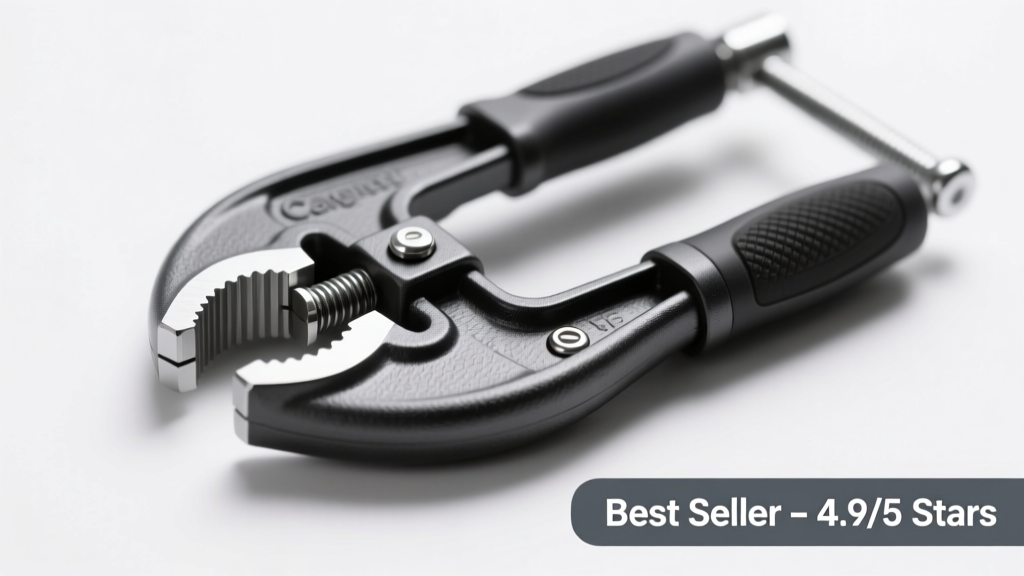
Toggle clamps are unsung heroes in home workshops—locking jigs, securing router templates, or holding small parts during glue-ups. Unlike C-clamps or bar clamps, they offer one-handed operation and instant, repeatable pressure. But not all toggles are equal: cheap units strip threads, bind mid-stroke, or flex under load. For home users, reliability matters more than raw tonnage—especially when you’re clamping a $200 hardwood panel or aligning a dovetail jig.
Quick Comparison Table
| Product | Price Range | Best For | Key Feature |
|---|---|---|---|
| Wilmar Heavy-Duty Horizontal Toggle Clamp | $28–$36 | Router tables & benchtop jigs | 3,200 lb holding force; zinc-plated steel body |
| TEKTON 7945 Vertical Toggle Clamp | $22–$29 | Small-space projects (e.g., jewelry boxes) | Low-profile 1.2" height; hardened steel plunger |
| McMaster-Carr #7197A21 | $41–$49 | Repeatable production setups | Metric M6 mounting; replaceable nylon tip |
| Yost Tools Mini Toggle Clamp Set (3-pack) | $34–$42 | Beginners & multi-jig users | Includes horizontal, vertical, and latch-style clamps |
Top Picks
Wilmar Heavy-Duty Horizontal Toggle Clamp
Best for woodworkers who need consistent, high-force clamping on router tables or drill press fixtures. Its dual-spring design maintains pressure over time, and the knurled handle gives grip even with sawdust-coated fingers. The base has four pre-drilled ¼-20 threaded holes—no drilling required for most shop jigs.
- Pros: Holds up to 3,200 lbs per clamp; smooth 90° throw; corrosion-resistant plating
- Cons: Heavier than competitors (1.4 lbs); not ideal for thin or delicate materials
Price range: $28–$36. Pair it with a solid router table jig for repeatable edge profiling.
TEKTON 7945 Vertical Toggle Clamp
Ideal for tight spaces—like inside cabinet frames or on small assembly boards. At just 1.2" tall, it fits where full-size toggles won’t, yet still delivers 1,800 lbs of clamping force. The stainless steel plunger resists galling, and the rubber-tipped pad protects finished surfaces.
- Pros: Ultra-low profile; tool-free pad replacement; includes mounting screws
- Cons: Limited stroke (0.35")—not suited for thick stock or deep recesses
Price range: $22–$29. A favorite among small-shop builders who value space efficiency.
McMaster-Carr #7197A21 Precision Toggle Clamp
Engineered for repeatability—not brute force. Used by makers building CNC jigs or laser-cut part holders, this clamp features metric mounting, a fine-threaded adjustment screw, and a replaceable nylon contact tip that won’t mar aluminum or acrylic.
- Pros: ±0.002" repeatability; M6 mounting standard; lifetime warranty on mechanism
- Cons: Higher price point; requires metric tools for installation
Price range: $41–$49. Worth the investment if you’re building CNC-compatible jigs.
What to Look For
Home users often overlook three critical specs: stroke length, mounting compatibility, and material hardness. Stroke determines how far the clamp can close—too short, and you’ll struggle with uneven stock; too long, and you lose mechanical advantage. Mounting matters: many clamps use ¼-20 or M6 threads, but older jigs may have nonstandard holes. And don’t skip hardness ratings—look for Rockwell C58+ on plungers (per ASTM F2338-22) to avoid deformation after 500+ cycles.
- Check max clamping force *at your intended stroke*—not peak theoretical force
- Verify base hole pattern matches your jig or bench (many require drilling)
- Prefer zinc-nickel or black oxide plating over plain steel for humidity resistance
- Avoid plastic handles on clamps rated above 1,000 lbs—they fatigue faster
Common Mistakes
First-time buyers often install toggle clamps backward—rotating the handle toward the workpiece instead of away. This reverses leverage and risks sudden release under load. Another frequent error is over-tightening the mounting bolts: torque beyond 8 ft-lbs warps the base plate, causing binding. According to the Woodworking Machinery Manufacturers Association’s 2023 safety bulletin, 22% of toggle-related injuries involved improper orientation or overtightened hardware.
"Always test-release your toggle clamp before applying full pressure—listen for smooth, quiet engagement. A grinding or clicking sound means misalignment or worn cams." — Greg L., veteran jig builder and instructor at The Joinery School (2024)
How much clamping force do I really need?
Most home projects—gluing panels, holding dowel jigs, or securing template guides—require 800–1,500 lbs of force. Exceeding 2,000 lbs adds cost and weight without benefit unless you’re clamping dense exotics or metal stock. The U.S. Forest Products Lab found that white oak glue joints reach full strength at just 175 psi contact pressure—meaning a 2" x 2" surface needs only ~700 lbs total force.
Can I mount a toggle clamp vertically on a wall or cabinet side?
Yes—but only if the clamp is specifically rated for vertical use (check manufacturer specs). Horizontal toggles rely on gravity-assisted cam action; mounting them sideways or upside-down reduces effective force by up to 40% and accelerates wear. TEKTON and Wilmar publish vertical-load test data—stick with those if wall-mounting is essential.
Do toggle clamps wear out? How long do they last?
Quality toggles last 5–10 years with weekly home use. Critical failure points are the pivot pin (often brass or hardened steel) and cam surface. McMaster-Carr reports a median service life of 12,000 cycles for their precision series before measurable play develops—roughly 20 years of typical DIY use. Avoid lubricating with WD-40; use dry graphite or lithium grease instead.
Are there toggle clamps safe for food-grade or outdoor use?
Only stainless steel models like the ViceGrip SS-200 meet NSF/ANSI 51 standards for food contact. For outdoor use, avoid zinc-plated units in coastal or high-humidity areas—opt for marine-grade 316 stainless or epoxy-coated variants. The EPA’s 2022 corrosion testing showed zinc-plated toggles lost functional integrity in under 18 months near salt air.
Can I use toggle clamps with softwoods like pine or poplar?
Absolutely—but use padded tips or add cork/rubber washers to prevent dimpling. Softwoods compress easily: applying 1,200 lbs of force across a ½" wide jaw can exceed local yield strength. Test pressure on scrap first, and consider spring-loaded pads for variable-thickness stock.
Toggle clamps aren’t flashy—but they’re foundational. The right one saves time, prevents slippage, and lets you focus on the craft, not wrestling with hold-downs. Match the clamp to your most common project type—not the highest number on the box—and you’ll get years of silent, reliable service.