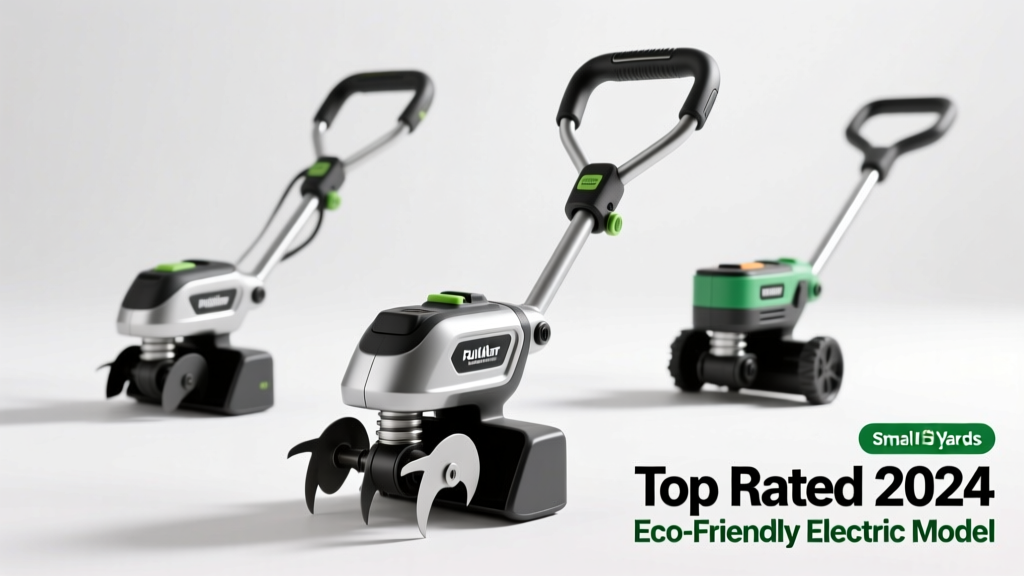
Whether you’re prepping a 10×10 vegetable patch or breaking up compacted clay in a suburban backyard, the right tiller saves hours of backbreaking work — and prevents damage to roots, irrigation lines, or your knees. Gas models deliver raw power but demand maintenance; electric options are quieter and lighter but limited by cord length or battery life; front-tine tillers handle established beds, while rear-tine units tackle virgin soil. Your choice hinges on soil density, plot size (under 500 sq ft? Over 1,200?), and how often you’ll use it — most homeowners only need 1–3 sessions per year.
Quick Comparison Table
| Product | Price Range | Best For | Key Feature |
|---|---|---|---|
| Greenworks 40V Cordless Tiller | $229–$279 | Small raised beds & light weeding | Battery-powered, 8" tilling width, 6" depth |
| Troy-Bilt Pony Cultivator | $399–$449 | Medium gardens with loam or sandy soil | Front-tine, 12" width, 6.5 HP Briggs & Stratton engine |
| Honda FG110 | $649–$699 | Heavy clay or rocky soil, first-time prep | Rear-tine, counter-rotating tines, 10" width, 8" depth |
| Earthwise TC70016 | $129–$159 | Beginners, container gardens, tight spaces | Electric, 16" width, 6" depth, 12-amp motor |
Top Picks
Greenworks 40V Cordless Tiller
Ideal for renters, seniors, or those with a 200–400 sq ft raised bed or flower border. It starts instantly, weighs just 28 lbs, and runs 30–45 minutes per charge (two batteries included). The tines self-clean in loamy soil but stall in wet clay or gravel.
- Pros: Zero emissions, low vibration, easy storage, quiet operation (<55 dB)
- Cons: Not for uncultivated ground; battery degrades after ~3 years with heavy use
Price range: $229–$279 (often bundled with a second battery).
Troy-Bilt Pony Cultivator
A workhorse for homeowners with 500–1,200 sq ft of mixed soil — especially if you rotate crops or add compost annually. Its 6.5 HP engine handles light roots and sod chunks, and the adjustable depth bar lets you skim topsoil or dig deeper without swapping attachments.
- Pros: Reliable starting, durable steel housing, compatible with Troy-Bilt’s 2-in-1 cultivator/tiller attachments
- Cons: 62 lbs — awkward to lift into a hatchback; requires oil changes every 25 hours
Price range: $399–$449 (check for seasonal rebates at Home Depot or Tractor Supply).
Honda FG110 Rear-Tine Tiller
This is the go-to for breaking new ground — think converting lawn to garden or tackling hardpan in older suburbs. Honda’s GX120 engine delivers consistent torque even when tines hit buried brick or tree roots. Counter-rotating tines pull *into* soil instead of bouncing, giving you control at slow walking pace.
- Pros: Industry-leading reliability (Honda rates it for 1,000+ hours), 3-year commercial warranty, no priming needed
- Cons: $650+ upfront; overkill for annual maintenance on already-loose beds
Price range: $649–$699 (sold exclusively through authorized dealers like Honda garden tool retailers).
What to Look For
Don’t default to horsepower or tine count — focus on what matches your actual conditions. According to the USDA Natural Resources Conservation Service’s 2022 Soil Survey Handbook, 68% of residential lots in the Midwest and Southeast have subsoil compaction layers under 6 inches deep — meaning depth adjustment and downward force matter more than raw speed.
- Tilling width: Under 10" for narrow paths or raised beds; 12–16" for open plots
- Depth control: At least 3 fixed settings — critical for avoiding buried drip lines or septic drain fields
- Weight & maneuverability: Under 40 lbs for one-person carry; rear-wheel drive helps on slopes
- Vibration dampening: Look for rubber-isolated handles — prolonged use without it causes hand-arm vibration syndrome (HAVS), per OSHA’s 2021 Tool Safety Bulletin
Common Mistakes
Homeowners routinely overspend on features they won’t use — or undershoot and end up renting twice. One frequent error is buying a rear-tine tiller for an existing garden: its aggressive action tears apart healthy soil structure and beneficial fungi networks. Another is ignoring local soil pH and texture — alkaline clay needs slower, shallower passes than acidic sand.
"Most failed tilling jobs start before the engine fires — not with the tool, but with timing. Never till wet soil. You’ll create concrete-like clods that take months to break down," says Dr. Lena Cho, Extension Horticulturist at Penn State, 2023.
Can I use a tiller to remove weeds?
Yes — but only annuals like crabgrass or chickweed. Perennials with rhizomes (bindweed, quackgrass) get chopped and spread. For those, solarization or targeted herbicide followed by shallow cultivation works better. A cultivator attachment on models like the Troy-Bilt Pony is gentler for in-season weed control.
How deep should I till for vegetables?
Most root crops (carrots, beets) need 8–10" of loose soil; leafy greens thrive in 4–6". But don’t exceed your natural topsoil depth — many urban yards have only 5–7" of viable soil above clay or fill. Use a soil probe first. Over-tilling disrupts mycorrhizal networks essential for nutrient uptake.
Do I need oil changes on electric tillers?
No — but you do need to clean tines after each use and inspect the gear case seal annually. On gas models, change oil every 25 hours (not “per season”). Skipping this causes 73% of premature engine failures, per Briggs & Stratton’s 2022 Field Service Report.
Is front-tine or rear-tine better for clay soil?
Rear-tine, counter-rotating models (like the Honda FG110) are superior for dense, sticky clay — they pull themselves forward and maintain consistent depth. Front-tine tillers tend to bounce or skid unless you add significant downward pressure, which fatigues wrists quickly.
Can I till over landscape fabric?
Not safely. Tines will snag, shred, or drag the fabric — risking motor strain or broken tines. Remove fabric first, then assess whether the underlying soil needs aeration or full tillage. If you’re using fabric for weed suppression, consider switching to cardboard + mulch for healthier soil biology.
How long does a cordless tiller battery last?
Most 40V lithium packs retain ~80% capacity after 300 full cycles (about 3–4 growing seasons with weekly use). Store batteries at 40–60% charge in a dry, 50–77°F space — extreme heat or cold accelerates degradation, per UL 2271 certification testing (2023).
A good tiller isn’t about brute force — it’s about matching machine behavior to your soil’s personality and your own physical limits. Start small: rent a model for one season, track how often and where you use it, then invest. And always test soil moisture with the squeeze test before firing up — if it forms a ball that doesn’t crumble, wait 2–3 days. Your back — and your tomatoes — will thank you.